Decanting - Day 5
We have seen what one Master of Wine (MW) has to say about decanting. How about one more? Michael Broadbent devotes almost fives pages to decanting in his book Wine Tasting (my copy is the 1989 Simon and Schuster Reprint). Here is a sampling of what he has to say.
“More fatuous argument has been stimulated by this side issue than almost any other.”
"The second, and in my opinion far less important, reason for decanting is to aerate the wine. It is in this area that there is a great deal of muddled thinking……”
“By general consensus, young wines can take, possible need, plenty of breathing time older wines less, very old wines scarcely any – just extract the cork and decant carefully. If it were only as simple as that.”
“How many times has one been told, and occasionally discovered accidentally, that a young red wine seems softer and better on the palate the next day?”
“It is my considered opinion that no noticeable oxidation occurs for a very considerable period after the cork is drawn, and, surprisingly little change occurs in the decanter. The main development takes place in the glass. The greater the wine, the more revealing and complex the bouquet and the longer it and the flavour will last.”
"My final advice on “air” is: be bold, and try decanting well in advance. Above all, with a really fine wine (and this applies as much to a top-class white burgundy as to claret) give the wine a chance to blossom in the glass: sip it, make it last, revel in its marvelous development.”
I certainly hope later editions of this otherwise excellent little book are less confusing. First we are told that he thinks that “little change occurs in the decanter” but then “be bold, and try decanting well in advance”. Maybe he has a lot of really pretty decanters that he likes to boldly show off?
Sunday, March 20, 2005

Saturday, March 19, 2005
Decanting - Day 4
Is the view on decanting expressed in The Oxford Companion to Wine the personal opinion of Jancis Robinson? Here are some of her comments on the subject from How to Taste (revised edition published in 2000).
“For a long time it has been thought that the process of aging in wine was simply one of slow oxidation, that small amounts of air either already present in the sealed bottle or entering through the cork, gradually react with the wine to make it develop into something more complex and ramified. It was thought therefore that if you poured a bottle of wine into another container such as a decanter, you would aerate it and somehow telescope the aging process into just a few minutes by putting the wine into contact with a lot of air. The bouquet would be fanned into life by all this oxygen. This view is still widely held, but the results of comparative tastings of samples of the same wines opened and decanted at varying intervals before tasting have been suspiciously inconclusive. Furthermore, some authorities argue that the effects of aeration can only be harmful; that by exposing a delicate bouquet to air you may make it evanesce, and that the interesting reactions between oxygen and wine are too complicated to be speeded up. All that can happen, they argue, is that the wine starts to oxidize too fast, and therefore it begins to deteriorate.”
She goes on to say “It is true that the potential disadvantage of dissipating the bouquet of a wine by decanting it or allowing a half-full bottle to stand open for a while can sometimes be an advantage. Some wines, full-bodied reds particularly, can be too intensely flavored when young. Rather than gaining extra flavors, the decanter allows them to lose some of their aggressive youth and mellow into a more palatable, if more vapid, middle age. This is especially true of some rich reds from California, Australia, Italy, the Lebanon, and the odd rustic wine from Spain and the Rhône.”
Hmmm, there is nothing like a nice vapid red wine!
One thing Ms Robinson does do in “How to Taste” is suggest a variation of the Peynaud anecdote. All you need is three bottles of the same wine. Open and decant one bottle three hours before tasting, decant another one hour before tasting, and open the third immediately before tasting. Have each wine poured for you so that you do not know how long they have been exposed to air and then do a comparative tasting. Does decanting make a difference?
Friday, March 18, 2005
Decanting - Day 3
My Wine Page-a-Day Calendar poses this question for March 18th:
Q: Which two wines would most benefit from decanting?
A. a 4-year-old Australian shiraz
B. a 20-year-old tawny Port
C. a 2-year-old Napa Valley cabernet sauvignon
D. a 20-year-old vintage Port
A: C and D. Decanting is done for two reasons: to pour older wines off their sediment and to help tight and tannic young wines open up. Because a two-year-old Napa Valley cabernet sauvignon is sure to have a hefty dose of tannin, it will undoubtedly benefit from spending some time in a decanter. And vintage Port is a powerful fortified wine. It will have a fair amount of sediment and should certainly be decanted.
Hmmm, someone else who believes that aeration will reduce the perception of tannin in a wine. Interesting!
WINE BLOG "MASTI AWARDS"
I have to interrupt the Decanting series to announce some late breaking news. Shiraz has won its first award from the blogosphere. Tom Wark of FERMENTATIONS has announced the first annual WINE BLOG "MASTI AWARDS" for Masthead Excellence. Shiraz won for Best Minimalist Approach to Masthead Creation. The blog received this accolade because “Most wine bloggers are so excited to offer up our expertise to a waiting readership, as well as being pretty darn lazy, that we generally just toss up any old masthead on our blog that the service offers and then jump into the writing. Shiraz's masthead takes this cache of Lazy that defines wine bloggers and take it to a minimalist height.”
What can I say? Well first I’d like to thank Blogger for providing the template that allowed me to carefully craft the word Shiraz into the masthead. And…….. well, really that was it. But I’d like to thank Tom for recognizing that Shiraz does take a simple approach to Blog formatting. I’d like Shiraz to be fancy and eye-catching, and maybe when it grows up and moves to something like TypePad it will be. But maybe if it stays this way Shiraz can be a multiple winner of the Best Minimalist Approach to Masthead Creation award!
Thursday, March 17, 2005
Decanting - Day 2
Described in The Oxford Companion to Wine (2nd Edition, Edited by Jancis Robinson, 1999) as an “optional and controversial step in serving wine, involving pouring wine out of its bottle into another container called a decanter.” The reasons given for decanting are to remove sediment, to aerate wine, and practical aspects of putting wine on the table before rather than during a meal, and showing off your fancy decanter. Again that name Peynaud comes up in the discussion on decanting as a way to provide air to a wine. The comment is essentially as stated by Peynaud in his book. The rebuttal? “However there are certain types of wines, Barolo most obviously, which may not have been included in Professor Peynaud’s experiments with decanting regimes, which can be so concentrated and tannic in youth that to lose some of their initial sensory impressions is a positive benefit.” Hmmm, the Barolos I tasted recently had several hours in glass before we tasted them, still seemed awfully tannic to me. They must have been absolute monsters out of the bottle! And I love how all of those experiments of Peynaud's are dismissed with a simple "may not".
Described in The Oxford Companion to Wine (2nd Edition, Edited by Jancis Robinson, 1999) as an “optional and controversial step in serving wine, involving pouring wine out of its bottle into another container called a decanter.” The reasons given for decanting are to remove sediment, to aerate wine, and practical aspects of putting wine on the table before rather than during a meal, and showing off your fancy decanter. Again that name Peynaud comes up in the discussion on decanting as a way to provide air to a wine. The comment is essentially as stated by Peynaud in his book. The rebuttal? “However there are certain types of wines, Barolo most obviously, which may not have been included in Professor Peynaud’s experiments with decanting regimes, which can be so concentrated and tannic in youth that to lose some of their initial sensory impressions is a positive benefit.” Hmmm, the Barolos I tasted recently had several hours in glass before we tasted them, still seemed awfully tannic to me. They must have been absolute monsters out of the bottle! And I love how all of those experiments of Peynaud's are dismissed with a simple "may not".
Wednesday, March 16, 2005
Decanting
As I recover from my surgery a little bit of idle reading has me rediscovering the following quotations.
“Only bottles which have a deposit need to be decanted.”
“If it is necessary to decant, it should be done at the last moment, just before sitting down or just before serving, never in advance.”
“Only wines suffering from some fault (for example, a lack of cleanness on the nose, the presence of some gas, a little thinness in constitution) warrant decanting sufficiently in advance to allow for plenty of contact with air.”
Who said this? The same person who wrote “I have carried out dozens of controlled decanting experiments on wines of all ages and all origins. The wines were either handled under inert gas so as to avoid any influence from oxygen, or, alternatively, I varied the amount of dissolved oxygen and the length of contact with air.” Hmmm, that might just qualify him as someone who knows more about decanting wine than most. Who is he? The author is the late Emile Peynaud and the quotes are from his book “The Taste of Wine”. Peynaud first published his book in 1980 and then published a revised second edition (from which I have quoted) in 1996.
Now all of us know that wine will evolve and change over time. Just let wine sit in your glass for 15-30 minutes and it will change in aroma, longer, say several hours, and the actual feel of the wine in your mouth may change. I experienced this recently with Penfold's 2002 Bin 389. Well wine is a living thing. Isn’t it? I read a bit more of Peynaud. He related an anecdote. A 1962 Médoc Cru had been decanted “almost four hours” before lunch. During the lunch “everyone praised the virtues of letting wines breathe”, except Peynaud. He asked that unopened bottles of the same wine be opened and a comparison be made. “The strong, estery bouquet of the undecanted wine filled the glasses with a floral, truffle-like refinement, while the other appeared totally faded by comparison. On the palate the undecanted wine was livelier, fresher, less thick but also less fleshy. Everyone agreed that decanting had made the wine lose finesse and elegance though it had made it seem fuller. It had made a lively and refined wine seem rather common and lackluster.”
I wonder if this experiment has ever been tried with recent vintages of Aussie shiraz?
Tuesday, March 15, 2005
Leaving a Bitter Taste
I'm supposed to be resting after surgery. But a visit to the doctor to make sure that all is going as planned and that nothing is in danger of falling off (even though the color due to bruising is highly suggestive of exactly that scenerio) has me dropping into the lab to see what's on the slab. Among the pile is the March 10th issue of the science journal Nature with a letter entitled "The receptors and coding logic for bitter taste" by KEN L. MUELLER, MARK A. HOON, ISOLDE ERLENBACH, JAYARAM CHANDRASHEKAR, CHARLES S. ZUKER & NICHOLAS J. P. RYBA. Nature 434, 225–229, (2005)
The synopsis provided is as follows: Almost every naturally occurring toxin tastes bitter, so the ability to detect bitterness is vital to animals as a means of avoiding poisonous substances. The T2R family of receptors, found on the tongue and palate epithelium, are implicated in bitter taste sensing. A combination of genetic, behavioural and physiological studies now confirms that T2R receptors are necessary and sufficient for the detection and perception of bitter compounds. Intriguingly the system can be subverted: bitter can be the new sweet. Mice engineered to express a bitter taste receptor in what are normally 'sweet' cells display strong attraction to this family of bitter compounds. So the 'taste' of a sweet or a bitter compound is a reflection of how the specific receptors are wired, rather than a property of the receptors or even of the tasted molecules themselves.
So it is true that an aversion to bitter is a good thing, but if you actually do like bitterness then maybe, just maybe, your sweet/bitter receptors have been mixed up!
The Best Wine Value In The World
They call Australia "the lucky country". There are a number of reasons for this. Tom Wark of the wine blog FERMENTATIONS has discovered one. Australian fortified wines! If you are an Australian over 55-60 years of age you know about these wines because they were what your parents and grandparents drank when you were a kid. OK, maybe Grandma drank mostly cheap cream sherry, but muscats, tawny ports and tokays have been part of the Australia wine scene for many, many years. Today some of the old names still exist, but more importantly not so old names, like Dutschke, try to continue the tradition. These are not easy wines to make. Base material must be established and added to over a period of years. But still only small amounts of wine are bottled each year. If you find some, especially Muscat, from names like Buller, Chambers, Dutschke, Morris, Seppelt, Yalumba , then buy a bottle. When you get it home pour a small glass, take a seat in nice big comfortable chair and swirl, sniff and sip your way to the lucky country. Pair it with some walnuts and dark chocolate.
They call Australia "the lucky country". There are a number of reasons for this. Tom Wark of the wine blog FERMENTATIONS has discovered one. Australian fortified wines! If you are an Australian over 55-60 years of age you know about these wines because they were what your parents and grandparents drank when you were a kid. OK, maybe Grandma drank mostly cheap cream sherry, but muscats, tawny ports and tokays have been part of the Australia wine scene for many, many years. Today some of the old names still exist, but more importantly not so old names, like Dutschke, try to continue the tradition. These are not easy wines to make. Base material must be established and added to over a period of years. But still only small amounts of wine are bottled each year. If you find some, especially Muscat, from names like Buller, Chambers, Dutschke, Morris, Seppelt, Yalumba , then buy a bottle. When you get it home pour a small glass, take a seat in nice big comfortable chair and swirl, sniff and sip your way to the lucky country. Pair it with some walnuts and dark chocolate.
Monday, March 14, 2005
Amazon Taking Orders for the Sideways DVD
Amazon is listing the Sideways DVD for release on April 5th, and they are taking orders as you read this. Better get that order in now! Both widescreen and full screen editions will be available.
Amazon is listing the Sideways DVD for release on April 5th, and they are taking orders as you read this. Better get that order in now! Both widescreen and full screen editions will be available.
A Little Bruised
Due to minor surgery late last week I will be pausing to reflect upon the many varied hues of color to the bruising that has followed the procedure. Who knows, with a bit of luck reflection upon the various shades of blue and purple may improve my description of the color of wine. I should be back to add to the Tasting Notes eBlog with a tasting of Aussie Shiraz around the 17th.
Due to minor surgery late last week I will be pausing to reflect upon the many varied hues of color to the bruising that has followed the procedure. Who knows, with a bit of luck reflection upon the various shades of blue and purple may improve my description of the color of wine. I should be back to add to the Tasting Notes eBlog with a tasting of Aussie Shiraz around the 17th.
Tuesday, March 08, 2005
2005 Vintage a Delight to Behold
Well in Pokolbin, anyway. Pokolbin? Where the hell is that? That's what wine blogs are for, to help with all these little details. Of course, you could just Google it! Pokolbin is in the Hunter Valley in New South Wales, Australia. The Hunter Valley is one of the oldest vineyard regions in Australia. Well known to Aussies, it really gets very little press outside the country. But one thing is for sure if the McWilliams Mt Pleasant Shiraz for 2005 are top wines then get some. We are talking, in particular, about the Maurice O'Shea Shiraz. The latest release is the 2000. Don't say you were not blogged in a timely manner.
In fact get a bottle or two of whatever you can get of the Mt Pleasant wines as, apart from being excellent, they are a little bit of Aussie wine history. As Langton's describes them in their Leading Australian Cult Wines page Maurice O'Shea is often regarded as the father of the Australian table wine industry. His wines (1921 to 1956) were remarkably good, begging the question why the Hunter Valley has not achieved its early promise in the market. I recommend the Maurice O'Shea Shiraz and the Mount Pleasant Lovedale Semillon.
Monday, March 07, 2005
Wine Forums and Internet Trolls
Still no reply from Kahuna (Ben Stevens) on where he obtained the material for his Worrying research on oxidation ? post on the Mark Squires' BB on eRobertParker.com.
Its getting to the point where you have to begin to wonder if this is not a troll. First, and so far only, post by this individual. Picks a topic sure to incite discussion (e.g. research by a French group showing that high alcohol New World wines do not survive long-term) and posts it on the largest and most active wine forum. It also mentions the effects of closures (natural cork versus synthetic cork), another point that has been hotly debated on eBob in recent times.
The problem is that several of us have tried to find out more about the lead investigator of the study Dr. Jean-Pierre Varoni. But he seems not to have published anything of note. Googling selected phrases from the text of the post by Kahuna also failed to identify anything. Others have pointed out that Jean-Pierre Varoni is very similar to Pierre-Antione Ravoni an associate of Robert Parker, Jr. However this may just be co-incidence.
If it is a troll then it is comforting that very few were taken in by what is quite a well constructed post. The post displays a good level of knowledge regarding the chemistry of redox reactions as they pertain to wine (although it could easily be a verbatim copy from lecture notes or an oenology text book).
More worrying is that if it is not a troll and Kahuna has decided not to return (for whatever reason) and provide the requested link, then Dr Varoni and his study have been poorly served by this individual.
Barossa Backfill
Another update on the Barossa trip has been added. It is the tastings done on December 14 and includes such notables as Kalleske (winemaker), Torbreck, Veritas, Smidge - Two Hands (winemaker), and Thorn Clarke. A numer of wines were tasted from barrel. You can find it here.
Another update on the Barossa trip has been added. It is the tastings done on December 14 and includes such notables as Kalleske (winemaker), Torbreck, Veritas, Smidge - Two Hands (winemaker), and Thorn Clarke. A numer of wines were tasted from barrel. You can find it here.
Saturday, March 05, 2005
High Alcohol Wines Turn to Vinegar
On Thursday a thread appeared on the Mark Squires Wine Bulletin Board under the title Worrying research on oxidation ? The initial post contains material from a “science research site” which describes "A recent study by the research arm of l’Union de Maisons de Bordeaux headed by Dr. Jean-Pierre Varoni, as yet unpublished, appears to have established that high alcohol wines may be at risk of rapidly turning sour in the latter stages of cellar development. The study, prompted in part by the tendency toward higher alcohol levels in New World red wines, concluded that the results were, 'alarming,' and calls into question the suitability of this wine style for medium- or long- term cellaring. "
Unfortunately no link was provided to the “science research site” and the thread originator has not (at this time) returned to provide any additional information. But this is a sufficiently interesting topic to follow up so……..
A little checking reveals that the l’Union de Maisons de Bordeaux site is here. Their Partners, presumably including their "research arm", are here. The study could come from the Oenology Dept of Université Victor Segalen Bordeaux 2. But my French is not good enough to figure out if the work comes from there or if Dr. Jean-Pierre Varoni is a member of the Faculty.
OK, so let’s look in the research literature databases to see where Dr Varoni does publish as this will help locate him. So far I have searched PubMed which is excellent for biomedical literature searches, but its fairly limited when it comes to non-medical related vinous topics, as the original post seems to be. There are other databases that can be searched via Ovid Tech. The most relevant databases are probably Agricola (Index to materials acquired by the National Agricultural Library and cooperating institutions.) and Biological Abstracts (Indexes life science research reported in nearly 5,500 journals. Coverage is international and includes biological and medical research findings, clinical studies, discoveries of new organisms, biotechnology, pharmacology and botany.)
J-P Varoni does not appear in any of these databases. So either Varoni has yet to publish, publishes only in obscure French journals that are not indexed in major library data bases, or the wrong name was given. Googling Varoni’s name or phrases from the text of the original post does not pull up anything.
Is this whole thing a hoax…….?
Thursday, March 03, 2005
Do You Hear That Wine?
Continuing on from yesterday. It has been reported in the science journal Nature that a Swiss musician can taste music as distinct flavors. The individual, E.S., has synaesthesia in which there is usually a concurrent perception of a musical note with a color. However E.S. experiences different tastes upon hearing different tones. A major third evokes sweet while a minor third is salty! If she hears a tritone she experiences disgust which is not a taste sensation, although it is a reaction I've had to some wines! I wonder if I was listening to music at the time? A link to the Reuters press article is here.
Continuing on from yesterday. It has been reported in the science journal Nature that a Swiss musician can taste music as distinct flavors. The individual, E.S., has synaesthesia in which there is usually a concurrent perception of a musical note with a color. However E.S. experiences different tastes upon hearing different tones. A major third evokes sweet while a minor third is salty! If she hears a tritone she experiences disgust which is not a taste sensation, although it is a reaction I've had to some wines! I wonder if I was listening to music at the time? A link to the Reuters press article is here.
Wednesday, March 02, 2005
Picking Up a Scent
I received a Page-A-Day Calendar for Christmas. Mine was the Wine Lover's . You also get a free on-line calendar so I've added it the Blog. Look to your right-> Probably breaking some sort of Copyright doing so but if it helps you know what day it is and you learn a bit of wine lore then maybe you'll get your own. The note for yesterday was about odors. One of my favorite subjects. That got me doing literature searches again to see if there is anything new on odor perception. I won't bore you with the details, just the summary of one which led me to another.
Color has a profound effect on the perception of odors. For example, strawberry flavored drinks smell more pleasant when colored red than green and descriptions of the 'nose' of a wine are dramatically influenced by its color. Using functional magnetic resonance imaging (fMRI) we demonstrate a neurophysiological correlate of these crossmodal visual influences on olfactory perception. Subjects were scanned while exposed either to odors or colors in isolation, or to color-odor combinations that were rated on the basis of how well they were perceived to match. Activity in caudal regions of the orbitofrontal cortex and in the insular cortex increased progressively with the perceived congruency of the odor-color pairs. These findings demonstrate the neuronal correlates of olfactory response modulation by color cues in brain areas previously identified as encoding the hedonic value of smells. The color of scents:chromatic stimuli modulate odor responses in the human brain. Osterbauer RA, Matthews PM, Jenkinson M, Beckmann CF, Hansen PC, Calvert GA. J Neurophysiol. 2005 Feb 2; [Epub ahead of print].
Human olfactory perception is notoriously unreliable, but shows substantial benefits from visual cues, suggesting important crossmodal integration between these primary sensory modalities. We used event-related fMRI to determine the underlying neural mechanisms of olfactory-visual integration in the human brain. Subjects participated in an olfactory detection task, whereby odors and pictures were delivered separately or together. By manipulating the degree of semantic correspondence between odor-picture pairs, we show a perceptual olfactory facilitation for semantically congruent (versus incongruent) trials. This behavioral advantage was associated with enhanced neural activity in anterior hippocampus and rostromedial orbitofrontal cortex. We suggest these findings can be interpreted as indicating that human hippocampus mediates reactivation of crossmodal semantic associations, even in the absence of explicit memory processing. The nose smells what the eye sees: crossmodal visual facilitation of human olfactory perception. Gottfried JA, Dolan RJ. Neuron. 2003 Jul 17;39(2):375-86.
All because of this little study. Well not entirely, but it certainly influenced both.
Monday, February 28, 2005
And The Oscar For Best Adapted Screenplay Goes To.....
When was it, sometime in late January I think, that we predicted that Sideways would win for its adaption of Rex Pickett's novel. It wasn't really a huge gamble. But what is disappointing is that Thomas Haden Church missed out on Best Supporting Actor. Some say he lost the female vote because of the character he played. If true that would be unfortunate as it does suggest that he did play a convincing role.
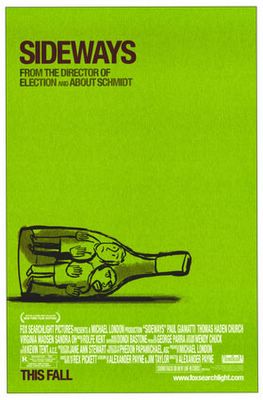
When was it, sometime in late January I think, that we predicted that Sideways would win for its adaption of Rex Pickett's novel. It wasn't really a huge gamble. But what is disappointing is that Thomas Haden Church missed out on Best Supporting Actor. Some say he lost the female vote because of the character he played. If true that would be unfortunate as it does suggest that he did play a convincing role.

Local Wine Events Web Site
At a recent tasting here in San Diego I was told about a web site that listed the local tasting events. I usually get them by visiting the wine shops, their online sites or the local newspaper on a Wednesday. But this site, LocalWineEvents.com, is great. I was completely surprised to find that it is a worldwide listing. Take a look. I'm sure you'll find something close to where you live!
At a recent tasting here in San Diego I was told about a web site that listed the local tasting events. I usually get them by visiting the wine shops, their online sites or the local newspaper on a Wednesday. But this site, LocalWineEvents.com, is great. I was completely surprised to find that it is a worldwide listing. Take a look. I'm sure you'll find something close to where you live!
Thursday, February 24, 2005
John Duval Wines
John Duval used to be Penfolds chief winemaker and only the third maker of Penfolds Grange from 1986 until his resignation in mid-2002. He resigned following the merger between Southcorp and Rosemount Wines in 2001. Now he's making wines under his own name. John Duval Wines 2003 Plexus is a mix of Shiraz, Grenache and Mourvedre. A shiraz was made in 2004 as well as the Plexus. Its not a big gamble to say that they will be wines worth looking for. More->

John Duval used to be Penfolds chief winemaker and only the third maker of Penfolds Grange from 1986 until his resignation in mid-2002. He resigned following the merger between Southcorp and Rosemount Wines in 2001. Now he's making wines under his own name. John Duval Wines 2003 Plexus is a mix of Shiraz, Grenache and Mourvedre. A shiraz was made in 2004 as well as the Plexus. Its not a big gamble to say that they will be wines worth looking for. More->

Wednesday, February 23, 2005
We're going to be doing it vertically!
Wine tasting is all about being able to describe what you see, smell and taste. This thread contains some key phrases! Do you have any that you might like to add?
Wine tasting is all about being able to describe what you see, smell and taste. This thread contains some key phrases! Do you have any that you might like to add?
Friday, February 18, 2005
Just another visit to the wine store
Dropped by my favorite wine store (Vintage Wines) last night to do a tasting of “Super Italians”. Very nice line-up of eight wines plus a ringer but at $50-110USD/btl just a little too expensive for what was in the glass so I wandered around the shop to see if there were any bargains. Penfold’s Bin 389 2002 was there at $19USD so I grabbed a bottle to see if all the hype is just that. The Bin 28 Kalimna was there as well but it’s the 2001!!! Its $17USD/btl and will be on the wine bar this week so I’ll wait until I come in for the Saturday Zinfandel tasting before I try it. What this! Trevor Jones 2003 Virgin Chardonnay at $15USD/btl in screwcap – must have a few of these. Goundrey Offspring 2002 Shiraz, $11USD/btl. Hmm, haven’t tried it. Better get a bottle. Killibinbin 2002 Shiraz, $32USD/btl. Love Killibinbin, but I got just the one bottle to try because if its not as good as some of the other 2002s I have then I don’t really need more. Ah, Villa Maria Sauvignon Blanc Private Bin, $8USD/btl, always try that because it can be great value. OK I was pretty much done. But while I’m waiting to pay I asked about what will be in the Aussie Tasting next month. Burge’s Draycott , Elderton’s Command, and maybe Penfold’s Grange! That brings up the current hype about the recent Penfold’s releases, which leads on to other new releases that they have. Something called Old Vines at $150USD/btl! “Never heard of it, no thanks”. Red Nectar. “You have Red Nectar?”. Sure, the Stonewall. They have a six pack and when I see the bottle I know its Red Nectar. But there is some confusion by the shop staff. They don’t think this is the wine described as Kalleske Red Nectar that was recently rated by Parker. No, it’s the 2003 Stonewall Shiraz. Well, OK maybe they are correct but I thought there was just one Red Nectar and the bottle says that Tammy Pfeiffer is the vigneron and the winemaker is Troy Kalleske. A bottle had been opened for a customer to try but he turned the wine down in favor of some big point wine that cost $80USD/btl that he never even tasted! The open bottle is pulled from behind the counter and I get a pour. Day and a half old Aussie Shiraz. Not shy about being forward! All the right notes – chocolate, blueberry, licorice, and more. The palate is just as expressive but not as jarring as the Barolos I’d just tasted. Its all so well integrated, no tannins that rip at your cheeks on the finish. OK so it might not live for decades like a couple of the Italians probably will. But I swear that as I was driving to work this morning I could still taste that wine! I could hardly remember most of the Barolos. Anyway I got the rest of the six-pack at $40USD/btl. When I got it back to the counter the guy ringing up my bill tells me how I was doing so well on QPR. So I said “Well if it turns out to be crap I can always say I was drunk when I bought it.” Checked out the Red Nectar site this morning and its the wine that Parker rated 95 points. There is no Kalleske Red Nectar. I knew that. Its just that Barolo clouds the mind. I feel for the poor guy that spent $80 on other wines because he thought the Stonewall hadn’t been rated. Nah I don’t. If he couldn’t taste how good a wine the 2003 Red Nectar Shiraz is then he deserves to waste his money.
Dropped by my favorite wine store (Vintage Wines) last night to do a tasting of “Super Italians”. Very nice line-up of eight wines plus a ringer but at $50-110USD/btl just a little too expensive for what was in the glass so I wandered around the shop to see if there were any bargains. Penfold’s Bin 389 2002 was there at $19USD so I grabbed a bottle to see if all the hype is just that. The Bin 28 Kalimna was there as well but it’s the 2001!!! Its $17USD/btl and will be on the wine bar this week so I’ll wait until I come in for the Saturday Zinfandel tasting before I try it. What this! Trevor Jones 2003 Virgin Chardonnay at $15USD/btl in screwcap – must have a few of these. Goundrey Offspring 2002 Shiraz, $11USD/btl. Hmm, haven’t tried it. Better get a bottle. Killibinbin 2002 Shiraz, $32USD/btl. Love Killibinbin, but I got just the one bottle to try because if its not as good as some of the other 2002s I have then I don’t really need more. Ah, Villa Maria Sauvignon Blanc Private Bin, $8USD/btl, always try that because it can be great value. OK I was pretty much done. But while I’m waiting to pay I asked about what will be in the Aussie Tasting next month. Burge’s Draycott , Elderton’s Command, and maybe Penfold’s Grange! That brings up the current hype about the recent Penfold’s releases, which leads on to other new releases that they have. Something called Old Vines at $150USD/btl! “Never heard of it, no thanks”. Red Nectar. “You have Red Nectar?”. Sure, the Stonewall. They have a six pack and when I see the bottle I know its Red Nectar. But there is some confusion by the shop staff. They don’t think this is the wine described as Kalleske Red Nectar that was recently rated by Parker. No, it’s the 2003 Stonewall Shiraz. Well, OK maybe they are correct but I thought there was just one Red Nectar and the bottle says that Tammy Pfeiffer is the vigneron and the winemaker is Troy Kalleske. A bottle had been opened for a customer to try but he turned the wine down in favor of some big point wine that cost $80USD/btl that he never even tasted! The open bottle is pulled from behind the counter and I get a pour. Day and a half old Aussie Shiraz. Not shy about being forward! All the right notes – chocolate, blueberry, licorice, and more. The palate is just as expressive but not as jarring as the Barolos I’d just tasted. Its all so well integrated, no tannins that rip at your cheeks on the finish. OK so it might not live for decades like a couple of the Italians probably will. But I swear that as I was driving to work this morning I could still taste that wine! I could hardly remember most of the Barolos. Anyway I got the rest of the six-pack at $40USD/btl. When I got it back to the counter the guy ringing up my bill tells me how I was doing so well on QPR. So I said “Well if it turns out to be crap I can always say I was drunk when I bought it.” Checked out the Red Nectar site this morning and its the wine that Parker rated 95 points. There is no Kalleske Red Nectar. I knew that. Its just that Barolo clouds the mind. I feel for the poor guy that spent $80 on other wines because he thought the Stonewall hadn’t been rated. Nah I don’t. If he couldn’t taste how good a wine the 2003 Red Nectar Shiraz is then he deserves to waste his money.
Thursday, February 17, 2005
I guess we'll never know!
Following on from the post below about whether wine critics should provide details of all wines tasted and not just those scoring above a particular point range or quality level, I asked a question on the Mark Squires forums of eRobertParker.com about the availability of information on the total number of wines tasted. Mr Parker was kind enough to provide an answer through his ERPSupport people. Mike, we checked with Mr. Parker who says: "No totally accurate record exists as we do not always record all of the wines rated below 84. In general, what is published represents approximately 25-35% of the total number of wines tasted."
So now you know!
Wednesday, February 16, 2005
Hearts and Hands
At the end of the Charlie Rose interview with Robert Parker Jr there was mention made of a culinary arts book called Hearts and Hands. This is a limited-run, first edition, book published by the Sir Peter and Lady Michael Foundation to raise money for cancer. All net proceeds from book sales and fundraising events will be donated to fund prostate cancer research and patient care, as well as other cancer causes.
The book is being offered in two editions — a linen, cloth-bound edition and a signed, leather-bound collector's edition. Both include descriptions of fifteen of the world's finest chefs and thirty original recipes for appetizers, entrees and desserts, as well as wine matches from the The Peter Michael Winery. Parker wrote the Preface to the book.
A very worthy cause.
“its really a 50 to 100 point system”
The title of the post for today is a quote from Robert Parker, Jr. during his interview on the Charlie Rose Show on Monday February 14, 2005. I saw a repeat last night and jotted the quote down, replayed it to confirm, and then re-confirmed it from the transcript that has been put up on the Mark Squires forum associated with eRobertParker.com. Don’t want to do a Jamie Goode!
Why is this quote of interest? Well its important because it does put more meat on the bones of the Parker scoring system which gives every wine 50 points for just being wine. Thus the given scores can never be less than 50. In practical terms, that is for readers of the The Wine Advocate, or subscribers to eRobertParker.com, its really not even a 20 point system because a wine has to score around 84-85 to be recommended (i.e. written-up) in The Wine Advocate. This has not always been the case . If you look back through the Vintage Guide in the online site you can find wines scored down into the 60’s. However this seems not to be the case in recent times even when the whole vintage, like 2002 in Italy which was rated at a 75, has scored poorly. For Piedmont only six wines were recommended from the 2002 vintage, while for Tuscany thirty wines received scores of 85 or better.
Most scoring systems, whether they are 20 point, A through D, stars, puffs, etc. are similar. They rarely, if ever, use their full range. Or, more correctly, the consumers reading the reviews put out by the wine critics using these scoring systems rarely, if ever, see the list of all the wines reviewed and the scores given. To some extent this is again a practical point. Parker, for example, tastes thousands of wines each year. If he were to publish all of them in The Wine Advocate then it would certainly cost significantly more to publish. However he must write notes on all the wines he tastes, even if its just the description of the wine and a score, and this could be easily put on-line. This would provide a full listing of all wines tasted and their scores.
If the consumer is to be truthfully served by wine critics then full disclosure of what wines have been tasted and how they rated should be the goal of the critics. Not whether a wine scored above 85 points. By limiting their published critiques to descriptions of wines that score high points wine critics do not function as consumer advocates. Instead they provide winemakers with great advertising material. That's the tail wagging the dawg!
Monday, February 14, 2005
Cover Art for Sideways DVD
ign.com released cover art for the Sideways DVD on 2/4/2005. Sorry for the late update!
ign.com released cover art for the Sideways DVD on 2/4/2005. Sorry for the late update!
Friday, February 11, 2005
Oxygen Not Necessary for Ageing Bottled Wine
In a Press Release Allen Hart, Southcorp's Research & Development Winemaker, described a study that has concluded that closures which allow very little oxygen to enter bottled wine do not affect the maturation of the wine. Hart concluded: "From this study it is apparent that oxygen was not a vital component for the ongoing evolution and maturation of these red wines after bottling. It is clear that access to small but measurable amounts of oxygen (eg synthetic closures), will accelerate the evolution and maturation of red wine through oxidative reactions. However, red wine will continue to evolve without measurable oxygen ingress via a closure, primarily through what is assumed to be anaerobic reactions. Some bottled wine may express "reductive" characters in such an anaerobic environment, in contrast to the wine developing oxidised characters in a more aerobic environment (but the rankings indicated that these) are not considered commercially unacceptable."
These observations are very similar to the studies of the Australian Wine Research Institute (AWRI) reported by Tyson Stelzer. Stelzer expanded on the Southcorp Press release in a post to the Mark Squires Bulletin Board of eRobertParker.com. See here. Several points bear noting. One of the wines used was the 1996 vintage of Penfolds Bin 389, a wine that can age for at least a decade and often longer. Various analyses (chemical, spectral, sensory) were done at 2.5, 4.5 and 6.5 years post-bottling. The data collected suggest that in wine bottled with ROTE (roll-on tamper-evident) or screw-cap closures, “the phenolic reactions that influence wine colour are still progressing even in the practical absence of ongoing oxygen for reaction. This allows the wines colour and tannin structure to continue to evolve with time."
So is wine development really a reductive process after all? You would think that we would know this by now. But we’ve never had a really efficient closure system to limit oxygen access before, unless you want to put your cellar under vacuum!
Thursday, February 10, 2005
A Dinosaur Roars
On the Mark Squires Bulletin Board (part of eRobert Parker.com) Jamie Goode of
www.wineanorak.com posted a note about comments apparently made by Michael Broadbent MW including the comment “What concerns me is this ‘global taste’ being forced on us”. This generated considerable discussion. Now Mark Squires is certainly no lover of British wine critics like Jancis Robinson or Broadbent and he posted this
“To me, Broadbent is a dinosaur. He has long since reached a point where his views seem reactionary. I wonder at this point how effective his tasting is. We were talking in another thread about the science of smell--that maybe 50% of the people over 65 lose 50% or more of their sense of smell. Maybe there is a reason why he remembers the '40s fondly.
I say that partly in jest--but partly not.
What is clear to me is that the Old School, best epitomized by a few British M.W.s., is dug in hard and tries to make the rules for everyone. Anyone who departs from them is a heathen. Their frustration is that Parker has pretty ignored them--and succeeded in influencing people more than they have.” (The full post can be found about a third of the way down this page.)
Things seemed to have gone quiet, and then a post appeared (on the top of this page) from Bartholomew Broadbent containing a reply from his father. The Dinosaur roared and while Squires may be unrepentant he certainly got chewed around the edges. At least Squires can now say that Broadbent finally knows who he is. Its just a guess but I’ll bet that Mr Squires thought that Mr Broadbent already knew all about him, what wif ‘im bein’ RP's lacky an all.
Monday, February 07, 2005
The "pseudo-scientific tyranny of wine ratings"
Neil Pendock seems to have gotten into a right tizzy doesn’t he? He hopes that people like Roger Scruton will bring sanity to wine appreciation, which he believes as been "hijacked by Robert Parker, Wine Spectator and a band of sensory accountants determined to condense a glass of wine into a score accurate to the third decimal point". Scruton, who describes drinkers of Australian wine as morons, has very questionable ethics. Hardly the sort of personality you want beating the drum "against pseudo-scientific wine appreciation, with its dissertations and exams, faux-academic 'qualifications' and non-reproducible wine ratings out of 100".
What is pseudo-scientific about wine appreciation? As a scientist I’m almost certainly biased, but I find that the more attention I place on examining the color, smell and taste of a wine the more I am able to appreciate, or understand, a wine. The ability to appreciate color, smell and taste are attributes that the majority of us have, although not in equal measure; we can be grouped according to our innate ability. More importantly while novice wine drinkers may be able to say that they “like” a wine they are very often hard pressed to describe what it is that they “appreciate” about the wine. Experience, particularly in the ability to describe what is being ”tasted”, is part of acquiring true wine appreciation.
The question then becomes is such leaning a pseudo-scientific process? Well understanding the physiological processes involved is certainly not pseudo-science. The major organs concerned (eyes, nose, and tongue) are capable of amazing discrimination, although it may take training in order for any group of individuals to reach a consensus on, for example the color magenta, or the odor of lime; this happens, more or less successfully, in wine appreciation classes all over the world resulting in what Pendock would probably call faux-academic “qualifications”.
Why is it necessary for us to learn to appreciate wine? Well the simple answer is that not all wine is created equal. And while anyone can drink whatever wine it is within their means to obtain, why would they want to drink poor quality wine? After all there is an almost endless supply of wine and a new vintage almost every year. It is not so much a matter of tasting from one bottle to the next but deciding which bottle to taste! It is this step in the process that has people like Pendock and Scruton screeching from their pulpits, because it is here that the masses, who mostly want to have a nice bottle of wine with dinner, must rely on a few individuals who taste and pass judgment on countless thousands of bottles of wine.
Next: Which Sensory Accountant Should The Masses Use to Fill Their Cellars?
Meanwhile check out the link to a discussion of a 1,000 point scoring system.
Friday, February 04, 2005
The Philosopher’s Stone, Newton, Rowling, Scruton, & Parker
Wine writers can certainly draw together unusual mixtures of people. And the idea that the bath is important for their ideas is interesting. Maybe that’s why B&B’s in the Barossa have such large spa baths!!!
Wine writers can certainly draw together unusual mixtures of people. And the idea that the bath is important for their ideas is interesting. Maybe that’s why B&B’s in the Barossa have such large spa baths!!!
Wednesday, February 02, 2005
Wine and Unusual Animal Mating Rituals
Australia's Black Swan Vineyards has partnered with the Los Angeles Zoo to donate two Australian black swans and fund the creation of the Zoo's first-ever black swan habitat, marking the first time in the Zoo's 39-year history that black swans will reside at the Zoo. The black swans, who mate for life, will officially arrive just in time for Valentine's Day 2005. Among the activities being planned are a discussion and slide presentation by L.A. Zoo General Curator Mike Dee, who will examine romantic and unusual animal mating rituals. The event will also feature the opportunity to name the Zoo's two new Australian black swans with an auction benefiting GLAZA's animal "adoption" program. GLAZA is the Greater Los Angeles Zoo Association. MORE->
Can’t say that I’ve tasted, or even seen these wines in any shops. But the web site is certainly one up on a lot of wine sites I’ve seen recently.
Tuesday, February 01, 2005
The Pirie Hypothesis
How can you tell if its going to be a great vintage? Well there is no foolproof way. But Andrew Pirie, who earned Australia's first PhD in viticulture in the 1970s when he conducted studies throughout Australia that led to his identification of Pipers Brook as a suitable vineyard site, has an idea from those old days as a student. "It was to do with how much sugar got into the berry each day just after colour change," he says, referring to veraison, the period when the grape begins to ripen. "I still haven't come up with a better idea than that, because that is the critical period when the berry's machinery is fed by sugar from the leaves and the machinery is only in operation for a couple of weeks. "If you were able to plot that, you would probably find that it did help to describe what made a great vintage." More->
How can you tell if its going to be a great vintage? Well there is no foolproof way. But Andrew Pirie, who earned Australia's first PhD in viticulture in the 1970s when he conducted studies throughout Australia that led to his identification of Pipers Brook as a suitable vineyard site, has an idea from those old days as a student. "It was to do with how much sugar got into the berry each day just after colour change," he says, referring to veraison, the period when the grape begins to ripen. "I still haven't come up with a better idea than that, because that is the critical period when the berry's machinery is fed by sugar from the leaves and the machinery is only in operation for a couple of weeks. "If you were able to plot that, you would probably find that it did help to describe what made a great vintage." More->
Thursday, January 27, 2005
Drink It or Distill It? A Reality Check
Discussions of whether the Old World or New World makes the better quality wine have raged since at least the famous 1976 Paris Tasting to debates on current wine forums. There is no doubt that the upper echelon of French wine has greater longevity and, to put it in simple terms “character”, than the top wines from other parts of the world. However for the majority of wine drinkers the top French wines are too expensive and in many cases, too difficult to acquire. And let’s face it, the average wine drinker does not have the desire nor the facilities to store these wines for the decades necessary to bring them to their best. But the French make millions of bottles of wine. Surely some of the stuff is drinkable? Maybe , but not when there is excess production and competition. Currently there is a proposal to distill 267 million bottles of Appellation d’Origine Controlée (AOC) labeled wine; The proposal from the Confederation of French Wine Cooperatives — which represents 110,000 winemakers who account for half of France's wine production — would require the French government to ask the EU's executive commission for a crisis distillation. AOC producers in France have never before resorted to an EU crisis distillation. Part of the reason for this dramatic proposal is a reduction in wine consumption by the French as well as falling wine exports.
Meanwhile, in the New World, Australia steams on into fourth spot as a wine exporter, and increases national wine consumption to 26.9 litres per capita in 2002-03; it was less than 3 litres in the 1930s. Still behind the Europeans, but with the prediction that the USA will overtake France as the leading wine consumer by 2008, and with the US accounting for 30% of Australian wine exports, it is time for a reality check.
Wednesday, January 26, 2005
Barossa, Barossa
I've added another post on our trip to the Barossa Valley. Click on the Archives for December (righthand side of the screen) to find Barossa - December 13. The post includes tasting notes for the following wineries
Kellermeister/Trevor Jones
Dutschke Wines (winemaker)
Rockford Wines
Glaetzer
Turkey Flat Vineyards
While you are there you might as well check out The Sauce! Where's The Sauce on December 11 and the first day of wine tasting described in Barossa - December 12.
Someone is Drinking #$%&!^+ Merlot!
Although the now (in)famous line from the movie Sideways would suggest that Merlot drinkers are pretty close to excrement on the sole of your shoe, that’s not what the consumer numbers say. According to the Wine Institute, a California wine industry organization based in San Francisco, merlot is the top red nation wide in the USA, with 26.7 million cases sold in 2003. Chardonnay remains the leader among white wines with some 52.5 million cases, while white zinfandel is the big mover in the blush wine category, with some 21.2 million cases sold in 2003.
These numbers, (from a report by Bill Daley, Chicago Tribune food and wine reporter published January 26, 2005) note that The top three varietals in the Chicago market, according to ACNielsen, a leading provider of consumer and marketplace information, are, in descending order of sales in 2004: chardonnay at $50.7 million; cabernet sauvignon at $33.5 million and merlot just a bit lower at $32.9 million. These figures cover a 52-week period ending Dec. 18, 2004.
Chicagoans purchased $300 million worth of wine at supermarkets, liquor stores and drugstores in 2004, according to ACNielsen. More domestic table wines were sold than imported ($155 million domestic versus $57 million imported), but imports rose at a rate of 6.5 percent while sales of domestic wines dropped just under 1 percent.
Among imports, Italian wines still "rule" Chicago with $30 million in 2004 sales, ACNielsen reported. Australian wines are coming on strong in second place with $25.8 million in sales, while French wines ranked third at $8 million. Italian sales were flat in 2004, neither up nor down; Australian sales were up 15 percent and French sales down 2.4 percent, according to ACNielsen statistics.
These are significant numbers because Chicago is the third largest market in the USA (8.1 million cases of wine in 2003), behind LA (13.8 million cases) and New York (10.9 million cases). Interesting numbers in themselves, I would have bet New York would have been the big gulper. But I guess the thirst is greater in LALA land.
Tuesday, January 25, 2005
Another Australian Adventure
I’ve started to put our recent trip downunder onto my G’Day eBlog. Its more of a travel log than a wine log but it does cover the Barossa trip. It all starts with the post on December 8. Link to it here.
I’ve started to put our recent trip downunder onto my G’Day eBlog. Its more of a travel log than a wine log but it does cover the Barossa trip. It all starts with the post on December 8. Link to it here.
The Merlot Mob Amazed as Pinot Noir Gate Crashes The Oscars
Sideways has been nominated for five Academy Awards including BEST PICTURE, Best Director, Best Adapted Screenplay, Best Supporting Actor and Best Supporting Actress. My money is on an award for Best Adapted Screenplay, and it would be nice if Haden Church sneaked in for Best Supporting Actor.
Sideways is one of the few movies I have seen where I have actually been interested enough to buy the Shooting Script and the Score, and paperback and movie book covers, the poster, and……
Monday, January 24, 2005
Kalleske Wines in Charity Auction
Troy Kalleske of Kalleske Wines has asked Wickman's Fine Wine Auctions to auction off 12 bottles and 2 signed magnums of his 2003 Greenock Shiraz with all proceeds donated equally between the Asian Tsunami appeal and the South Australian Eyre Peninsula Fire appeal. The next auction will feature these wines in a special CHARITY category with all bids starting at $1, no reserves and no commissions to pay. You simply pay for any shipping and insurance from the winery.
Robert Parker gave the 2003 Grennock shiraz 96-100 points in the Wine Advocate #155 and described it as A barrel sample of the 2003 Greenock Shiraz appears to be a virtually perfect wine.
This is a pretty special opportunity folks. There are very few of the magnums available, and I'm sure even fewer have been signed. One has a special place in my cellar.
Friday, January 21, 2005
Tuesday, January 18, 2005
Barossa On The Boil
Although many of you may doubt it, notes on our recent Barossa trip do exist. They will appear, as if by magic, in a short while. Meanwhile I have listed the wineries that were visited so that you can get an idea of what is in store. Not all the wines made by each winery were tasted, and in some cases wines were tasted but notes were not made. However I think you will find that won't make too much difference when you read the details of some of the tastings! And there might be photographs as well.
December 12
Two Hands
Seppeltsfield
BV Estate
Gnadenfrei
Heritage Estate
Kaesler
The Willows
December 13
Kellermeister/Trevor Jones
Dutschke (winemaker)
Rockford
Glaetzer
Turkey Flat
December 14
Kalleske (winemaker)
Torbreck
Veritas
Smidge (winemaker) – Two Hands
Thorn Clarke
December 15
Elderton
Bethany
Liebich Vein
St Hallet
December 16
Hutton Vale (grapegrower)
Heathvale (grapegrower)
Monday, January 17, 2005
Philosophy and Wine
Oh dear, I've just found out I'm a moron!
Moron - from Merriam-Webster Online
Pronunciation: 'mor-"än
Function: noun
Etymology: irregular from Greek mOros foolish, stupid
1 usually offensive : a mildly mentally retarded person
2 : a very stupid person
Why am I a moron? Well I drink Australian wine. Who has called me (and most probably you) a moron? This little fellow. He did it at the first-ever "Wine and Philosophy" Conference at the University of London. He said "Australia is a big problem. It is a landscape that has been dragged from hunter-gatherer to farmer in 200 years." Australians have generally not, therefore, "built into their wine 'le gout de terroir'", choosing instead to make wines at 14.5% alcohol, and to brand them for sale in "the moron market".
Scruton says that it is morally acceptable to get drunk in moderation on some Old World wines but not on those produced in Australia. According to the Professor, fine wine is marked by "terroir" and by the integration of the alcoholic taste so that one cannot notice it. Moderate intoxication caused by such wines is laudable because it enables the drinker to make "communion with the immanent reality, history, geography and customs of a community. The flavour is imparted by the principles of settlement."
I was born in Australia over 50 years ago. For the last 20 years I've lived in the USA and traveled, almost annually, back to Australia. If Australia is devoid of reality, history, geography, customs and settlement then I guess I am a moron. But I think we all know who the moron is, don't we Professor? It comes as no surprise that Scruton (how I would love to write another word in there) is a Professor of Philosophy. Its a bloody pity he can't get his Eurocentric brain into a gear high enough to join the rest of the world in applauding the "terroir" that exists in Aussie wines.
Monday, January 03, 2005
Barossa Backfill
Well we had a great time in the Barossa. Did you? Judging by the empty space around here I’d say probably not. All due to a series of unfortunate events, I’m afraid. The cottages we rented in Tanunda lacked phone lines so no internet access there. Then the Big Pond Prepaid Internet software I tried to install in Adelaide did not have the intelligence to recognize that I was trying to install from a hotel room and needed to dial “0” for an outside line. That wasted additional time getting internet access. When we did get up and running Miranda spent large amounts of time looking at real estate in the Barossa Valley. Then we went house hunting, then we made offers, then we signed contracts, then we went to Sydney and started to chase down money to pay for it all.
Thus the eBlogs have suffered. But fear not! Over the next few weeks I will be backfilling this space with notes on a great trip, great wines and some very gracious and accommodating grapegrowers and winemakers.
Friday, December 17, 2004
Barossa - December 17
Last day in the Barossa. The only important things to do are to head out to Dutschke Wines to buy a couple of bottles of Wayne’s wonderful Muscat and sign his barrel of Fortified Shiraz. Then its off to Adelaide and the National Wine Centre of Australia. I recommend a visit. After all where else can you get to question Len Evans, Peter Lehmann and other notables of the Aussie wine industry?
Signing the barrel of Fortified Shiraz at Dutschke Wines.

Copyright Miranda Alexander-Pollard
Thursday, December 16, 2004
Barossa - December 16
Only two vineyards on the itinerary today and I’d never heard of either of them.
The first one, Hutton Vale, is on a dirt road miles away from anywhere. It all looks very rustic and so it should because this mixed production farm has been owned by the Angus family since 1842. The farm is now run by John and Jan Angus. Jan makes jams and chutneys while John oversees the vineyards. The tasting room is in part of the lower level of a sprawling farmhouse. The 2003 Rhine Riesling is a deep straw yellow with aromas of citrus and melon. Medium bodied and well balanced it has crisp and refreshing acidity and excellent length to the finish. (2, 2, 3.8, 10.2 = 18/20, 14% alcohol). The 2001 Grenache/Mataro was deep cherry red in color with notes of blackberry, blueberry and spices. Medium weight with evidence of oak vanilla it is well balanced with good acidity across the palate and drying tannins on the finish, and a lengthy finish. (2, 2, 4.1, 10.0 = 18.1/20, 14.5% alcohol). An interesting note with this wine was that John Angus detected some TCA in the first bottle he opened. I’ll admit that I did notice a slight “funk” but I would not have called it corked. However John clearly knows his own wines and immediately opened a second bottle and the difference was obvious. A clear lesson for cellar door staff – it pays to know your wines. The 2002 Grenache/Mataro was again cherry red, but with aromas of spices and lychees. Softer and suppler that the 2001, it was clearly the more elegant wine. Very well balanced with an excellent finish. My notes end simply with “great wine”. (2, 2, 4.2, 10.2 =18.4/20, 14.5% alcohol). The final wine was the 1999 Shiraz. This is a dense cherry red with a red edge and had been opened for several hours before we tasted it. It gave up a bouquet of cedar and fountain pen ink. Well structured it has a solid backbone of tannins and flavors that carried through on retronasal. John Angus in a disappointed tone, said it was still too closed and needed hours more to open. Later my brother John said “If that Shiraz was closed, then its going to be bloody great when it does open”. (2, 2, 4.1, 10.1 = 18.2/20, 14.0% alcohol). After the tasting we took a tour through the farm house and then the vineyards with John Angus and the family dogs. We saw Shiraz vines with their huge anti-frost fan and the co-mixed Grenache and Mataro vineyard; the GM is co-fermented. An interesting bit of wine trivia, although I’m sure it is not trivial to John Angus, is that the Angus Family once owned the Mount Edelstone vineyards. However due to the vagaries of the Agricultural Industry in Australia in the 1960s and 1970s John’s father Colin Angus sold the vineyard to Cyril Henschke in 1974, and the rest, as they say, is history.
Such friendly hospitality is difficult to leave and so we are more than just a little late to the next vineyard, Heathvale. This is another old property that dates back to 1865 and was under vines in the 1880s. However the vines were removed in the 1920s and it has only been since 1987 that the new owners of Heathvale, Trevor and Faye March, have replanted the vineyards. The wines they produce are all single vineyard. The 2004 Eden Valley Rhine Riesling is light straw with light floral and citrus notes. It has good structure and clean acidity. (2, 2, 3.8, 9.9 = 17.7/20). The 2002 Chardonnay (French Oak) was light straw in color with toasted oak, peach and honeysuckle flavors. The palate showed great structure with a creamy richness to the palate one expects from good oak treatment together with clean acidity. (2, 2, 4.1, 10.2 = 18.3/20, 13.5% alcohol). This is one wine I intend to seek out back in the USA. The 2003 Chardonnay was not quite in the same league. Light straw in color with sweeter fruit flavors and honeysuckle. Softer and suppler on the palate with good structure it lacked the richness of the 2002. (2, 2, 3.9, 9.8 = 17.7/20). The 2001 Shiraz was a dense cherry red with an intense note of mulberry jam. The entry was soft and elegant and the wine showed great structure across the palate and a lengthy finish. A very distinctive Shiraz. (2, 2, 4.5, 10.2 = 18.7/20, 14.5% alcohol). The 2002 Shiraz was also dense cherry red. Compared to the 2001 this wine had a less intense initial aroma but showed greater complexity. It opened with blueberries and ripe fruit and those flavors intensified over time. On the palate it had the same soft and supple entry, and covered the palate seamlessly. Beautifully balanced, it had a rich, lengthy finish. (2, 2, 4.5, 10.5 = 19.0 /20). It’s a Classic! I asked Trevor what the Shiraz sells for in the USA, expecting to hear something around the $50 mark. He said about $25USD! (Postscript: I’m back in the USA now and the 2002 Heathvale Shiraz costs less that $25. I know because I bought some. But the interesting thing is that, as part of the 2002 Australian Shiraz tasting I’ve been doing, I already had a bottle in my cellar. I just never realized what I had!) After tasting the Heathvale wines Trevor took us on a walk through the vineyards and explained the ages of the vines and the different trellising methods he is using to gain optimal flavors in the grapes; clearly a knowledgeable and enthusiastic vigneron.
On the way back to Tanunda we dropped into the Eden Valley Hotel for a bite to eat and a taste of some Merlot. In a corner of the main bar we shared mini pizzas and a glass of the three reds scrawled on the chalk board. The Irvine Spring Hill Merlot was a dense cherry red and fragrant with the perfume of violets. Soft and supple on entry, it was well balanced with the flavors carrying well on retronasal. (2, 2, 4.0, 10.0 = 18.0/20). The Irvine Eden Crest Merlot was a bigger, richer and more complex wine with attractive notes of blueberries and black currents. Soft and supple on entry, with vanilla present on retronasal, and a lengthy finish this was quite a nice Merlot. (2, 2, 4.2, 10.4 = 18.6/20). The Irvine Zinfandel was a dense cherry red with a briery, underbrush note and ripe fruit, and just a hint of ethyl acetate (volatile acidity). The mouthfeel was medium weight and the wine was well balanced with pleasing acidity and the flavors carried through on retronasal. (2, 2, 3.9, 9.8 = 17.7/20).
Over dinner at Salters we finished the rest of the opened bottles of the Heathvale 2002 Chardonnay and Shiraz. Both wines had now been open for almost 5 hours. The Chardonnay gave notes of apricot and apple and was rich and full bodied with crisp acidity and a lengthy finish. (2, 2, 4.1, 10.0 = 18.1/20). The Shiraz was rich and jammy with blueberry and chocolate aromas. Soft and supple on entry, it was mouth filling across the palate with unobtrusive tannins and clean acidity to the finish. A wine with great structure, a lengthy finish, and flavors that are pronounced on retronasal. (2, 2, 4.4, 10.3 = 18.7/20). With all the history, hospitality and excellent wines our last full day in the Barossa should have been our best but the staff at Salters seemed determined that it should not be so. Between the air-conditioning noisily blasting out freezing cold air and coffee that took forever to get to the table they almost succeeded.
Tuesday, December 14, 2004
Barossa - December 14
Kalleske (winemaker)
First on the agenda was a trip out to the winery of rising star Troy Kalleske. The winery is only several years old and much of the operation is still being done in a big tin shed owned by Troy’s brother, and protected by Tyson, a Tyrolean Shepard, who is a monster of a dog; and deserves to be in the Wine Dogs book. The tasting at Kalleske was notable for several reasons. Troy Kallseke is so young, the wines are so good, and Tyson drools so much. After a while I began to wonder if Tyson’s drooling might just be because his sense of smell was letting him “taste” the wines as well. The wines tasted were from barrel samples unless indicated. The 2004 Clarry’s Barossa Red (Grenache/Shiraz) was bright cherry in color and gave aromas of fresh berry fruit. Mouthfilling on the palate it has a core of firm tannins. An attractive wine. (2, 2, 3.8, 9.2 = 17.0/20). The 2004 Old Vines Grenache was cherry red and very open with rich spice and confectionary notes backed up by ripe red berry fruits. Medium bodied with excellent mouthfeel, pronounced but refreshing acidity and a prolonged finish. A lovely wine, but as a barrel sample it can’t go into the Classic Wines section, but watch out for it. (2, 2, 4.6, 10.6 = 19.2/20). The 2003 Old Vines Grenache had more pepper and mint than the 2004 and was softer on the palate. It is another beauty, with great balance and a long finish. (2, 2, 4.4, 10.6 = 19/20). The 2004 Greenock Shiraz was purple and gave off layers of blackberry, anise and chocolate. This is a big Barossa shiraz. Very well balanced but at this stage it still has mouth drying tannins and there is quite a bit of alcohol in there but its going to be an outstanding wine. (2, 2, 4.5, 10.5 = 19/20). The 2003 Greenock Shiraz was from bottle. Dense cherry red in color it was restrained compared to the 2004 with more briar and underbrush notes in addition to its pure Barossa shiraz aromas. With powdery tannins and a prolonged finish it is an excellent, but very young wine. (2, 2, 4.2, 10.3 = 18.5/20). A barrel sample of the 2003 Johann Georg Shiraz was simply remarkable. Incredibly dark in color and very open with complex aromas of savory meats, chocolate, licorice allsorts coming in clouds from the glass. Opulent and seductive on the palate it has great structure, an excellent backbone of firm tannins, and a wonderfully long finish. The fruit comes from a vineyard planted in 1875 and which used to go to Penfolds for Grange. Well move over you overgrown bully there is a new kid in town! (2, 2, 4.6, 10.6 = 19.2/20). Everyone seems to want to make a fortified shiraz. The Kalleske 2002 VP Shiraz was dense cherry red with a prominent anise character on the nose and a big jammy aroma on the palate and soft alcohol on the finish. The alcohol used is a 50/50 mix of brandy and neutral spirit. (2, 2, 4.4, 10.3 = 18.7/20). The final wine was a 1978 Single Vintage Tawny (Shiraz/Grenache) that was the color of motor oil. Extremely rich and luscious with notes of toffee, raisins, and walnts and a clean finish. (2, 2, 4.1, 10.5 = 18.6/20). A great way to finish a fascinating tasting.
Torbreck
Torbreck scored points right off the bat just because they were generous enough to offer all and sundry a taste of their lineup, including Run Rig. Most cellar doors seem to think that there is something special about their top of the line wines and hold them back from most of the folks who walk in their door. To look at us you wouldn’t think that our little group spends quite a lot of money on wine per year. We didn’t really buy all that much at the cellar doors we visited, but I came back with a list that I am chasing down, and I know that John and Chris have been busy getting onto or buying from mailing lists. Torbreck is going to end up doing pretty well, some other places are just not going to get a look in because we didn’t see the wines we expected to see. I’m sure ours is a common experience.
On to the wines. The 2003 Juveniles (60 percent Grenache, 20 percent Shiraz and 20 percent Mataro) was light cherry red in color with lychees and cherries wafting up from the wine. Soft and silky on entry, it is medium bodied and very well balanced with a lengthy finish. This wine does not see any oak so it is very approachable now. (2, 2, 4.0, 10.2 = 18.2/20, 14.25 alcohol). The 2002 The Steading (60 percent Grenache, 20 percent Shiraz and 20 percent Mataro) is essentially an oaked version of the Juveniles. Dense cherry red in color this wine gave up an aroma of the barnyard. Light to medium weight and well balanced with good acidity, it was not as appealing as the Juveniles. (2, 2, 3.8, 10.2 = 18.0/20). The 2003 Woodcutters Red is cherry red and very open with spicy and jammy notes and again an aroma of barnyard. This is a wine with a soft entry, medium weight on the palate and with flavors that carry well on retronasal, but a somewhat abbreviated finish. (2, 2, 3.9, 10.1 = 18.0/20, 14% alcohol). The 2003 The Struie took things up a notch. Dense cherry red it leaps out of the glass with rich, ripe fruit, pepper and chocolate. Real Shiraz! Medium to full bodied with excellent balance, it finishes with drying tannins and a lengthy display of its pure flavors. (2, 2, 4.5, 10.4 = 18.9/20, 14.5% alcohol). The 2003 Descendant was outstanding. Dense cherry red with rich, ripe fruit that envelopes you in aromas of blackberries and the aromatics of the Viognier grape. Soft and elegant on the palate this wine has it all, balance, a solid backbone of drying tannins and an extra-long finish. (2, 2, 4.6, 10.5 = 19.1/20). One for The Classics. The 2002 The Factor was almost as good. Dense cherry red with wonderful notes of chocolate and blackberry backed up by ripe fruit and sweet oak on the palate. Well balanced with flavors that carry well on retronasal and big drying tannins on the finish, it was upset by the alcohol being a little too obvious. (2, 2, 4.5, 10.3 = 18.8/20, 14.5% alcohol). The 2002 Run Rig, the wine we came to taste. Dense cherry red in color and to my nose subdued with just hints of blackberry and perhaps red fruits. Its true nature was revealed on the palate where it is elegant, seductive and complex. There is a lot going on when this wine carresses your tongue, and to get the most from it you would need to spend hours with a bottle all to yourself. It is extremely well balanced and structured with clean acidity and a firm tannic finish. There is a little alcohol there as well, but it scrapes into The Classic Wines. (2, 2, 4.6, 10.4 = 19.0/20, 14.5% alcohol). As we tasted the Run Rig we must have all gone very quite as our server told us that we were experiencing the “Run Rig Silence”. Well in truth it is a great wine, but for me the silence was all about figuring out why I should pay $180USD ($225AUD) for a bottle when the Descendant is going for $90USD!
Veritas
The next winery is Veritas where we are served by Mrs Binder. When most people would be retired she is busy serving wines quietly but effectively to anyone who walks in the door. Good-onya Mrs Binder! The 2002 Cellar Selection Barossa Cabernet Sauvignon is a dense ruby red with an intense chocolate aroma overlaying an attractive wintergreen mint character. A well structured Cabernet with good balance, acidity and soft tannins. (2, 2, 4.1, 10.2 = 18.3/20). The 2003 Christa Rolf Barossa Valley Shiraz Grenache is bright ruby red with an attractive jammy nose. But it lacks any impact across the mid-palate and while the tannins are firm they impart a green stalky character to the finish. Not my cup of tea! (2, 2, 4.0, 9.6 = 17.6/20). The 2003 Cellar Selection Shiraz is cherry red with a subdued nose of Christmas cake. The palate has ripe fruits and is well balanced with clean acidity and firm tannins. (2, 2, 3.8, 9.9 = 17.7/20). The 2002 Binders ‘Bulls Blood’ Shiraz Mataro Pressings is a dense cherry red and a distinct nail polish nose (ethyl acetate, VA). It has a soft entry, is quite well balanced considering and has very firm tannins but there is evident alcohol. A disappointing wine. (2, 2, 3.5, 10.1 = 17.6/20).
Smidge (winemaker) – Two Hands
Matt Wenk must be one of the busiest wine makers in the Barossa! And seeing that a number of the wines he makes use fruit from relatively young vines he’s also a bloody good winemaker. We met Matt at the Branson winery, near Seppeltsfield. The first wines we tried were bottled under his own Smidge label. The 2003 Le Grenouille (Merlot) is a deep cherry red with complex aromas of mint, pepper and other spices. Medium weight and well balanced with well matched acidity and tannins. (2, 2, 3.9, 9.9 = 17.8/20). The 2002 The Tardy (Zinfandel) is cherry red with a big fruit cake nose and the aroma of lychees that (for me) is typical of Zinfandel. The palate displays the ripe fruit and the excellent structure well. But the alcohol is not for the faint of heart. (2, 2, 4,2, 9.8 = 18.0/20, 15.5% alcohol). We then moved into the barrel storage area and the wine tasting got very educational. First we tasted 2004 Zinfandel from Langhorne Creek that had been fermented with different yeast strains. Stored in French oak the first used a Bordeaux yeast and was loaded with rich ripe flavors of blueberries and blackberries. Very well balanced the tannins were just a little hard, but it’s a pup. The second wine was also from French oak but had seen a Rhone yeast and was completely different. Almost closed to me, others said they detected spice notes including nutmeg. But the next wine is the one to look for. From Barossa fruit and again in French oak this 2004 Barossa Zinfandel was all lychees and spice. The entry was soft and very spicy with fragrant floral flavors that cover the palate. Considerably more intense that the Langhorne wines. Matt said that the wine might be called The Donald, but I see on his web site that a 2004 Barossa Zinfandel will be called Rudi. Might be time to email Matt and find out if there is more than one Zin coming from Barossa fruit! The next four wines were from the Two Hands range. The 2003 Ares (Shiraz) was a dense purple and showed great intensity and power of fruit flavors with ripe blackberry, chocolate and sweet oak. Wonderful mouthfeel and beautiful balance with big drying tannins at the finish. (2, 2, 4.5, 10.6 = 19.1/20). The 2003 Aphrodite (Cabernet Sauvignon) from a French oak barrel was a dense ruby red with pure ripe Cabernet fruit and cedar notes. Great intensity of flavor. Medium weight with an excellent marriage of structural components across the palate. If wine can make love to your mouth this may come close! (2, 2, 4.3, 10.4 = 18.7/20). We also tasted from a barrel of the 2004 Aphrodite. (I’m not sure that this is the final blend.) But the wine we tasted was obviously very young, a dense garnet in color and just oozing jam and chocolate aromas from its rich ripe fruit. It has a wonderful mouth feel with sweetness from the oak and solid tannins coming in at the finish. The opulence of the wine, even at this young stage, is amazing. (2, 2, 4.5, 10.6 = 19.1/20). The last barrel sample was a 2004 Shiraz from a vineyard next to that used for Torbreck’s Descendent. This wine has 3% residual sugar and 17% alcohol and is used as a blending component, some of it going into the Ares. It was big in all respects, and while it was not a wine that you could drink in large amounts it was certainly not undrinkable. This just goes to show that a good winemaker can make palatable big wines. Matt Wenk is one winemaker to watch.
Thorn Clarke
Last winery of a very long day and I was content to rest up before dinner and just taste through the line up without making any notes. Although as I expected the best wine was definitely the 2002 William Randell Barossa Valley Shiraz; a previous tasting note is here.
Dinner
The evening meal was at 1918. We started with The Willows Vineyard The Doctor Sparkling Red. Deep cherry red in color it was almost liqueur-like with a pronounced blueberry aroma. Medium bodied and refreshing across the palate with the flavors persisting on retronasal. A slightly hard alcoholic finish. (2, 2, 3.9, 9.5 = 17.4/20, 13.5% alcohol). Over our entrées we finished the open bottle of Smidge Wines The Tardy 2002 Zinfandel. The half consumed bottle had been open in the car for about five hours. Dense cherry red with typical lychee and dark fruit jam flavors. On the palate it was rich with ripe fruit, and becoming almost cordial-like. The alcohol was more evident, but there was still a lengthy finish. (2, 2, 3.8, 9.7 = 17.5/20, 15.5% alcohol). (A little side note: I’m not sure when it was but a little discussion broke out between John and I over my use of lychees as a flavor descriptor for Zinfandel. Later, when Miranda and I were back in Adelaide, I bought some canned lychees in syrup and ripe lychee nuts to see if the flavor I had memorized was correct. I’m happy to report that while the flavor is not absolutely identical its close enough for me to continue to use lychee as a descriptor for Zin. So there!). Our main meals were over a comparison between the Greenock Creek 2001 Alices Shiraz and the Torbreck 2003 The Struie. The Alices was dark cherry, almost purple, and very open with ripe fruit, blueberry, vanilla and a hint of alcohol. On the palate it was full bodied and well balanced with firm tannins holding the finish and the flavors carrying through on a lengthy finish. (2, 2, 4.1, 10.5 = 18.6/20, 15.5% alcohol). The Struie was a very dense cherry red with sweet ripe fruit and dusty oak. Full bodied and well balanced. It finished with drying tannins that softened considerably over time. The complexity that we had found earlier in the day just didn’t seem to be there over food. But its still a hell of a nice wine. (2, 2, 4.1, 10.2 = 18.3/20, 14.5% alcohol).
Subscribe to:
Posts (Atom)