To get to the Port Phillip Estate cellar door you have to make your way up a long driveway. But first you have to find Port Phillip Estate. That involves more than just a little bit of back and forth along the roads of Mornington Peninsula. After Moorooduc Estate we were not under any illusions about how easy it would be to find another winery. After going the wrong way at least once we finally pulled up outside the cellar door just as a brief rain shower began falling. That made the now necessary visit to the restrooms more of a sprint than a leisurely stroll. But the few moments necessary for relief saw the rain off and allowed a comfortable amble into a very open and airy tasting room that overlooks rows of vines.
Both vineyards are very new with Port Phillip Estate having been established in 1987 and Kooyong even later in 1995. Neither winery seemed greatly excited when I proposed a visit by email but I was at least informed that the Kooyong wines could be tasted at the Port Phillip Estate cellar door. Consequently we only got to taste the wines that were being poured rather than all the wines that are produced by these two wineries. The wines tasted were poured by a young fellow whose family owns a small bottle shop. He told us he wants to get into the wine business and sees his stint at the cellar door as a step in that direction. He was at least attentive and talkative.
First up was the 2004 Port Phillip Estate Pinot Noir ($32AUD). Cherry red with pink edge. Slightly closed, it yielded notes of spice and white pepper. On the palate the wine was soft and supple and well balanced with the flavors carrying well onto the palate. 2, 2, 3.6, 10.0 = 17.6/20, 88/100. Next was the 2001 Port Phillip Estate Shiraz ($20AUD). Cherry red with a pink edge. This had aromas of menthol, oak and red current. In the mouth the wine had a soft entry backed up by nice firm tannins but lacked any real complexity. 2, 2, 3.2, 9.5 = 16.7/20, 84/100. The younger 2003 Port Phillip Estate Shiraz ($32AUD) was a deeper cherry in color with pepper, spice and blackberry aromas. It was soft and supple with pleasant carry of flavors onto the palate, juicy acidity, but marred by a little bitterness to the finish. 2, 2, 3.8, 9.8 = 17.6/20, 88/100.
The only Kooyong wine available for tasting was their 2000 Kooyong Pinot Noir ($37AUD). This is apparently the second vintage, and it was quite impressive. Cherry red in color with a pink edge. Rich, ripe and bold, it had intense spice and smoke aromas. On the palate it was medium weight with firm astringency, nicely balanced and well structured, and with good length to the finish. 2, 2, 4.0, 10.1 = 18.1/20, 90/10
Port Phillip Estate Wines can be obtained from Southern Hemisphere Wine. Kooyong is available through the Australian Premium Wine Collection, although the APWC web site has yet to catch up with that information. We didn’t buy any wines at the cellar door but we did see Glen Green’s Essential Wine Tasting Guide with the Port Phillip Estate logo, and quickly snapped one up.
Monday, February 06, 2006

Wednesday, February 01, 2006
Top 100 Wine Blogs
We are pleased! Shiraz - where you are right now - rates 16th and Tasting Notes rates 45th in the Top 100 Wine Blogs. The rating are based on standardized composite logarithmic scores based on multiple relative link popularity rankings from more than a half-dozen top search engines, as well as page rank and web rank scores. As such, they are general quantitative ratings of popularity and do not measure quality of content or frequency of updates, which can be found below. Quality and frequency - it sounds like some sort of measure of sexual adequacy!
Wine Blogging #18
Vintage Wines LTD, San Diego, California.
 My first WBW and I have to praise a wine shop! Good thing I’m used to giving my favorite wine shop plenty of exposure, although it is usually on my other wine blog Tasting Notes.
Why continue to play favorites? Why not branch out and look for another wine shop in San Diego that feels the love? San Diego and surrounding counties are full of wine shops and wine bars doing great things for wine drinkers, just check out the events listed on Local Wine Events.Com. And then check out places like Wine Street , Carlsbad Wine Merchants , 57 Degrees , The Wine Encounter, Bacchus Wine Market & Tasting Room, Wine Sellar & Brasserie, Varietals Wine Merchants - the list goes on and on.
Even with such a large listing Vintage Wines has to be at the top. This wine shop, hidden away in a small mall on Miramar Road, is special to me for several reasons. First, I have along history with them. This goes back to some time in the mid-1980’s when I returned to California after I had returned to Australia; its not as confusing as it sounds, we can talk about it later. At that time I heard that there was this wine shop that had tastings on a Saturday morning. Once I started to attend the tastings I found that they also had a reasonable selection of Australian wines, long before Aussie wine was fashionable in the USA. Second, over the years their selection of Australian wines has grown so that they always have an excellent selection of wines on hand in all prices ranges from Yellow Tail to Torbreck. Third, they offer wine at attractive prices, very attractive prices. Fourth, the staff is knowledgeable, friendly, and diverse in their tastes. Very diverse! Fifth, they have a wide range of wines. American, Australian, French, German, Italian, New Zealand, Spanish, etc. And yes they have shelf talkers, and they will list the points – although for Australian wines you are just as likely to get Halliday’s scores as you are Parker’s.
Sounds like just another good wine shop? Vintage Wines is much more than that. One small example is the email conversations I have had over the last two days with Steve Frederick, the store manager. Yesterday I asked if they would be getting any of the John Duval Entity Shiraz. He replied that he would find out if his distributor is getting any of the wine. Then today I came across the press release confirming the rumors that Paterno Wines would be distributing Two Hands wines. Chasing up that news I rediscovered that Yabby Lake wines are also handled by Paterno. I’d tasted and really liked Yabby Lake on our last visit to Australia and so I fired off an email to Steve about availability. The reply came back with information on estimated pricing, vintages, and availability, and the little added extra that they also have Heathcote Estate Shiraz available – Tod Dexter is winemaker for both Yabby Lake and Heathcote Estate and I’d tasted wines from both vineyards with him last December. Money and wine will soon be changing hands.
Another of the features of Vintage Wines is the variety of wines available for tasting. You can always drop by for a taste from the Wine Bar (except Sunday). Changed every Friday the Bar consists of 5 whites, 6 reds, and 1 dessert wine offered by the taste or glass. The Wine Bar is set up by Bob Bartnett. Bob has been at Vintage for as long as I’ve been going there. Once the owner of a Mustang with the license plate ZINFAN, Bob knows and loves wine, especially Old World. If you are into over-oaked, high alcohol wines don’t ask Bob for recommendations. When Zinfandel was the topic of a Saturday tasting Bob would run it. I pretty soon figured out that we had different palates, but even though I tried I could never get my ordering of the wines to jibe with his. I could almost always come close when John Lindsey, the owner, ran a tasting but Bob could always fool me.
Those semi-structured Saturday tastings that initially drew me to Vintage Wines have long gone. Fortunately they have been replaced by more value orientated tasting schedule that can be done at your leisure. The $2 tasting usually consists of 5 wines under $15/bottle that are considered to provide the best bang for your dollar. The $5 tasting will get you 6 wines based around a varietal, style, or country of origin. Both tastings last from 11AM to 3PM. It is not unusual to find me at a table surrounded by glasses from the $5 tasting as well as few selected tastes from the Wine Bar. If Miranda comes we will often bring some nibbles, as do many of the Saturday regulars.
An event I try not to miss is the monthly Third Thursday tasting. This is a structured event run between 6.30-8.00PM. There are usually 8 top quality wines that are tasted single blind (i.e. you know the identity of the wines but not their order). Votes are taken for 1st, 2nd and 3rd placed wine, and then the identities are revealed. After that discussion and excuses ensue! For the cost of a reasonable bottle of wine (between $40-60) you can compare some outstanding examples of the winemakers art. The folks that attend these tasting can be quite diverse and I have often sat at tables with both novice and expert alike. The discussions can be interesting.
That’s Vintage Wines. If you are ever in San Diego, especially on a Saturday, drop by and spend $7!
No I don’t have a tasting note to go with this WBW commentary. But if you link to Tasting Notes you will find a bunch of notes on $5 and Third Thursday tastings from Vintage Wines.
Vintage Wines LTD, 6904 Miramar Road, Suite 101 San Diego, CA 92121
Web: http://shop.vintagewinessd.com/index.htm,
Tel: (858) 549-2112, Fax: (858) 549-0557, Email: info@vintagewinessd.com
Storefront Hours: Sun & Mon 10AM-6PM, Tues 10AM-7PM, Wed through Fri 10AM-9PM, Sat 10AM-6PM
 My first WBW and I have to praise a wine shop! Good thing I’m used to giving my favorite wine shop plenty of exposure, although it is usually on my other wine blog Tasting Notes.
Why continue to play favorites? Why not branch out and look for another wine shop in San Diego that feels the love? San Diego and surrounding counties are full of wine shops and wine bars doing great things for wine drinkers, just check out the events listed on Local Wine Events.Com. And then check out places like Wine Street , Carlsbad Wine Merchants , 57 Degrees , The Wine Encounter, Bacchus Wine Market & Tasting Room, Wine Sellar & Brasserie, Varietals Wine Merchants - the list goes on and on.
Even with such a large listing Vintage Wines has to be at the top. This wine shop, hidden away in a small mall on Miramar Road, is special to me for several reasons. First, I have along history with them. This goes back to some time in the mid-1980’s when I returned to California after I had returned to Australia; its not as confusing as it sounds, we can talk about it later. At that time I heard that there was this wine shop that had tastings on a Saturday morning. Once I started to attend the tastings I found that they also had a reasonable selection of Australian wines, long before Aussie wine was fashionable in the USA. Second, over the years their selection of Australian wines has grown so that they always have an excellent selection of wines on hand in all prices ranges from Yellow Tail to Torbreck. Third, they offer wine at attractive prices, very attractive prices. Fourth, the staff is knowledgeable, friendly, and diverse in their tastes. Very diverse! Fifth, they have a wide range of wines. American, Australian, French, German, Italian, New Zealand, Spanish, etc. And yes they have shelf talkers, and they will list the points – although for Australian wines you are just as likely to get Halliday’s scores as you are Parker’s.
Sounds like just another good wine shop? Vintage Wines is much more than that. One small example is the email conversations I have had over the last two days with Steve Frederick, the store manager. Yesterday I asked if they would be getting any of the John Duval Entity Shiraz. He replied that he would find out if his distributor is getting any of the wine. Then today I came across the press release confirming the rumors that Paterno Wines would be distributing Two Hands wines. Chasing up that news I rediscovered that Yabby Lake wines are also handled by Paterno. I’d tasted and really liked Yabby Lake on our last visit to Australia and so I fired off an email to Steve about availability. The reply came back with information on estimated pricing, vintages, and availability, and the little added extra that they also have Heathcote Estate Shiraz available – Tod Dexter is winemaker for both Yabby Lake and Heathcote Estate and I’d tasted wines from both vineyards with him last December. Money and wine will soon be changing hands.
Another of the features of Vintage Wines is the variety of wines available for tasting. You can always drop by for a taste from the Wine Bar (except Sunday). Changed every Friday the Bar consists of 5 whites, 6 reds, and 1 dessert wine offered by the taste or glass. The Wine Bar is set up by Bob Bartnett. Bob has been at Vintage for as long as I’ve been going there. Once the owner of a Mustang with the license plate ZINFAN, Bob knows and loves wine, especially Old World. If you are into over-oaked, high alcohol wines don’t ask Bob for recommendations. When Zinfandel was the topic of a Saturday tasting Bob would run it. I pretty soon figured out that we had different palates, but even though I tried I could never get my ordering of the wines to jibe with his. I could almost always come close when John Lindsey, the owner, ran a tasting but Bob could always fool me.
Those semi-structured Saturday tastings that initially drew me to Vintage Wines have long gone. Fortunately they have been replaced by more value orientated tasting schedule that can be done at your leisure. The $2 tasting usually consists of 5 wines under $15/bottle that are considered to provide the best bang for your dollar. The $5 tasting will get you 6 wines based around a varietal, style, or country of origin. Both tastings last from 11AM to 3PM. It is not unusual to find me at a table surrounded by glasses from the $5 tasting as well as few selected tastes from the Wine Bar. If Miranda comes we will often bring some nibbles, as do many of the Saturday regulars.
An event I try not to miss is the monthly Third Thursday tasting. This is a structured event run between 6.30-8.00PM. There are usually 8 top quality wines that are tasted single blind (i.e. you know the identity of the wines but not their order). Votes are taken for 1st, 2nd and 3rd placed wine, and then the identities are revealed. After that discussion and excuses ensue! For the cost of a reasonable bottle of wine (between $40-60) you can compare some outstanding examples of the winemakers art. The folks that attend these tasting can be quite diverse and I have often sat at tables with both novice and expert alike. The discussions can be interesting.
That’s Vintage Wines. If you are ever in San Diego, especially on a Saturday, drop by and spend $7!
No I don’t have a tasting note to go with this WBW commentary. But if you link to Tasting Notes you will find a bunch of notes on $5 and Third Thursday tastings from Vintage Wines.
Vintage Wines LTD, 6904 Miramar Road, Suite 101 San Diego, CA 92121
Web: http://shop.vintagewinessd.com/index.htm,
Tel: (858) 549-2112, Fax: (858) 549-0557, Email: info@vintagewinessd.com
Storefront Hours: Sun & Mon 10AM-6PM, Tues 10AM-7PM, Wed through Fri 10AM-9PM, Sat 10AM-6PM
Monday, January 30, 2006
Wine Pairings
There has been a lot of discussion recently about what pairs with wine, specifically whether cheese is a good match for red wine. I have a pairing that I think goes remarkably well – poodles and wine. No, I haven’t yet done an exhaustive investigation on the subject; although I don’t see why that should matter because all the armchair experts will just come out of their closets and poo-poo the idea anyway.
But the evidence is mounting. Moorooduc Estate (Mornington Peninsula) has two poodles; although they don't feature on the web site. Abercorn (Mudgee) has one. And there must be more in Wine Dogs. The Basic Juice blog has one. And Shiraz has three – we don’t do anything by halves.
There is the beautiful 12 year old Mercy, with a little bit of breakfast on her bottom lip - old age must be setting in! Then there is the lovely white princess Arwen Evenstar (0r Winnie), who just turned two - Happy Birthday Poo!



And finally there is the four year old Strider AKA Aragorn Elessar Son of Arathorn, Heir of Isildur and King of the Reunited Kingdom of the Dúnedain. Called by Gandalf 'the greatest traveller and huntsman in this age of the world', AKA Strides.
There has been a lot of discussion recently about what pairs with wine, specifically whether cheese is a good match for red wine. I have a pairing that I think goes remarkably well – poodles and wine. No, I haven’t yet done an exhaustive investigation on the subject; although I don’t see why that should matter because all the armchair experts will just come out of their closets and poo-poo the idea anyway.
But the evidence is mounting. Moorooduc Estate (Mornington Peninsula) has two poodles; although they don't feature on the web site. Abercorn (Mudgee) has one. And there must be more in Wine Dogs. The Basic Juice blog has one. And Shiraz has three – we don’t do anything by halves.
There is the beautiful 12 year old Mercy, with a little bit of breakfast on her bottom lip - old age must be setting in! Then there is the lovely white princess Arwen Evenstar (0r Winnie), who just turned two - Happy Birthday Poo!
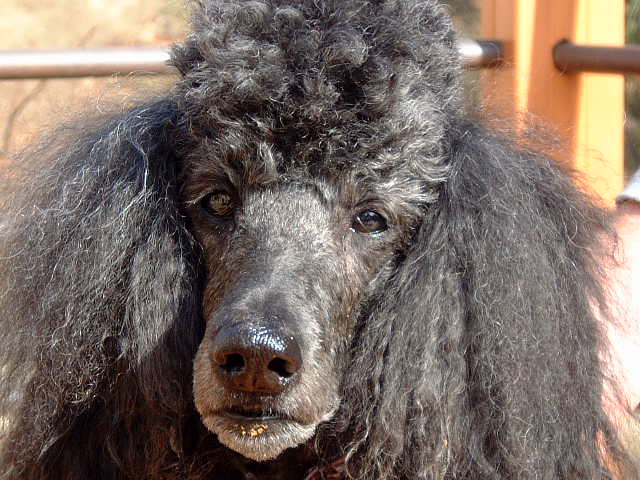

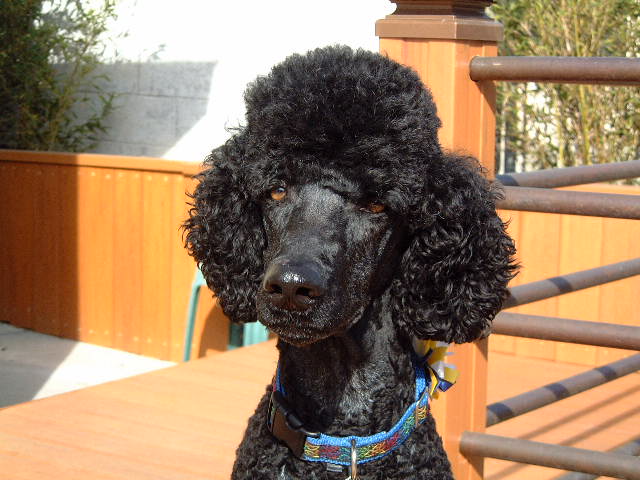
And finally there is the four year old Strider AKA Aragorn Elessar Son of Arathorn, Heir of Isildur and King of the Reunited Kingdom of the Dúnedain. Called by Gandalf 'the greatest traveller and huntsman in this age of the world', AKA Strides.
On the Wild Side at Moorooduc Estate (Mornington Peninsula, Victoria, Australia)
Continuing with our December 2005 visit to Mornington Peninsula and its wineries.
All the hospitality we received at Stonier Wines left us with only a small amount of time to make our 1pm lunch reservation at Jill's at Moorooduc Estate. I’d set up the lunch reservation and some wine tasting with Kate McIntyre, daughter of Moorooduc Estate owners Richard and Jill McIntyre. In one of her emails Kate had written “Give us a call if you have any problems finding us!”
That was, of course, well before we had even boarded the plane to Oz, let alone actually being in the process of motoring down Frankston Road after leaving Stonier. “OK, so we just turn left onto Balnarring Road and then right onto Derril Road.” That sounds simple. And as long as you don’t drive past Derril Road, it is! Once you go past Foxys Road you will be able to figure it – Derril Road is behind you. Have I mentioned the narrow roads yet? Or the undulations that hide oncoming cars? Thought not. How about Derils Road being dirt. No? Oh well, never mind. The drive past Devilbend Reservoir has a calming influence. More importantly Moorooduc Estate is worth the effort.
We actually arrived slightly early and so dropped into the tasting room to see if we could find Kate before heading to Jill’s restaurant for lunch. “Is Kate McIntyre about?” “Oh you must be her American visitors. I think she’s in the main building.” She was indeed, and she wasn’t alone. Samwise and Pedro were with her, and while they turned out to be a little more cautious in their greeting than Kate we were very happy to meet them. Miranda was particularly happy; she hadn’t seen a Poodle for at least two days.
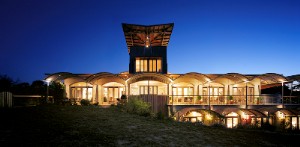 The main building at Moorooduc Estate is very impressive, certainly the most beautiful of the wineries we visited on the Peninsula. Its rammed earth construction is both rustic and modern, and most certainly spacious. Jill’s, their restaurant, overlooks vineyards and the Moorooduc Valley. My first impression of Moorooduc wines was the 2001 The Moorooduc Pinot Noir (French oak) that I had with lunch. Cherry red in color with an orange tinged edge, my glass gave waves and waves of spicy Pinot Noir notes over stewed quince and an appealing earthy, meaty bouquet. Medium to full bodied it was beautifully soft and supple with a backbone of juicy acidity and very fine tannins supporting a lengthy finish. 2, 2, 4.5, 10.3 = 18.8/20, 94/100. It was a brilliant accompaniment to the excellent food served at Jill’s. Moorrooduc also offers accommodation for those who might want to spend some quality time among the vines and away from everything else.
Similar to many Mornington Peninsula wineries Moorooduc Estate is a relative newcomer. It was founded in 1982. The vineyards total about 12 acres and are in a warmer and more elevated area than Stonier. Production is relatively small, about 2,500 to 3,000 cases per year. What is unique to Moorooduc is that the wines are fermented using yeasts present in the vineyards. Wild yeast fermentation was begun in 1996 at Moorooduc and within five years (2001 vintage) all the Estate wines were being produced using wild yeast fermentation. The yeast strains have not been identified and so it is not known if the same strains are active in the annual fermentations, or indeed if the yeasts are truly wild; they may have originated from commercial yeast used in the earliest vintages. In any case wild fermentation is a clear sign that Richard McIntyre has considerable confidence in his abilities as a winemaker.
Moorooduc Estate makes three levels of wine, all of which will be under screwcap with the 2004 vintage. The Devil Bend wines are made with fruit sourced from viticulturally different parts of Mornington Peninsula. The Estate wines reflect the Moorooduc subregion and include fruit from the Estate’s Derril Road vineyard. The top of the line are the wines labeled The Moorooduc. Sourced from the best of the Derril Road fruit, these wines are made in very limited quantities.
My notes are in the order the wines were tasted. First up was the 2004 Pinot Gris (Screwcap) (French oak). Light straw yellow in color it gave a fresh, yeasty aroma backed up by lemon and anise. Those flavors as well as some herbaceousness carry onto the palate. The feel of the wine in the mouth is soft and round (malolactic?). It’s a fruit driven wine that gives the impression of slight sweetness. There is nice length to the finish. 2, 2, 3.6, 9.8 = 17.4/20, 87/100. 14% alcohol. Next was the 2002 Devils Bend Creek Chardonnay (French oak). Light straw yellow in color, I detected a slight reductive character. Pleasant fruit without great complexity. Appealingly soft in the mouth (from malolactic fermentation), there is just a touch of oak evident. 2, 2, 3.6, 9.8 = 17.4/20, 87/100. 13.5% alcohol. The 2003 Moorooduc Estate Chardonnay (French oak – 35% new) (100% barrel ferment) was light straw in color with opulent aromatics. Its a mouth pleasing wine with no sharp edges, impressive balance and a lengthy finish. 2, 2, 4.1, 10.2 = 18.3/20, 92/100. 13.5% alcohol. Surprisingly I found the 2003 The Moorooduc Chardonnay (French Oak – 40% new) only (very) slightly better than its little sister at this stage of its life. Others will certainly disagree with my assessment. But I found this light straw yellow wine just a little too influenced by oak characters at present. But its quality is clearly evident once the wine hits your mouth. Wonderfully soft and graceful on the palate, beautifully balanced and with great length to the finish, it is a wine that will take 3 to 5 years to show its real class. 2, 2, 4.0, 10.4 = 18.4/20, 92/100.
The first of the red wines tasted was the 2003 Devils Bend Creek Pinot Noir (French oak – 10% or less new oak). Light cherry with pink edge. Very nice spicy Pinot Noir character with notes of stewed quince, strawberry, and just a little nail polish. Medium to full bodied with juicy acidity and excellent presence of flavors on the palate. 2, 2, 3.9, 9.8 = 17.7/20, 88/100. 14% alcohol. The 2003 Moorooduc Estate Pinot Noir (French Oak) is light cherry with pink edge. At this stage more restrained than the Devils Bend Pinot with notes of pepper and sawdust. This wine really comes alive in the mouth with a burst of spiciness. Excellent mouthfeel, nice balance, and great length to the finish mark a very attractive wine. 2, 2, 4.0, 10.0= 18.0, 90/100. 14% alcohol. The top of the line 2003 The Moorooduc Pinot Noir (Screwcap) (French Oak) is light cherry with pink edge in color. Beautiful complex savoury earth notes backed up by slight pepper over spicy Pinot. Simply excellent. Medium to full bodied it is soft and supple in the mouth with excellent presence of flavors on the palate, and juicy acidity to the end of the lengthy finish. 2, 2, 4.4, 10.2 = 18.6/20, 93/100. 14% alcohol.
The 2004 Moorooduc Shiraz (Screwcap) (French Oak) (Not released at time of tasting) was cherry red with pink edge. Pleasantly complex with black pepper turning to a slight herbaceousness. There are also bright dark fruits notes that evolve into attractive jammy characters. Nice mouthfeel with excellent carry of flavors onto the palate. Impressive balance with the juicy acidity marrying well with firm but not overdone astringency. 2, 2, 4.1, 10.1 = 18.2/20, 91/100. 14% alcohol. Next was the 2000 Moorooduc Cabernet Sauvignon (French Oak) (80% Cabernet Sauvignon, rest Merlot and Cabernet Franc). Light cherry red with a faint orange tinge to the edge to indicate some age. The aromas come in waves of spearmint and menthol over cedar. In the mouth its medium bodied but soft, almost Pinot Noir-like, as it caresses the palate. Nice carry of flavors onto the palate. Not great cabernet, but an interesting attempt. 2, 2, 3.8, 9.8 = 17.6/20, 88/100. 13% alcohol. Last was the 2001 Moorooduc Shiraz (French Oak). Cherry red with very faint orange tinge to the edge. Very attractive cool climate pepper and savory notes with just a touch of nail polish. To most Barossa Shiraz drinkers this wine will probably seem thin but for me there was a softness and elegance that was both appealing and distinctive. 2, 2, 4.1, 10.2 = 18.3/20, 92/100. 13.5% alcohol.
It is unlikely that much Moorooduc wine ever finds its way to the USA, the production is simply too small. So as we were leaving I purchased a mixed 6-pack to savor during the rest of our visit downunder. After our goodbyes to Kate, Samwise and Pedro, we headed off in the direction of Port Phillip Estate. I’ve already said that you need a really good map to find wineries in Mornington Peninsula, haven’t I?
Disclaimer: In the interests of full disclosure I have to note that our meal at Jill’s was provided gratis by Kate McIntyre.
Continuing with our December 2005 visit to Mornington Peninsula and its wineries.
All the hospitality we received at Stonier Wines left us with only a small amount of time to make our 1pm lunch reservation at Jill's at Moorooduc Estate. I’d set up the lunch reservation and some wine tasting with Kate McIntyre, daughter of Moorooduc Estate owners Richard and Jill McIntyre. In one of her emails Kate had written “Give us a call if you have any problems finding us!”
That was, of course, well before we had even boarded the plane to Oz, let alone actually being in the process of motoring down Frankston Road after leaving Stonier. “OK, so we just turn left onto Balnarring Road and then right onto Derril Road.” That sounds simple. And as long as you don’t drive past Derril Road, it is! Once you go past Foxys Road you will be able to figure it – Derril Road is behind you. Have I mentioned the narrow roads yet? Or the undulations that hide oncoming cars? Thought not. How about Derils Road being dirt. No? Oh well, never mind. The drive past Devilbend Reservoir has a calming influence. More importantly Moorooduc Estate is worth the effort.
We actually arrived slightly early and so dropped into the tasting room to see if we could find Kate before heading to Jill’s restaurant for lunch. “Is Kate McIntyre about?” “Oh you must be her American visitors. I think she’s in the main building.” She was indeed, and she wasn’t alone. Samwise and Pedro were with her, and while they turned out to be a little more cautious in their greeting than Kate we were very happy to meet them. Miranda was particularly happy; she hadn’t seen a Poodle for at least two days.
 The main building at Moorooduc Estate is very impressive, certainly the most beautiful of the wineries we visited on the Peninsula. Its rammed earth construction is both rustic and modern, and most certainly spacious. Jill’s, their restaurant, overlooks vineyards and the Moorooduc Valley. My first impression of Moorooduc wines was the 2001 The Moorooduc Pinot Noir (French oak) that I had with lunch. Cherry red in color with an orange tinged edge, my glass gave waves and waves of spicy Pinot Noir notes over stewed quince and an appealing earthy, meaty bouquet. Medium to full bodied it was beautifully soft and supple with a backbone of juicy acidity and very fine tannins supporting a lengthy finish. 2, 2, 4.5, 10.3 = 18.8/20, 94/100. It was a brilliant accompaniment to the excellent food served at Jill’s. Moorrooduc also offers accommodation for those who might want to spend some quality time among the vines and away from everything else.
Similar to many Mornington Peninsula wineries Moorooduc Estate is a relative newcomer. It was founded in 1982. The vineyards total about 12 acres and are in a warmer and more elevated area than Stonier. Production is relatively small, about 2,500 to 3,000 cases per year. What is unique to Moorooduc is that the wines are fermented using yeasts present in the vineyards. Wild yeast fermentation was begun in 1996 at Moorooduc and within five years (2001 vintage) all the Estate wines were being produced using wild yeast fermentation. The yeast strains have not been identified and so it is not known if the same strains are active in the annual fermentations, or indeed if the yeasts are truly wild; they may have originated from commercial yeast used in the earliest vintages. In any case wild fermentation is a clear sign that Richard McIntyre has considerable confidence in his abilities as a winemaker.
Moorooduc Estate makes three levels of wine, all of which will be under screwcap with the 2004 vintage. The Devil Bend wines are made with fruit sourced from viticulturally different parts of Mornington Peninsula. The Estate wines reflect the Moorooduc subregion and include fruit from the Estate’s Derril Road vineyard. The top of the line are the wines labeled The Moorooduc. Sourced from the best of the Derril Road fruit, these wines are made in very limited quantities.
My notes are in the order the wines were tasted. First up was the 2004 Pinot Gris (Screwcap) (French oak). Light straw yellow in color it gave a fresh, yeasty aroma backed up by lemon and anise. Those flavors as well as some herbaceousness carry onto the palate. The feel of the wine in the mouth is soft and round (malolactic?). It’s a fruit driven wine that gives the impression of slight sweetness. There is nice length to the finish. 2, 2, 3.6, 9.8 = 17.4/20, 87/100. 14% alcohol. Next was the 2002 Devils Bend Creek Chardonnay (French oak). Light straw yellow in color, I detected a slight reductive character. Pleasant fruit without great complexity. Appealingly soft in the mouth (from malolactic fermentation), there is just a touch of oak evident. 2, 2, 3.6, 9.8 = 17.4/20, 87/100. 13.5% alcohol. The 2003 Moorooduc Estate Chardonnay (French oak – 35% new) (100% barrel ferment) was light straw in color with opulent aromatics. Its a mouth pleasing wine with no sharp edges, impressive balance and a lengthy finish. 2, 2, 4.1, 10.2 = 18.3/20, 92/100. 13.5% alcohol. Surprisingly I found the 2003 The Moorooduc Chardonnay (French Oak – 40% new) only (very) slightly better than its little sister at this stage of its life. Others will certainly disagree with my assessment. But I found this light straw yellow wine just a little too influenced by oak characters at present. But its quality is clearly evident once the wine hits your mouth. Wonderfully soft and graceful on the palate, beautifully balanced and with great length to the finish, it is a wine that will take 3 to 5 years to show its real class. 2, 2, 4.0, 10.4 = 18.4/20, 92/100.
The first of the red wines tasted was the 2003 Devils Bend Creek Pinot Noir (French oak – 10% or less new oak). Light cherry with pink edge. Very nice spicy Pinot Noir character with notes of stewed quince, strawberry, and just a little nail polish. Medium to full bodied with juicy acidity and excellent presence of flavors on the palate. 2, 2, 3.9, 9.8 = 17.7/20, 88/100. 14% alcohol. The 2003 Moorooduc Estate Pinot Noir (French Oak) is light cherry with pink edge. At this stage more restrained than the Devils Bend Pinot with notes of pepper and sawdust. This wine really comes alive in the mouth with a burst of spiciness. Excellent mouthfeel, nice balance, and great length to the finish mark a very attractive wine. 2, 2, 4.0, 10.0= 18.0, 90/100. 14% alcohol. The top of the line 2003 The Moorooduc Pinot Noir (Screwcap) (French Oak) is light cherry with pink edge in color. Beautiful complex savoury earth notes backed up by slight pepper over spicy Pinot. Simply excellent. Medium to full bodied it is soft and supple in the mouth with excellent presence of flavors on the palate, and juicy acidity to the end of the lengthy finish. 2, 2, 4.4, 10.2 = 18.6/20, 93/100. 14% alcohol.
The 2004 Moorooduc Shiraz (Screwcap) (French Oak) (Not released at time of tasting) was cherry red with pink edge. Pleasantly complex with black pepper turning to a slight herbaceousness. There are also bright dark fruits notes that evolve into attractive jammy characters. Nice mouthfeel with excellent carry of flavors onto the palate. Impressive balance with the juicy acidity marrying well with firm but not overdone astringency. 2, 2, 4.1, 10.1 = 18.2/20, 91/100. 14% alcohol. Next was the 2000 Moorooduc Cabernet Sauvignon (French Oak) (80% Cabernet Sauvignon, rest Merlot and Cabernet Franc). Light cherry red with a faint orange tinge to the edge to indicate some age. The aromas come in waves of spearmint and menthol over cedar. In the mouth its medium bodied but soft, almost Pinot Noir-like, as it caresses the palate. Nice carry of flavors onto the palate. Not great cabernet, but an interesting attempt. 2, 2, 3.8, 9.8 = 17.6/20, 88/100. 13% alcohol. Last was the 2001 Moorooduc Shiraz (French Oak). Cherry red with very faint orange tinge to the edge. Very attractive cool climate pepper and savory notes with just a touch of nail polish. To most Barossa Shiraz drinkers this wine will probably seem thin but for me there was a softness and elegance that was both appealing and distinctive. 2, 2, 4.1, 10.2 = 18.3/20, 92/100. 13.5% alcohol.
It is unlikely that much Moorooduc wine ever finds its way to the USA, the production is simply too small. So as we were leaving I purchased a mixed 6-pack to savor during the rest of our visit downunder. After our goodbyes to Kate, Samwise and Pedro, we headed off in the direction of Port Phillip Estate. I’ve already said that you need a really good map to find wineries in Mornington Peninsula, haven’t I?
Disclaimer: In the interests of full disclosure I have to note that our meal at Jill’s was provided gratis by Kate McIntyre.
Tuesday, January 24, 2006
Naked Wine – Not another wine movie!
Wine movies are really going down hill if this little gem is the future.
I quite like the concept of viewers being able to participate in the plot, choose alternate endings and even have friends help solve the mystery. And the prize, a personal wine tasting hosted by the winemaker, could be an interesting experience. As advertising the project is quite innovative, but the soap-opera acting was too much for me.
Wine movies are really going down hill if this little gem is the future.
I quite like the concept of viewers being able to participate in the plot, choose alternate endings and even have friends help solve the mystery. And the prize, a personal wine tasting hosted by the winemaker, could be an interesting experience. As advertising the project is quite innovative, but the soap-opera acting was too much for me.
Monday, January 23, 2006
Oh Those Naughty Scientists, Can’t They Just Let Us Enjoy Life!
Recent articles on a study of how cheese influences sensory assessment of wine have resulted in a flurry of comments on wine boards worldwide. And as I can’t resist the temptation to comment on some of them I will be devoting a future post to the subject. But right now I want to comment on another piece of research that is sure to generate its own share of inspired criticisms.
A study published online in the British Medical Journal (BMJ) on January 20, 2006 has concluded that “Wine buyers made more purchases of healthy food items than people who buy beer.” Why is this important? Well a number of studies have shown differential effects of beer and wine consumption on morbidity and mortality. The resulting hypothesis suggested that components other than ethanol may be responsible. However studies have also found that wine drinkers have a healthier diet than beer or spirit drinkers. This suggests that variation in diet associated with the preferred drink may explain the beneficial effect of wine drinking on health. A complicating factor in many lifestyle studies is that self reporting may influence the study outcome. For example there may be under or over reporting depending upon how study subjects think their answers may be perceived. A group of Danish investigators has attempted to exclude self reporting by comparing the relationship between beer and/or wine purchases against food purchased at the same time. They examined some 3.5 million transactions chosen at random from 98 outlets of two large Danish supermarket chains over a six month period (September 2002 to February 2003). Their results?
“Wine buyers bought more olives, fruit and vegetables, poultry, cooking oil, and low fat cheese, milk, and meat than beer buyers. Beer buyers bought more ready cooked dishes, sugar, cold cuts, chips, pork, butter or margarine, sausages, lamb, and soft drinks than wine buyers.”
Sausages and lamb are favorites of beer drinkers! This has got to be a sham. I drink very little beer but I’ll eat lamb and sausages whenever I can. I’ll even eat lamb sausages. Of course that’s not what the study shows. It simply indicates that those who purchased beer (and presumably consumed it) are more likely to purchase certain food items. And as the investigators are quick to point out the results are by no means conclusive as there are a number of strengths and weaknesses in their study. What they have done is add a little more information to our understanding of what may explain the health effects of alcohol consumption.
The final paragraph of their paper, read from my point of view as a scientist, indicates just how much more work needs to be done before we can explain the health effects of wine. But I’ll bet there are a lot of beer drinkers out there who won’t see it that way.
“Possible explanation of the health benefits of drinking wine.
The additional beneficial effect of drinking wine, rather than other alcoholic drinks, on mortality and morbidity from coronary heart disease and certain cancers may be due to specific substances in wine or to different characteristics of people who drink other types of alcohol. Drinking habits - how much alcohol is ingested, whether alcohol is consumed with food, and which type of alcohol is consumed - probably depend on social and cultural factors, lifestyle, and diet. Wine tends to be drunk with meals, in modest amounts, which may have metabolic advantages; in contrast, spirits are often consumed at times other than mealtime. In Denmark wine drinkers have a higher level of education, higher income, better psychological functioning, and better subjective health than people who do not drink wine. Similar results have been found in a Californian population: people who prefer wine tend to be educated, healthy, lean, young or middle aged women with a moderate alcohol intake, whereas those who prefer beer tend to be less educated, healthy young men with a higher alcohol intake. Thus, the influence of type of alcoholic drink on mortality could be due to insufficient adjustment for lifestyle factors such as diet, drinking patterns, smoking, physical activity, education, or income.” Food buying habits of people who buy wine or beer: cross sectional Study. Ditte Johansen, Karina Friis, Erik Skovenborg, Morten Grønbæk BMJ, doi:10.1136/bmj.38694.568981.80 (published 20 January 2006).
Recent articles on a study of how cheese influences sensory assessment of wine have resulted in a flurry of comments on wine boards worldwide. And as I can’t resist the temptation to comment on some of them I will be devoting a future post to the subject. But right now I want to comment on another piece of research that is sure to generate its own share of inspired criticisms.
A study published online in the British Medical Journal (BMJ) on January 20, 2006 has concluded that “Wine buyers made more purchases of healthy food items than people who buy beer.” Why is this important? Well a number of studies have shown differential effects of beer and wine consumption on morbidity and mortality. The resulting hypothesis suggested that components other than ethanol may be responsible. However studies have also found that wine drinkers have a healthier diet than beer or spirit drinkers. This suggests that variation in diet associated with the preferred drink may explain the beneficial effect of wine drinking on health. A complicating factor in many lifestyle studies is that self reporting may influence the study outcome. For example there may be under or over reporting depending upon how study subjects think their answers may be perceived. A group of Danish investigators has attempted to exclude self reporting by comparing the relationship between beer and/or wine purchases against food purchased at the same time. They examined some 3.5 million transactions chosen at random from 98 outlets of two large Danish supermarket chains over a six month period (September 2002 to February 2003). Their results?
“Wine buyers bought more olives, fruit and vegetables, poultry, cooking oil, and low fat cheese, milk, and meat than beer buyers. Beer buyers bought more ready cooked dishes, sugar, cold cuts, chips, pork, butter or margarine, sausages, lamb, and soft drinks than wine buyers.”
Sausages and lamb are favorites of beer drinkers! This has got to be a sham. I drink very little beer but I’ll eat lamb and sausages whenever I can. I’ll even eat lamb sausages. Of course that’s not what the study shows. It simply indicates that those who purchased beer (and presumably consumed it) are more likely to purchase certain food items. And as the investigators are quick to point out the results are by no means conclusive as there are a number of strengths and weaknesses in their study. What they have done is add a little more information to our understanding of what may explain the health effects of alcohol consumption.
The final paragraph of their paper, read from my point of view as a scientist, indicates just how much more work needs to be done before we can explain the health effects of wine. But I’ll bet there are a lot of beer drinkers out there who won’t see it that way.
“Possible explanation of the health benefits of drinking wine.
The additional beneficial effect of drinking wine, rather than other alcoholic drinks, on mortality and morbidity from coronary heart disease and certain cancers may be due to specific substances in wine or to different characteristics of people who drink other types of alcohol. Drinking habits - how much alcohol is ingested, whether alcohol is consumed with food, and which type of alcohol is consumed - probably depend on social and cultural factors, lifestyle, and diet. Wine tends to be drunk with meals, in modest amounts, which may have metabolic advantages; in contrast, spirits are often consumed at times other than mealtime. In Denmark wine drinkers have a higher level of education, higher income, better psychological functioning, and better subjective health than people who do not drink wine. Similar results have been found in a Californian population: people who prefer wine tend to be educated, healthy, lean, young or middle aged women with a moderate alcohol intake, whereas those who prefer beer tend to be less educated, healthy young men with a higher alcohol intake. Thus, the influence of type of alcoholic drink on mortality could be due to insufficient adjustment for lifestyle factors such as diet, drinking patterns, smoking, physical activity, education, or income.” Food buying habits of people who buy wine or beer: cross sectional Study. Ditte Johansen, Karina Friis, Erik Skovenborg, Morten Grønbæk BMJ, doi:10.1136/bmj.38694.568981.80 (published 20 January 2006).
Saturday, January 21, 2006
Big Gun Burgundy from 2002 and 2003
First Third Thursday Tasting for 2006 at Vintage Wines of San Diego. Held on January 19th, 2006 6:30pm.
These tastings are conducted using a single blind format with the wines poured several hours before. My tasting notes are in the order the wines were served
1) 2002 Charlopin, Cote de Nuits ($NA USD)
Light cherry red with a faint tinge of orange/brown (lightest colored wine in the group). Nice clean Pinot Noir character, with spices and just a touch of ripe banana. A light bodied, pleasant wine with nice balance across the palate, finishing with considerable acidity. 2, 2, 4.2, 9.6 = 17.8/20, 89/100.
2) 2002 Guy Dufouleur, Nuits St Georges Clos des Perrieres ($44.99USD)
Light cherry with a faint tinge of orange/brown. Initially closed with only faint note of spices, opening to dried earth, leather, and ripe banana. Light body (almost thin) with sharp acidity and mouth drying tannins. Leather and rotten apple flavors on the palate. 2, 2, 3.8, 9.6 = 17.4/20, 87.
3) 2003 Louis Jadot, Gevrey Chambertin Les Petite Chapelle ($61.99USD)
Light cherry red with pink edge. Smells of earth, dusty oak, violets and spice. Additional aromas of pepper, smoke and tea developed during the tasting. Medium weight with excellent balance and very firm tannins. Very appealing. 2, 2, 4.0, 10.3 = 18.3/20, 92/100.
4) 2002 Joseph Roty, Gevrey Chambertin Les Fontenys ($77.99USD)
Light cherry red with pink edge. Very open with excellent ripe Pinot characters. Soft entry with great presence of flavors on the palate; although the occasional hint of a vegetal character was a bit worrying.. Very well balanced with attractive juicy acidity and excellent length to the finish. 2, 2, 4.2, 10.4 = 18.4/20, 92/100.
5) 2003 Louis Jadot, Latricieres-Chambertin ($129.99USD)
Light cherry fed with pink edge. Slightly closed with spices and pepper and then dried tea leaves. Medium weight. Soft and supple with excellent balance and nice length to the finish. 2, 2, 4.1, 10.3 = 18.4/, 92/100.
6) 2003 Frederic Esmonin, Chambertin Clos de Beze ($89.99USD)
Light cherry red with a faint tinge of orange/brown to the edge. Nice Pinot Noir aromas. Very earthy and spicy. Medium weight with a soft and supple entry and firm tannins. Beautifully balanced with wonderful mouthfeel. Excellent carry of flavors onto the palate. Although the aromas tended to close down with time, this is a very, very nice wine. 2, 2, 4.2, 19.5 = 18.7/20, 94/100.
7) 2002 Xavier Liger-Belair, Clos Vougeot ($89.99USD)
Light cherry red with pink edge. Slightly closed, giving up smells of dusty oak, earth and mushrooms. Medium weight with a super soft (elegant) caress on the palate backed up by attractive juicy acidity. Nicely structured, well balance wine. 2, 2, 3.9, 10.1 = 18.0/20, 90/100.
8) 2002 Xavier Liger-Belair, Richebourg ($174.99USD)
Light cherry red with faint brownish tinge to the edge. Graphite, licorice and ripe banana turning to spices. Medium weight with soft entry followed by moth drying astringency and bright acidity. Well balanced with nice expression of flavors across the palate. 2, 2, 4.0, 10.2 = 18.2/20, 91/100.
9) 2003 Faiveley, Corton Clos des Corton ($119.99USD)
Dark cherry red with red edge, clearly the most extracted color of allthe wines. Uncharacteristic of Pinot Noir with rich, deep aromas of cocoa, plumb and smoke turning to fruit cake and coconut. This is powerful stuff. Full bodied with overwhelming astringency on the palate and nice bright acidity just struggling to the surface on a finish that fades. Almost too aggressive to assess, and will need decades to soften. 2, 2, 4.2, 9.6 = 17.8/20, 89/100.
Before the identities were revealed votes for the top three wines were taken. The top scoring wine was the 2003 Louis Jadot, Latricieres-Chambertin, followed by the 2002 Joseph Roty, Gevrey Chambertin Les Fontenys, and then came the 2002 Xavier Liger-Belair, Clos Vougeot. I scored the 2003 Frederic Esmonin, Chambertin Clos de Beze as the top wine followed by the 2003 Louis Jadot, Latricieres-Chambertin and then the 2002 Joseph Roty, Gevrey Chambertin Les Fontenys.
After a couple of hours of nursing the wines (and stealing pours from glasses at seats that were unoccupied) the Esmonin began to shut down. So I may have been a bit too generous in scoring it, but it has a wonderful mouthfeel that completely seduced me. I thought it the surprise of the night. Well at least a pleasant surprise, the real surprise was the Faiveley. I’ve never had one before and I’m certainly only ever likely to taste them in the future under this format as I’m pretty sure they have more longevity than I do. The one staff member at Vintage Wines who has experience with more mature examples is of the opinion that you really shouldn’t look at the wine for between one to decades.
Given my recent experiences its reasonable to ask how these wines compare with Pinot from the Mornington Peninsula of Victoria, Australia. Once I’ve put up the notes on all those wines you will probably be able to decide for yourself. And it would certainly be instructive to taste them side-by-side because the differences should be obvious. The Aussies tend to be more forward and appealing in their spicy aromas but usually lack the depth and complexity of the Burgundies on the palate. I’d certainly prefer the Aussies (something like The Moorooduc) with a few years of bottle age, but they are unlikely to last the distance of decades. Although, as we will see Yabby Lake might be something to wait on.
First Third Thursday Tasting for 2006 at Vintage Wines of San Diego. Held on January 19th, 2006 6:30pm.
These tastings are conducted using a single blind format with the wines poured several hours before. My tasting notes are in the order the wines were served
1) 2002 Charlopin, Cote de Nuits ($NA USD)
Light cherry red with a faint tinge of orange/brown (lightest colored wine in the group). Nice clean Pinot Noir character, with spices and just a touch of ripe banana. A light bodied, pleasant wine with nice balance across the palate, finishing with considerable acidity. 2, 2, 4.2, 9.6 = 17.8/20, 89/100.
2) 2002 Guy Dufouleur, Nuits St Georges Clos des Perrieres ($44.99USD)
Light cherry with a faint tinge of orange/brown. Initially closed with only faint note of spices, opening to dried earth, leather, and ripe banana. Light body (almost thin) with sharp acidity and mouth drying tannins. Leather and rotten apple flavors on the palate. 2, 2, 3.8, 9.6 = 17.4/20, 87.
3) 2003 Louis Jadot, Gevrey Chambertin Les Petite Chapelle ($61.99USD)
Light cherry red with pink edge. Smells of earth, dusty oak, violets and spice. Additional aromas of pepper, smoke and tea developed during the tasting. Medium weight with excellent balance and very firm tannins. Very appealing. 2, 2, 4.0, 10.3 = 18.3/20, 92/100.
4) 2002 Joseph Roty, Gevrey Chambertin Les Fontenys ($77.99USD)
Light cherry red with pink edge. Very open with excellent ripe Pinot characters. Soft entry with great presence of flavors on the palate; although the occasional hint of a vegetal character was a bit worrying.. Very well balanced with attractive juicy acidity and excellent length to the finish. 2, 2, 4.2, 10.4 = 18.4/20, 92/100.
5) 2003 Louis Jadot, Latricieres-Chambertin ($129.99USD)
Light cherry fed with pink edge. Slightly closed with spices and pepper and then dried tea leaves. Medium weight. Soft and supple with excellent balance and nice length to the finish. 2, 2, 4.1, 10.3 = 18.4/, 92/100.
6) 2003 Frederic Esmonin, Chambertin Clos de Beze ($89.99USD)
Light cherry red with a faint tinge of orange/brown to the edge. Nice Pinot Noir aromas. Very earthy and spicy. Medium weight with a soft and supple entry and firm tannins. Beautifully balanced with wonderful mouthfeel. Excellent carry of flavors onto the palate. Although the aromas tended to close down with time, this is a very, very nice wine. 2, 2, 4.2, 19.5 = 18.7/20, 94/100.
7) 2002 Xavier Liger-Belair, Clos Vougeot ($89.99USD)
Light cherry red with pink edge. Slightly closed, giving up smells of dusty oak, earth and mushrooms. Medium weight with a super soft (elegant) caress on the palate backed up by attractive juicy acidity. Nicely structured, well balance wine. 2, 2, 3.9, 10.1 = 18.0/20, 90/100.
8) 2002 Xavier Liger-Belair, Richebourg ($174.99USD)
Light cherry red with faint brownish tinge to the edge. Graphite, licorice and ripe banana turning to spices. Medium weight with soft entry followed by moth drying astringency and bright acidity. Well balanced with nice expression of flavors across the palate. 2, 2, 4.0, 10.2 = 18.2/20, 91/100.
9) 2003 Faiveley, Corton Clos des Corton ($119.99USD)
Dark cherry red with red edge, clearly the most extracted color of allthe wines. Uncharacteristic of Pinot Noir with rich, deep aromas of cocoa, plumb and smoke turning to fruit cake and coconut. This is powerful stuff. Full bodied with overwhelming astringency on the palate and nice bright acidity just struggling to the surface on a finish that fades. Almost too aggressive to assess, and will need decades to soften. 2, 2, 4.2, 9.6 = 17.8/20, 89/100.
Before the identities were revealed votes for the top three wines were taken. The top scoring wine was the 2003 Louis Jadot, Latricieres-Chambertin, followed by the 2002 Joseph Roty, Gevrey Chambertin Les Fontenys, and then came the 2002 Xavier Liger-Belair, Clos Vougeot. I scored the 2003 Frederic Esmonin, Chambertin Clos de Beze as the top wine followed by the 2003 Louis Jadot, Latricieres-Chambertin and then the 2002 Joseph Roty, Gevrey Chambertin Les Fontenys.
After a couple of hours of nursing the wines (and stealing pours from glasses at seats that were unoccupied) the Esmonin began to shut down. So I may have been a bit too generous in scoring it, but it has a wonderful mouthfeel that completely seduced me. I thought it the surprise of the night. Well at least a pleasant surprise, the real surprise was the Faiveley. I’ve never had one before and I’m certainly only ever likely to taste them in the future under this format as I’m pretty sure they have more longevity than I do. The one staff member at Vintage Wines who has experience with more mature examples is of the opinion that you really shouldn’t look at the wine for between one to decades.
Given my recent experiences its reasonable to ask how these wines compare with Pinot from the Mornington Peninsula of Victoria, Australia. Once I’ve put up the notes on all those wines you will probably be able to decide for yourself. And it would certainly be instructive to taste them side-by-side because the differences should be obvious. The Aussies tend to be more forward and appealing in their spicy aromas but usually lack the depth and complexity of the Burgundies on the palate. I’d certainly prefer the Aussies (something like The Moorooduc) with a few years of bottle age, but they are unlikely to last the distance of decades. Although, as we will see Yabby Lake might be something to wait on.
Thursday, January 19, 2006
Wine and Cheese - Not a Match
I just love this stuff! There is so much dogma associated with wine appreciation, very little of which is supported by peer reviewed research. A report in the New Scientist comments on the dogma breaking work of Bernice Madrigal-Galan and Hildegarde Heymann of the University of California at Davis. Madrigal-Galan and Heymann had trained wine tasters evaluate the strength of various flavors and aromas in cheap and expensive versions of four different varieties of wine either alone and when preceded by eight different cheeses. The result was that the cheese suppressed many flavors, including berry and oak, and taste and tactile perception of sourness and astringency. “Heymann suggests that proteins in the cheese may bind to flavour molecules in the wine, or that fat from the cheese may coat the mouth, deadening the tasters' perception of the wines' flavours.” The research will appear online in March in the American Journal of Enology and Viticulture.
While most of us appreciate that wine and food can be a great mix, a little thought should make anyone realize that adding additional flavors, like food, into tasting a wine will affect the perception of what is actually in the bottle. I'm off to a big gun Burgundy tasting tonight – I wonder if they will serve any cheese? I’ll have to take a copy of this along. Oh yes, there will be a lot of huffing and puffing about it. EDIT: Why am I not surprised that the huffing and puffing has started already?
Thanks to Dave at Vinosense for posting a commentary on the Scotsman.com link to this research.
I just love this stuff! There is so much dogma associated with wine appreciation, very little of which is supported by peer reviewed research. A report in the New Scientist comments on the dogma breaking work of Bernice Madrigal-Galan and Hildegarde Heymann of the University of California at Davis. Madrigal-Galan and Heymann had trained wine tasters evaluate the strength of various flavors and aromas in cheap and expensive versions of four different varieties of wine either alone and when preceded by eight different cheeses. The result was that the cheese suppressed many flavors, including berry and oak, and taste and tactile perception of sourness and astringency. “Heymann suggests that proteins in the cheese may bind to flavour molecules in the wine, or that fat from the cheese may coat the mouth, deadening the tasters' perception of the wines' flavours.” The research will appear online in March in the American Journal of Enology and Viticulture.
While most of us appreciate that wine and food can be a great mix, a little thought should make anyone realize that adding additional flavors, like food, into tasting a wine will affect the perception of what is actually in the bottle. I'm off to a big gun Burgundy tasting tonight – I wonder if they will serve any cheese? I’ll have to take a copy of this along. Oh yes, there will be a lot of huffing and puffing about it. EDIT: Why am I not surprised that the huffing and puffing has started already?
Thanks to Dave at Vinosense for posting a commentary on the Scotsman.com link to this research.
Monday, January 16, 2006
Stonier Wines (Mornington Peninsula, Victoria, Australia)
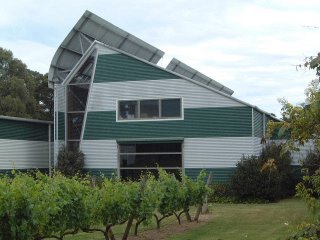 The good thing about finding Merricks General Store and a welcome cup of coffee was that we were on time for the opening of Stonier Wines. The emails between me and the people at Stonier had been a little confusing and so I wasn’t too sure what the welcome would be. But I had finally emailed them that we would arrive at 11am. Once Miranda started talking the young lady behind the tasting counter asked if we were the “American visitors”? Well yes I had sent some emails some time back, so I guess we are. She poured us a little bubbly and went to get the weekend manager, Noella Thornton. Have I said how helpful Australian wine folk are? Not rude, not pushy, not trying to force their idea of their wines down your throat. Noella let us taste through the line-up and then, with a glass of what we preferred in hand, she showed us the winery and barrel room and provided a great amount of information. Much more than I could note down, but here is some of it.
Described (in their own advertising) as “Chardonnay and Pinot Noir Specialists” Stonier was established in 1978 by the Stonier Family. History has it that Brian Stonier purchased acreage at Merricks because he wanted to plant Champagne vines to make wine for his daughter’s wedding. A rather inauspicious start for the winery considered by James Halliday to be “the pre-eminent winery in the Mornington Peninsula”.
A working winery was opened in 1991 and the barrel room was built in 2000. During those years Stonier was sold to Petaluma, and then adsorbed into the Lion Nathan Group in 2001. Stonier currently makes 30,000 cases of wine with about 15% being exported. The biggest overseas market is the UK; the wines are not distributed in the USA. The current winemaker is Geraldine McFaul who began working full time in 1997. The grapes come from between 150-200 acres of vineyards of the Mornington Peninsula as well the vineyards at Stonier.
Unfortunately we did not get to taste any of the single vineyard Pinots but the wines we did taste were impressive although a little restrained. This probably hints more at the influence of Burgundy on the winemaker. The 2004 Chardonnay (French Oak) (Screwcap) $23AUD, was light straw yellow in color with herbal/fruity notes and nice clean bright acidity. Well structured with the soft roundness of malolactic fermentation. 2, 2, 3.8, 10.2 = 18.0/20, 90/100. 13.5% alcohol. (80% barrel fermented, 20% stainless steel). The 2003 Reserve Chardonnay (Cork) (French Oak, 30% new) $39AUD, was another light straw yellow wine but had more buttery and yeasty flavors over smokey oak. On the palate is was again more aromatic with notes of citrus and peach. It has nice clean, bright acidity, and is well structured. 2, 2, 4.1, 10.1 = 18.2/20, 91/100. 14% alcohol. (100% barrel fermented). The top of the line 2003 KBS Chardonnay (Cork) (French Oak) $55AUD, is a single vineyard wine. Light straw yellow in color it gave muted notes of lemon and nuts. There is nice bright acidity and toasted oak, but the wine is still a little too tight and will need some time to open. 2, 2, 3.8, 10.2 = 18.0/20, 90/100. 14% alcohol. Fruit was whole bunch pressed, and fermented in 75% new Vosges oak.
The entry level 2004 Pinot Noir (Screwcap) (French oak) $24AUD, was light cherry in color with a pink edge. Very spicy with dusty oak. Light to medium bodied with a soft, silky entry and excellent carry of flavors onto the palate. The acidity is a little sharp. Austere is a good description for this wine. 2, 2, 4.1, 9.6, = 17.7/20, 89/100. 13.5% alcohol. Malolactic fermentation allowed in barrel. Next was the 2004 Reserve Pinot Noir (Screwcap) (French oak - 30% new oak, rest 1-2 year old.) $45AUD. Light cherry in color with a lighter edge. This wine has pure Pinot Noir character, with notes of smoky oak. It is marred by a slight bitterness. Light to medium bodied, it has a soft and appealing mouthfeel, nice length and balance with nicely handled oak. Another austere wine. 2, 2, 3.9, 9.8 = 17.7/20, 89/100. 13.5% alcohol. Malolactic fermentation allowed in barrel. The last wine we tasted was the 2001 Cabernet Sauvignon (Cork) (French Oak) $19AUD. This is the last vintage of Cabernet made by Stonier. Light in color with notes of menthol, cedar and anise it is medium bodied with good mouthfeel, and firm tannins. The flavors carry well onto the palate, but the structure is not impressive. 2, 2, 3.6, 9.5 = 17.1/20, 85/100. 13% alcohol.
Having never tasted anything from Stonier before I came away quite impressed with their wines. In general they are a little too high in acidity for my palate. But they certainly represent a more austere style that is a good counterpoint to the fruit laden, high alcohol wines from warmer regions of Australia.
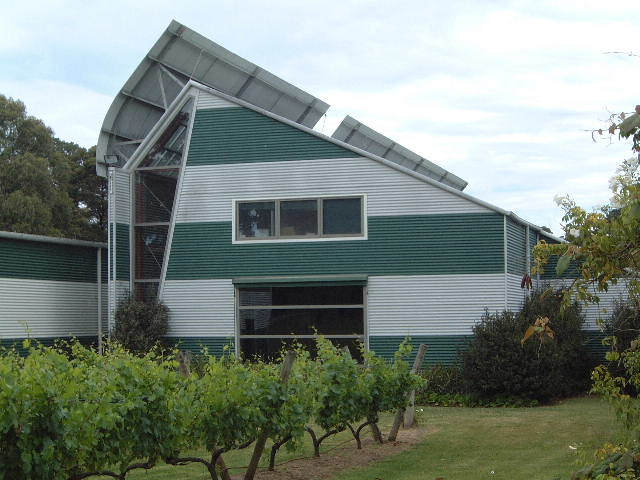 The good thing about finding Merricks General Store and a welcome cup of coffee was that we were on time for the opening of Stonier Wines. The emails between me and the people at Stonier had been a little confusing and so I wasn’t too sure what the welcome would be. But I had finally emailed them that we would arrive at 11am. Once Miranda started talking the young lady behind the tasting counter asked if we were the “American visitors”? Well yes I had sent some emails some time back, so I guess we are. She poured us a little bubbly and went to get the weekend manager, Noella Thornton. Have I said how helpful Australian wine folk are? Not rude, not pushy, not trying to force their idea of their wines down your throat. Noella let us taste through the line-up and then, with a glass of what we preferred in hand, she showed us the winery and barrel room and provided a great amount of information. Much more than I could note down, but here is some of it.
Described (in their own advertising) as “Chardonnay and Pinot Noir Specialists” Stonier was established in 1978 by the Stonier Family. History has it that Brian Stonier purchased acreage at Merricks because he wanted to plant Champagne vines to make wine for his daughter’s wedding. A rather inauspicious start for the winery considered by James Halliday to be “the pre-eminent winery in the Mornington Peninsula”.
A working winery was opened in 1991 and the barrel room was built in 2000. During those years Stonier was sold to Petaluma, and then adsorbed into the Lion Nathan Group in 2001. Stonier currently makes 30,000 cases of wine with about 15% being exported. The biggest overseas market is the UK; the wines are not distributed in the USA. The current winemaker is Geraldine McFaul who began working full time in 1997. The grapes come from between 150-200 acres of vineyards of the Mornington Peninsula as well the vineyards at Stonier.
Unfortunately we did not get to taste any of the single vineyard Pinots but the wines we did taste were impressive although a little restrained. This probably hints more at the influence of Burgundy on the winemaker. The 2004 Chardonnay (French Oak) (Screwcap) $23AUD, was light straw yellow in color with herbal/fruity notes and nice clean bright acidity. Well structured with the soft roundness of malolactic fermentation. 2, 2, 3.8, 10.2 = 18.0/20, 90/100. 13.5% alcohol. (80% barrel fermented, 20% stainless steel). The 2003 Reserve Chardonnay (Cork) (French Oak, 30% new) $39AUD, was another light straw yellow wine but had more buttery and yeasty flavors over smokey oak. On the palate is was again more aromatic with notes of citrus and peach. It has nice clean, bright acidity, and is well structured. 2, 2, 4.1, 10.1 = 18.2/20, 91/100. 14% alcohol. (100% barrel fermented). The top of the line 2003 KBS Chardonnay (Cork) (French Oak) $55AUD, is a single vineyard wine. Light straw yellow in color it gave muted notes of lemon and nuts. There is nice bright acidity and toasted oak, but the wine is still a little too tight and will need some time to open. 2, 2, 3.8, 10.2 = 18.0/20, 90/100. 14% alcohol. Fruit was whole bunch pressed, and fermented in 75% new Vosges oak.
The entry level 2004 Pinot Noir (Screwcap) (French oak) $24AUD, was light cherry in color with a pink edge. Very spicy with dusty oak. Light to medium bodied with a soft, silky entry and excellent carry of flavors onto the palate. The acidity is a little sharp. Austere is a good description for this wine. 2, 2, 4.1, 9.6, = 17.7/20, 89/100. 13.5% alcohol. Malolactic fermentation allowed in barrel. Next was the 2004 Reserve Pinot Noir (Screwcap) (French oak - 30% new oak, rest 1-2 year old.) $45AUD. Light cherry in color with a lighter edge. This wine has pure Pinot Noir character, with notes of smoky oak. It is marred by a slight bitterness. Light to medium bodied, it has a soft and appealing mouthfeel, nice length and balance with nicely handled oak. Another austere wine. 2, 2, 3.9, 9.8 = 17.7/20, 89/100. 13.5% alcohol. Malolactic fermentation allowed in barrel. The last wine we tasted was the 2001 Cabernet Sauvignon (Cork) (French Oak) $19AUD. This is the last vintage of Cabernet made by Stonier. Light in color with notes of menthol, cedar and anise it is medium bodied with good mouthfeel, and firm tannins. The flavors carry well onto the palate, but the structure is not impressive. 2, 2, 3.6, 9.5 = 17.1/20, 85/100. 13% alcohol.
Having never tasted anything from Stonier before I came away quite impressed with their wines. In general they are a little too high in acidity for my palate. But they certainly represent a more austere style that is a good counterpoint to the fruit laden, high alcohol wines from warmer regions of Australia.
Sunday, January 15, 2006
Short Guide to Visiting Wineries of Mornington Peninsula, Victoria
It shouldn’t be difficult to get to a specific Mornington Peninsula winery, after all its almost too easy to get to the Peninsula from Melbourne. The Nepean Highway will take you right there. But how do you locate individual wineries? All the tourist guides we obtained from the airport and hotel as well as on the MPVA site are almost completely useless in terms of detailed maps; the Mornington Peninsula Vignerons Association does print a map but its the same one as on their site. If you are going to be looking for specific wineries then make a list of their addresses from the MPVA site and get yourself a good street map; fortunately our hire car had one. Your first stop should probably be the Merricks General Store, but not for wine tasting. Most wineries, if they take visitors, open at 11am, so the Merricks General Store is a great place to find for a late breakfast and a read of the newspaper. I spent most of my time trying to figure out just where our first winery of the day was located. We had been trying to find it, Miranda being literally covered in tourist maps, when we happened on the MGS. Coffee, croissants and directions time!
I had planned this trip from California which had meant emails to wineries that I thought would provide a good overview of the Pinot Noir made in the area. As I had only started to take a serious interest in wine in the mid-1970s and had then left for the USA in 1982 I had missed all of the progress that had occurred. Plus Mornington Peninsula wines are virtually unknown in the USA. So I relied heavily on an article in the June/July 2005 issue of Gourmet Traveller WINE magazine to select the Pinot producers. Most of the wineries contacted were very helpful, with several going above and beyond my requirements. There were a few who did not reply, and I thought it prudent not to annoy them any further by visiting.
Our first winery was to be Stonier Wines. But where was it? It wasn’t until we walked out of the MGS that we figured it out. The entrance to Stonier Wines was less than 100 feet away. In other words next door! OK, that’s the first one down. This is easy. Wrong!
It shouldn’t be difficult to get to a specific Mornington Peninsula winery, after all its almost too easy to get to the Peninsula from Melbourne. The Nepean Highway will take you right there. But how do you locate individual wineries? All the tourist guides we obtained from the airport and hotel as well as on the MPVA site are almost completely useless in terms of detailed maps; the Mornington Peninsula Vignerons Association does print a map but its the same one as on their site. If you are going to be looking for specific wineries then make a list of their addresses from the MPVA site and get yourself a good street map; fortunately our hire car had one. Your first stop should probably be the Merricks General Store, but not for wine tasting. Most wineries, if they take visitors, open at 11am, so the Merricks General Store is a great place to find for a late breakfast and a read of the newspaper. I spent most of my time trying to figure out just where our first winery of the day was located. We had been trying to find it, Miranda being literally covered in tourist maps, when we happened on the MGS. Coffee, croissants and directions time!
I had planned this trip from California which had meant emails to wineries that I thought would provide a good overview of the Pinot Noir made in the area. As I had only started to take a serious interest in wine in the mid-1970s and had then left for the USA in 1982 I had missed all of the progress that had occurred. Plus Mornington Peninsula wines are virtually unknown in the USA. So I relied heavily on an article in the June/July 2005 issue of Gourmet Traveller WINE magazine to select the Pinot producers. Most of the wineries contacted were very helpful, with several going above and beyond my requirements. There were a few who did not reply, and I thought it prudent not to annoy them any further by visiting.
Our first winery was to be Stonier Wines. But where was it? It wasn’t until we walked out of the MGS that we figured it out. The entrance to Stonier Wines was less than 100 feet away. In other words next door! OK, that’s the first one down. This is easy. Wrong!
Thursday, January 05, 2006
The Vineyards and Wines of Mornington Peninsula – A Short History?
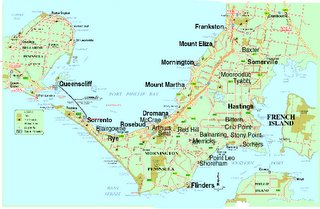 The importance of Victoria’s Mornington Peninsula to the history of wine in Australia may seen quite insignificant. After all the region does not rate a mention in the indexes of W S Benwell’s Journey to Wine in Victoria or David Dunstan’s Better than Pommard: A History of Wine in Victoria. But like many regions near the capital cities of most states of Australia there is a long association with vines and wines. Dunstan notes on page 73 that at a meeting of the Melbourne Vine Grower’s Association in August 1867 wines were exhibited from Dromana. However the modern era of wine history of the Morington Peninsula began in the 1950’s when experimental planting were made at, where else, Dromana. This small planting was purchased by the brother-in-law of wine merchant Doug Seabrook, and Seabrook experimented with plantings of Rhine Riesling until the vineyard was destroyed by bushfire in 1967 (see John Beeston, A Concise History of Australian Wine). In the 1970’s business man Baillieu Myer planted cabernet and riesling at the family property Elgee Park. Myer was followed by Nat White who planted at Main Ridge in 1975, and the Kefford’s planted Merricks North in 1976 (see John Beeston, The Wine regions of Australia).
The Mornington Peninsula wine region is about 60 km south and south east of Melbourne (see map). The region has a maritime climate which is heavily influenced by the wet and windy weather of Bass Strait. Altitude ranges from sea level to 250 meters. These features produce cool climate vineyard country with grape ripening depending upon both altitude and wind exposure. The most successful varieties are Chardonnay and Pinot Noir. However Shiraz has been successful in the warmer areas. Cabernet has been produced but has fallen from favor. Pinot Gris is thought to have a future on the Peninsula.
 The importance of Victoria’s Mornington Peninsula to the history of wine in Australia may seen quite insignificant. After all the region does not rate a mention in the indexes of W S Benwell’s Journey to Wine in Victoria or David Dunstan’s Better than Pommard: A History of Wine in Victoria. But like many regions near the capital cities of most states of Australia there is a long association with vines and wines. Dunstan notes on page 73 that at a meeting of the Melbourne Vine Grower’s Association in August 1867 wines were exhibited from Dromana. However the modern era of wine history of the Morington Peninsula began in the 1950’s when experimental planting were made at, where else, Dromana. This small planting was purchased by the brother-in-law of wine merchant Doug Seabrook, and Seabrook experimented with plantings of Rhine Riesling until the vineyard was destroyed by bushfire in 1967 (see John Beeston, A Concise History of Australian Wine). In the 1970’s business man Baillieu Myer planted cabernet and riesling at the family property Elgee Park. Myer was followed by Nat White who planted at Main Ridge in 1975, and the Kefford’s planted Merricks North in 1976 (see John Beeston, The Wine regions of Australia).
The Mornington Peninsula wine region is about 60 km south and south east of Melbourne (see map). The region has a maritime climate which is heavily influenced by the wet and windy weather of Bass Strait. Altitude ranges from sea level to 250 meters. These features produce cool climate vineyard country with grape ripening depending upon both altitude and wind exposure. The most successful varieties are Chardonnay and Pinot Noir. However Shiraz has been successful in the warmer areas. Cabernet has been produced but has fallen from favor. Pinot Gris is thought to have a future on the Peninsula.
Wednesday, January 04, 2006
Blogging Downunder 2005
As I’ve noted in a previous post Miranda and I visited Australia in December, 2005. These annual excursions to Oz are a combination of work and vacation but always include a visit to nearby wine regions. In future posts I’ll be detailing all the wine related activities that were part of the trip. The first series of posts will be on the wineries visited on the Mornington Peninsula of Victoria. There will be separate posts (with tasting notes) on Stonier, Moorooduc, Port Phillip, Kooyong, and Paringa. I’ll also be posting on our meeting with Tod Dexter, the winemaker for Yabby Lake (Mornington Pen.) and Heathcote Estate. There will also be individual posts on our visits to several wineries/vineyards in the Barossa. This will include a visit to Seppeltsfield to taste their dessert wines, a very enjoyable visit to Dutschke Wines and the Lyndoch block party, and an equally enjoyable afternoon spent with David and Pam Cross of Winter Creek. To finish there will be some notes on the excellent wines tasted at an Offline in Sydney, and some comments on a few other intriguing wines that passed our lips.
As I’ve noted in a previous post Miranda and I visited Australia in December, 2005. These annual excursions to Oz are a combination of work and vacation but always include a visit to nearby wine regions. In future posts I’ll be detailing all the wine related activities that were part of the trip. The first series of posts will be on the wineries visited on the Mornington Peninsula of Victoria. There will be separate posts (with tasting notes) on Stonier, Moorooduc, Port Phillip, Kooyong, and Paringa. I’ll also be posting on our meeting with Tod Dexter, the winemaker for Yabby Lake (Mornington Pen.) and Heathcote Estate. There will also be individual posts on our visits to several wineries/vineyards in the Barossa. This will include a visit to Seppeltsfield to taste their dessert wines, a very enjoyable visit to Dutschke Wines and the Lyndoch block party, and an equally enjoyable afternoon spent with David and Pam Cross of Winter Creek. To finish there will be some notes on the excellent wines tasted at an Offline in Sydney, and some comments on a few other intriguing wines that passed our lips.
Wednesday, December 28, 2005
Aussie Shiraz and a Nobel Prize
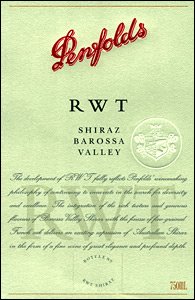 Its always cause for celebration when a Nobel Prize is won by Australian Scientists but the recent presentation of the 2005 prize for Physiology or Medicine to Professor Barry Marshall and Dr Robin Warren is of interest to this wine blog for several reasons. As Professor Staffan Normark said in the Presentation Speech of Marshall and Warren “Against prevailing dogmas, you discovered that one of the most common and important diseases of mankind, peptic ulcer disease, is caused by a bacterial infection of the stomach. Your discovery has meant that this frequently chronic and disabling condition can now be permanently cured by antibiotics to the benefit of millions of patients. Your pioneering work has also stimulated research all around the world to better understand the link between chronic infections and diseases such as cancer.”
I attended a scientific meeting in the mid-1980’s where data from the studies of Marshall and Warren was presented and I witnessed the dogma that was hurled at the idea that bacteria cause ulcers. It was not a pretty picture, certainly not a glowing indictment of the acceptance of innovative scientific investigation.
One other item stands out among the celebrations following the award of the 2005 prize to Marshall and Warren – the menu. Three wines were served. The Pommery Grand Cru Vintage 1995 Champagne, Le Dauphin de Guiraud 2002 Sauternes, and Penfolds RWT 2001 Barossa Valley. An Aussie Shiraz gets to share the celebrations! I’m sure that would have added to the pleasure of the two prize winners.
To my knowledge this is the first time that an Australian wine has been served at a Nobel Banquet, and it ends up being a Shiraz.

 Its always cause for celebration when a Nobel Prize is won by Australian Scientists but the recent presentation of the 2005 prize for Physiology or Medicine to Professor Barry Marshall and Dr Robin Warren is of interest to this wine blog for several reasons. As Professor Staffan Normark said in the Presentation Speech of Marshall and Warren “Against prevailing dogmas, you discovered that one of the most common and important diseases of mankind, peptic ulcer disease, is caused by a bacterial infection of the stomach. Your discovery has meant that this frequently chronic and disabling condition can now be permanently cured by antibiotics to the benefit of millions of patients. Your pioneering work has also stimulated research all around the world to better understand the link between chronic infections and diseases such as cancer.”
I attended a scientific meeting in the mid-1980’s where data from the studies of Marshall and Warren was presented and I witnessed the dogma that was hurled at the idea that bacteria cause ulcers. It was not a pretty picture, certainly not a glowing indictment of the acceptance of innovative scientific investigation.
One other item stands out among the celebrations following the award of the 2005 prize to Marshall and Warren – the menu. Three wines were served. The Pommery Grand Cru Vintage 1995 Champagne, Le Dauphin de Guiraud 2002 Sauternes, and Penfolds RWT 2001 Barossa Valley. An Aussie Shiraz gets to share the celebrations! I’m sure that would have added to the pleasure of the two prize winners.
To my knowledge this is the first time that an Australian wine has been served at a Nobel Banquet, and it ends up being a Shiraz.
Tuesday, December 27, 2005
Happy Holidays
 I would like to wish all of our regular (and irregular) readers all the best for the Holiday Season and 2006. We returned from Australia just before Christmas but, just like in Australia, time for blogging seems to be out of my reach. However as the year winds down I will be posting on our trip downunder, some amazing wines and the equally impressive winemakers that craft them. There will be notes on wines from the Mornington Peninsula, Barossa Valley, and some very interesting wines consumed with meals both grand and simple.
 I would like to wish all of our regular (and irregular) readers all the best for the Holiday Season and 2006. We returned from Australia just before Christmas but, just like in Australia, time for blogging seems to be out of my reach. However as the year winds down I will be posting on our trip downunder, some amazing wines and the equally impressive winemakers that craft them. There will be notes on wines from the Mornington Peninsula, Barossa Valley, and some very interesting wines consumed with meals both grand and simple.
Wednesday, November 30, 2005
Downunder Bound
We are off to Australia on QANTAS Thursday night. First stop is Melbourne where I have to attend the Australasian Society of Immunology annual meeting. But before that starts in earnest we will take a trip out to the Mornington Peninsula to taste a few wines, mainly Pinot Noir. Visits are planned at Stonier Wines, Paringa Estate , Moorooduc Estate, Port Phillip Estate (and Kooyong) and then Dromana Estate. But Shiraz won’t be forgotten as we will be traveling to Adelaide late next week and have set up visits with Dutschke Wines and Winter Creek. We will probably drop in on a few other wineries as well, unannounced!
If things go as they have done in the past then my posts to Shiraz will be even more intermittent than usual as finding internet connections can be a problem. But this time I’m hoping to be able to add a few photos of our visit. I will also be posting personal diary-like notes to G'Day.
We are off to Australia on QANTAS Thursday night. First stop is Melbourne where I have to attend the Australasian Society of Immunology annual meeting. But before that starts in earnest we will take a trip out to the Mornington Peninsula to taste a few wines, mainly Pinot Noir. Visits are planned at Stonier Wines, Paringa Estate , Moorooduc Estate, Port Phillip Estate (and Kooyong) and then Dromana Estate. But Shiraz won’t be forgotten as we will be traveling to Adelaide late next week and have set up visits with Dutschke Wines and Winter Creek. We will probably drop in on a few other wineries as well, unannounced!
If things go as they have done in the past then my posts to Shiraz will be even more intermittent than usual as finding internet connections can be a problem. But this time I’m hoping to be able to add a few photos of our visit. I will also be posting personal diary-like notes to G'Day.
Wine Spectator 2005 Top 100
Another Top 100 wines of 2005 has hit my mailbox, this time it is from Wine Spectator. Their top wine is the 2002 Joseph Phelps Insignia from Napa. The 2002 Insignia is the wine that also came first in a recent tasting of Cabernet Sauvignon and blends held here in San Diego. Admittedly a much smaller tasting than the Wine Spectator has done over the last year, but it did show the quality of this wine.
But what about the most important wines? Well Australia had eleven wines in the top 100. Three were white wines (2 Chardonnay and 1 Riesling), with the remaining reds consisting of 1 Cabernet, 1 Grenache and 6 Shiraz. The listing is as follows
18 Thorn-Clarke Shiraz, Barossa Valley Shotfire Ridge 2003 $20USD (93 points)
21 Barossa Valley Estate Shiraz, Barossa Valley E&E Black Pepper 2002 $85USD (97 points)
28 Leeuwin Chardonnay, Margaret River Art Series 2002 $65USD (96 points)
32 Rosemount GSM, South Australia 2001 $30USD (93 points)
40 Two Hands Shiraz, Barossa Valley Bella’s Garden 2003 $55USD (94 points)
45 Wilson Riesling, Clare Valley Polish Hill River 2003 $19USD (92 points)
58 Greg Norman Estates Shiraz, Limestone Coast 2002 $16USD (90 points)
63 Forefathers Shiraz, McLaren Vale 2003 $23USD (91 points)
79 Evans & Tate Chardonnay, Margaret River 2004 $16USD (90 points)
87 Marquis Philips Cabernet Sauvignon, South Eastern Australia 2003 $18USD (90 points)
91 Mount Langi Ghiran Shiraz, Victoria Billi Billi 2002 $15USD (90 points)
Notice anything unusual about this list? Except for the Leeuwin and Barossa Valley Estate there is a complete absence of the upper echelon of Australian wines, particularly Shiraz. A rather poor showing when you consider that this is the first year that Syrah/Shiraz or a blend containing the variety has dominated the Wine Spectator Top 100.
It is true that a number of other Australian Shiraz scored as well or better than some of the wines listed here, but they were not included in the Top 100. The selection of the Wine Spectator Top 100 is based on four criteria: quality (as represented by score); value (as reflected by release price); availability (measured by case production, or for international wines, the number of cases imported); and an X-factor called excitement.
These criteria can really make a significant difference in how a wine rates. For example the 2003 Tim Smith Shiraz, Barossa Valley scored the same as the Two Hands Bella’s Garden. Being cheaper you would think that it should easily make the Top 100 but the few cases imported (52) are no match for the 1,200 cases of the Bella’s. Availability may also have played a role in the 2003 Nurihannam Shiraz Barossa Scholar (93 points, $18USD) not making the list while the Thorn-Clarke Shotfire Ridge did.
A really obvious absence from the Top 100 is the Dutschke 2002 St Jakobi Shiraz from the Barossa Valley. This wine received 94 points, costs $40USD and had 900 cases imported. Its better value and should be equally as available as the Two Hands Bella’s.
Another Top 100 wines of 2005 has hit my mailbox, this time it is from Wine Spectator. Their top wine is the 2002 Joseph Phelps Insignia from Napa. The 2002 Insignia is the wine that also came first in a recent tasting of Cabernet Sauvignon and blends held here in San Diego. Admittedly a much smaller tasting than the Wine Spectator has done over the last year, but it did show the quality of this wine.

But what about the most important wines? Well Australia had eleven wines in the top 100. Three were white wines (2 Chardonnay and 1 Riesling), with the remaining reds consisting of 1 Cabernet, 1 Grenache and 6 Shiraz. The listing is as follows
18 Thorn-Clarke Shiraz, Barossa Valley Shotfire Ridge 2003 $20USD (93 points)
21 Barossa Valley Estate Shiraz, Barossa Valley E&E Black Pepper 2002 $85USD (97 points)
28 Leeuwin Chardonnay, Margaret River Art Series 2002 $65USD (96 points)
32 Rosemount GSM, South Australia 2001 $30USD (93 points)
40 Two Hands Shiraz, Barossa Valley Bella’s Garden 2003 $55USD (94 points)
45 Wilson Riesling, Clare Valley Polish Hill River 2003 $19USD (92 points)
58 Greg Norman Estates Shiraz, Limestone Coast 2002 $16USD (90 points)
63 Forefathers Shiraz, McLaren Vale 2003 $23USD (91 points)
79 Evans & Tate Chardonnay, Margaret River 2004 $16USD (90 points)
87 Marquis Philips Cabernet Sauvignon, South Eastern Australia 2003 $18USD (90 points)
91 Mount Langi Ghiran Shiraz, Victoria Billi Billi 2002 $15USD (90 points)
Notice anything unusual about this list? Except for the Leeuwin and Barossa Valley Estate there is a complete absence of the upper echelon of Australian wines, particularly Shiraz. A rather poor showing when you consider that this is the first year that Syrah/Shiraz or a blend containing the variety has dominated the Wine Spectator Top 100.
It is true that a number of other Australian Shiraz scored as well or better than some of the wines listed here, but they were not included in the Top 100. The selection of the Wine Spectator Top 100 is based on four criteria: quality (as represented by score); value (as reflected by release price); availability (measured by case production, or for international wines, the number of cases imported); and an X-factor called excitement.
These criteria can really make a significant difference in how a wine rates. For example the 2003 Tim Smith Shiraz, Barossa Valley scored the same as the Two Hands Bella’s Garden. Being cheaper you would think that it should easily make the Top 100 but the few cases imported (52) are no match for the 1,200 cases of the Bella’s. Availability may also have played a role in the 2003 Nurihannam Shiraz Barossa Scholar (93 points, $18USD) not making the list while the Thorn-Clarke Shotfire Ridge did.
A really obvious absence from the Top 100 is the Dutschke 2002 St Jakobi Shiraz from the Barossa Valley. This wine received 94 points, costs $40USD and had 900 cases imported. Its better value and should be equally as available as the Two Hands Bella’s.
Monday, November 28, 2005
Halliday versus Parker and Kramer
 The 2005 Annual Wine Press Club of NSW Lecture was presented this year by wine commentator and author James Halliday. Mr Halliday discussed how wines commended and awarded in the Australian wine show system are in many cases quite different to those lauded by overseas critics.
Well at least that is how the Wine Press Club of NSW described the lecture. Reading through the speech (available as a PDF) you get the feeling that Halliday is hoping to defend Australian wines and wine judging in a forceful manner but his argument is flawed. Essentially Halliday uses Trophy results from the Sydney Royal Wine Show (2000 and 2005) to argue that 1) wine judges do not agree with Robert Parker on what constitutes Australia’s best wines, and 2) that Matt Kramer is wrong when he suggests that Australian wine styles are set by the big companies, and this is validated at wine shows where the big wine companies run fixed events.
There is considerable debate about the value of wine show results in Australia, but this is not something that is restricted to Australia. Only the naïve would believe that Trophy and medal winners have won against all comers; in truth many winemakers do not enter their wines. Wine show results should be viewed in the context of the wines that make up the competition, and the expertise of the judges.
So why aren’t Robert Parker’s favorite’s big winners at Australian wine shows? Halliday goes to some length to demonstrate that many of the wine regions not favored by Parker are the big winners, and that among red wines Cabernet Sauvignon, not Parker’s favorite Shiraz, wins most trophies. The relevant paragraphs are:
But what about the McLaren Vale, Langhorne Creek and the Barossa Valley? Five for
McLaren Vale and two each for Langhorne Creek and – amazingly for some – the Barossa Valley.
These three regions are overwhelmingly the birthplace of the monstrous red wines so
beloved of Robert Parker, yet they are also outranked by the Riverina (6), the King Valley (5), Orange (4) and the Grampians (4). Sorry, Mr Parker, whichever way you want to look at it, the Australian show judges profoundly disagree with you.
All would be well and truly explained, including Kramer’s assertions, if Halliday had left it at that but then he writes the following (on page 7)
At the same time, the composition of the judging panels goes a long way to explaining why Parkeresque wines seldom achieve any significant recognition. Under the Chairmanship of Brian Croser, there has been an emphatic instruction to all judges to reward wines with finesse and elegance, and to penalise over-ripe, over-extracted wines. I can assure you there will be no change of policy under my forthcoming Chairmanship.
Oops, I think someone just shot himself in the foot and then ever so adroitly stuffed it in his mouth! Of course Parker’s favorites are not going to be the favorites of the show judges if the deck is stacked in such a manner. Is this same emphatic instruction a reason why many wines are not exhibited? That would seem a reasonable explanation.
And what about Kramer’s criticsm? Well he was only slightly off target. Its not the big wine companies that set the wine styles its the chairmen of wine shows! And of course they don’t have an axe to grind do they?


 The 2005 Annual Wine Press Club of NSW Lecture was presented this year by wine commentator and author James Halliday. Mr Halliday discussed how wines commended and awarded in the Australian wine show system are in many cases quite different to those lauded by overseas critics.
Well at least that is how the Wine Press Club of NSW described the lecture. Reading through the speech (available as a PDF) you get the feeling that Halliday is hoping to defend Australian wines and wine judging in a forceful manner but his argument is flawed. Essentially Halliday uses Trophy results from the Sydney Royal Wine Show (2000 and 2005) to argue that 1) wine judges do not agree with Robert Parker on what constitutes Australia’s best wines, and 2) that Matt Kramer is wrong when he suggests that Australian wine styles are set by the big companies, and this is validated at wine shows where the big wine companies run fixed events.
There is considerable debate about the value of wine show results in Australia, but this is not something that is restricted to Australia. Only the naïve would believe that Trophy and medal winners have won against all comers; in truth many winemakers do not enter their wines. Wine show results should be viewed in the context of the wines that make up the competition, and the expertise of the judges.
So why aren’t Robert Parker’s favorite’s big winners at Australian wine shows? Halliday goes to some length to demonstrate that many of the wine regions not favored by Parker are the big winners, and that among red wines Cabernet Sauvignon, not Parker’s favorite Shiraz, wins most trophies. The relevant paragraphs are:
But what about the McLaren Vale, Langhorne Creek and the Barossa Valley? Five for
McLaren Vale and two each for Langhorne Creek and – amazingly for some – the Barossa Valley.
These three regions are overwhelmingly the birthplace of the monstrous red wines so
beloved of Robert Parker, yet they are also outranked by the Riverina (6), the King Valley (5), Orange (4) and the Grampians (4). Sorry, Mr Parker, whichever way you want to look at it, the Australian show judges profoundly disagree with you.
All would be well and truly explained, including Kramer’s assertions, if Halliday had left it at that but then he writes the following (on page 7)
At the same time, the composition of the judging panels goes a long way to explaining why Parkeresque wines seldom achieve any significant recognition. Under the Chairmanship of Brian Croser, there has been an emphatic instruction to all judges to reward wines with finesse and elegance, and to penalise over-ripe, over-extracted wines. I can assure you there will be no change of policy under my forthcoming Chairmanship.
Oops, I think someone just shot himself in the foot and then ever so adroitly stuffed it in his mouth! Of course Parker’s favorites are not going to be the favorites of the show judges if the deck is stacked in such a manner. Is this same emphatic instruction a reason why many wines are not exhibited? That would seem a reasonable explanation.
And what about Kramer’s criticsm? Well he was only slightly off target. Its not the big wine companies that set the wine styles its the chairmen of wine shows! And of course they don’t have an axe to grind do they?
James Halliday’s 2005 Top 100
Noted Australian wine critic James Halliday has released his list of the Top 100 Wines from Australia. The list, which is 101 strong, was chosen from a field of over 10,000 wines, although only 1233 had a chance of making it into the Top 100. What is interesting with the 2005 list is that preference was given to medium-bodied wines with alcohol level below 15%. Reading through the list it becomes quite obvious that this is not a list that you will see on wine store shelves in the USA. There are a few familiar faces like the Turkey Flat Shiraz 2003 (96 points) and the St Hallett Old Block Shiraz 2002 (96 points). But others like the Hewitson The Mad Hatter Shiraz 2003 (95 points) are not something I have seen. I’d also haven’t seen the Kooyong Meres Single Vineyard Pinot Noir 2003 (95 points) or the Paringa Estate Pinot Noir 2003 (96 points). But if things go as planned I will be doing so in a week or less when I visit Mornington Peninsula in Victoria.
Its instructive to red both the Introduction and the Conclusion penned by Halliday on this years’ Top 100. The former has a little jab at Robert Parker (or the Parker Factor), while the latter is pointed at critics who argue that Australia has no terroir – a small attempt to put Matt Kramer of the Wine Spectator in his place.
Noted Australian wine critic James Halliday has released his list of the Top 100 Wines from Australia. The list, which is 101 strong, was chosen from a field of over 10,000 wines, although only 1233 had a chance of making it into the Top 100. What is interesting with the 2005 list is that preference was given to medium-bodied wines with alcohol level below 15%. Reading through the list it becomes quite obvious that this is not a list that you will see on wine store shelves in the USA. There are a few familiar faces like the Turkey Flat Shiraz 2003 (96 points) and the St Hallett Old Block Shiraz 2002 (96 points). But others like the Hewitson The Mad Hatter Shiraz 2003 (95 points) are not something I have seen. I’d also haven’t seen the Kooyong Meres Single Vineyard Pinot Noir 2003 (95 points) or the Paringa Estate Pinot Noir 2003 (96 points). But if things go as planned I will be doing so in a week or less when I visit Mornington Peninsula in Victoria.
Its instructive to red both the Introduction and the Conclusion penned by Halliday on this years’ Top 100. The former has a little jab at Robert Parker (or the Parker Factor), while the latter is pointed at critics who argue that Australia has no terroir – a small attempt to put Matt Kramer of the Wine Spectator in his place.
Wednesday, November 23, 2005
What Does The Average Wine Drinker Pay For Australian Wine?
Its very instructive to consider what the average wine drinker pays for a bottle of Australian wine. In a presentation to the Australian Winegrape Conference on November 17, 2005 Jamie Odell, Managing Director, Foster's Wine Estates, provided data on the breakdown of consumer spending on Australian wine in the USA and the UK.
The vast majority, 89% to be precise, of Australian wine sold in the USA sells for $6-8 a bottle. Six percent of wine sales are for wine in the $4-6 range, another 3% cost $8-10 and 1% of wine sales account for bottles costing $10-15. While its not stated in the presentation I assume that the remaining 1% are for wines that cost more than $15 a bottle. The average price paid by the consumer in the USA is about $7 in 2005, but that has fallen from $8 in 2001. The overall price the American consumer pays for bottled wine was about $5 in 2005.
What about the UK? It’s a similar story. Twenty-six percent of sales are for wine costing less than 3 pounds, 40% cost 3-4 pound, 22% 4-5 pound and 8% 5-6 pound. That leaves 4% of sales costing more than 6 pound ($10.32USD).
Joe Public obviously likes his wine cheap. Is it possible to get consumers to pay more for their wines? Educating people to appreciate quality wine is the key. But growing the top end of the market (above $25 a bottle) to any significant degree will not be easy.
Its very instructive to consider what the average wine drinker pays for a bottle of Australian wine. In a presentation to the Australian Winegrape Conference on November 17, 2005 Jamie Odell, Managing Director, Foster's Wine Estates, provided data on the breakdown of consumer spending on Australian wine in the USA and the UK.
The vast majority, 89% to be precise, of Australian wine sold in the USA sells for $6-8 a bottle. Six percent of wine sales are for wine in the $4-6 range, another 3% cost $8-10 and 1% of wine sales account for bottles costing $10-15. While its not stated in the presentation I assume that the remaining 1% are for wines that cost more than $15 a bottle. The average price paid by the consumer in the USA is about $7 in 2005, but that has fallen from $8 in 2001. The overall price the American consumer pays for bottled wine was about $5 in 2005.
What about the UK? It’s a similar story. Twenty-six percent of sales are for wine costing less than 3 pounds, 40% cost 3-4 pound, 22% 4-5 pound and 8% 5-6 pound. That leaves 4% of sales costing more than 6 pound ($10.32USD).
Joe Public obviously likes his wine cheap. Is it possible to get consumers to pay more for their wines? Educating people to appreciate quality wine is the key. But growing the top end of the market (above $25 a bottle) to any significant degree will not be easy.
Wine Industry Outlook Conference to Stress the Need for a New Model for Australian Wine
 The 2005 Wine Industry Outlook Conference in Adelaide, South Australia will examine Creating The Competitive Advantage. The conference, to be held on Thursday November 24th, has set itself a lofty task.
It is timely for the Australian wine industry to examine its strategy for continued success. How competitive is the Australian wine industry across each price point in international markets? Are we in danger of being 'pigeon-holed' as makers of cheerful, consistent well priced wines at commercial prices only, or is this argument simply a smokescreen that ignores the success of Australian wine across all price points.
In any event, how can Australia expand its offering to capitalise on its broad consumer appeal but also offer opportunities for consumers to confidently trade up to super premium, ultra premium and icon wines. Since its inception in 1994 the Wine Industry Outlook Conference has set the agenda for winery executives, winemakers, marketers, strategists, stockbrokers, analysts and investors. The 2005 Outlook Conference will not only provide an invaluable update on industry supply and demand trends but change the way you think about your company as we look to the future.
The program will include eight talks. Two of the more interesting presentations are:
Noted winemaker Brian Croser’s talk, titled Wines of Distinction, will argue that Australia's premium wine producers must aspire higher, aim for greatness and use our natural advantages of ancient soils and varying microclimates to make the most distinguished, complex and sought after wines on earth.
Jamie Odell, Managing Director, Foster's Wine Estates, will discuss A Portfolio Approach: The Australian wine category has continued to grow well but value is trailing volume growth in key international markets. Developing the premium price point space for Australian wines is essential. Our whole portfolio will benefit if we are able to achieve valid recognition for our premium wines.
Croser has held his point of view for some time. Clearly the argument is to produce wines that will compete with the best from the rest of the world; which usually means Europe, especially France, and the USA. There is a significant problem in competing with Old World wines, and that is their ability to mature over decades. This is not the case for Australia. Very few top level Australian wines, especially those with the greatest popularity outside Australia, have been around for a decade or more. More importantly who defines the wines as great? Currently Robert Parker, Jr. holds sway over the fortunes of the greatest of the great – Bordeaux. He is an avowed Francophile and so is highly unlikely to ever place Australia above France.
Fortunately Parker is known for his love of Australian Shiraz, especially from South Australia. He does review more and more Australian wines every year but he is very consistent in rating less that 10% (usually around 6%) of the recommended wines as extraordinary (96 or more points). Fortunately over 40% of the recommended wines usually fall into the outstanding (90-95 more points) category. But Parker recommends less that 30-35% of the wines he tastes.
Given the above, one has to ask what Odell means by “valid recognition of our premium wines”. Does he want greater numbers of wine to be rated highly, or is their something else? There is an argument that wine critics, like Parker, appreciate a certain style of Australia wine. That style, called by some “sunshine-in-a-bottle”, by others “fruit bomb”, may have generated an unwelcome caricature of Australian wine, but it does not have to be a permanent negative. The real key to opening the markets necessary to expand the sales of “great” Australian wine is to educate the wine drinker. Those seeking the immediate gratification of sunshine-in-a-bottle need to be shown the delight that comes from letting the sun set, so that the wine can sleep, cast off its immaturity and awaken with the complexity that comes with age. And Australian wine makers need to have those wines available for the consumer to appreciate. A costly endeavor? Yes, but education of the masses is necessary if the market for expensive wine is to be grown
And this brings me to my final point. What definitions are being used to correlate price with quality? In the USA the range of wine levels and price points is approximately as follows: Value wines are those $3 and under, Standard wines (Everyday wines) are those priced between $3-$7 per 750ml, Premium wines are between $7-$15, Super-Premium wines are between $15-$25, Ultra-Premium wines are over $25. The recently released data from Constellation Wines USA Project Genome (sic) defined premium wine as wine costing $5 or more. Significantly 12% of the 3,500+ consumers questioned were defined as Enthusiasts, but 49% were not enthusiastic enough to have purchased a bottle for more that $15 in the past six months! This is one reason why [yellow tail] now sells a million cases a month in the USA. The average wine drinker does not see the value in spending money on “great” wine. They want to be able to drop by their local wine store or supermarket and pick up a bottle of pleasant wine that they can drink with dinner that night. Educating these folks to spend $50 on a bottle of wine that they will be advised to cellar for ten or more years is not going to be easy!
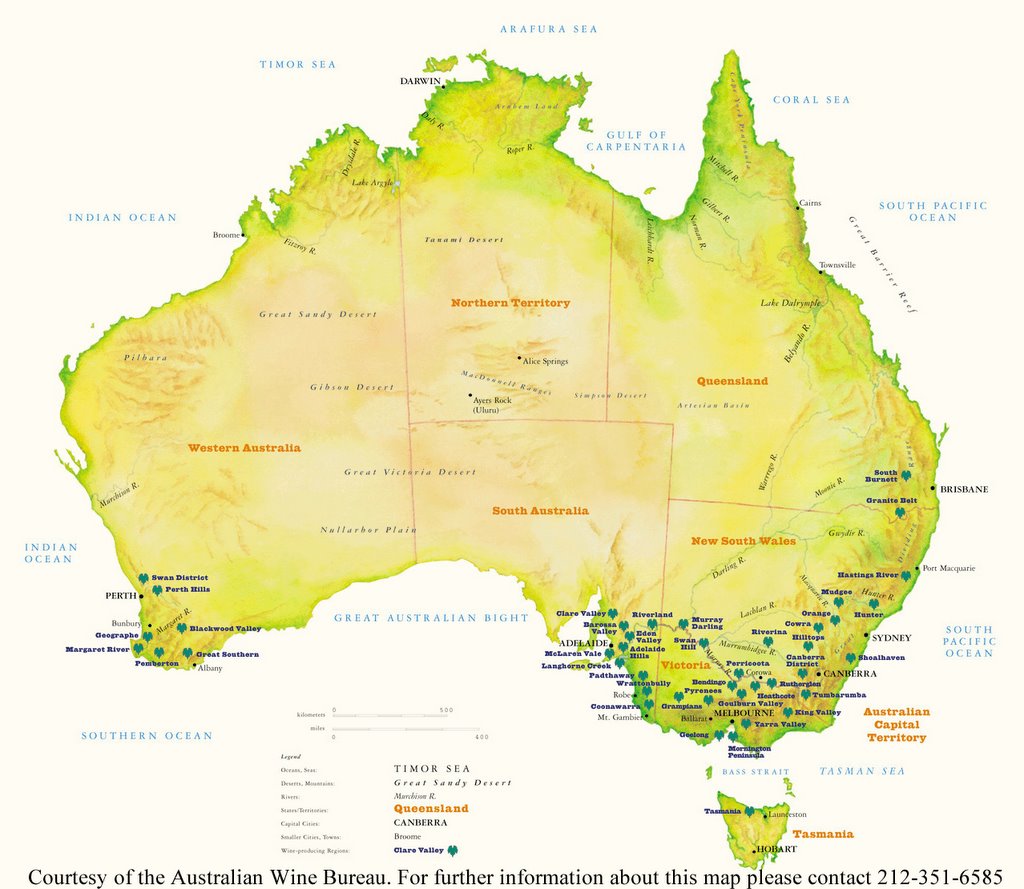 The 2005 Wine Industry Outlook Conference in Adelaide, South Australia will examine Creating The Competitive Advantage. The conference, to be held on Thursday November 24th, has set itself a lofty task.
It is timely for the Australian wine industry to examine its strategy for continued success. How competitive is the Australian wine industry across each price point in international markets? Are we in danger of being 'pigeon-holed' as makers of cheerful, consistent well priced wines at commercial prices only, or is this argument simply a smokescreen that ignores the success of Australian wine across all price points.
In any event, how can Australia expand its offering to capitalise on its broad consumer appeal but also offer opportunities for consumers to confidently trade up to super premium, ultra premium and icon wines. Since its inception in 1994 the Wine Industry Outlook Conference has set the agenda for winery executives, winemakers, marketers, strategists, stockbrokers, analysts and investors. The 2005 Outlook Conference will not only provide an invaluable update on industry supply and demand trends but change the way you think about your company as we look to the future.
The program will include eight talks. Two of the more interesting presentations are:
Noted winemaker Brian Croser’s talk, titled Wines of Distinction, will argue that Australia's premium wine producers must aspire higher, aim for greatness and use our natural advantages of ancient soils and varying microclimates to make the most distinguished, complex and sought after wines on earth.
Jamie Odell, Managing Director, Foster's Wine Estates, will discuss A Portfolio Approach: The Australian wine category has continued to grow well but value is trailing volume growth in key international markets. Developing the premium price point space for Australian wines is essential. Our whole portfolio will benefit if we are able to achieve valid recognition for our premium wines.
Croser has held his point of view for some time. Clearly the argument is to produce wines that will compete with the best from the rest of the world; which usually means Europe, especially France, and the USA. There is a significant problem in competing with Old World wines, and that is their ability to mature over decades. This is not the case for Australia. Very few top level Australian wines, especially those with the greatest popularity outside Australia, have been around for a decade or more. More importantly who defines the wines as great? Currently Robert Parker, Jr. holds sway over the fortunes of the greatest of the great – Bordeaux. He is an avowed Francophile and so is highly unlikely to ever place Australia above France.
Fortunately Parker is known for his love of Australian Shiraz, especially from South Australia. He does review more and more Australian wines every year but he is very consistent in rating less that 10% (usually around 6%) of the recommended wines as extraordinary (96 or more points). Fortunately over 40% of the recommended wines usually fall into the outstanding (90-95 more points) category. But Parker recommends less that 30-35% of the wines he tastes.
Given the above, one has to ask what Odell means by “valid recognition of our premium wines”. Does he want greater numbers of wine to be rated highly, or is their something else? There is an argument that wine critics, like Parker, appreciate a certain style of Australia wine. That style, called by some “sunshine-in-a-bottle”, by others “fruit bomb”, may have generated an unwelcome caricature of Australian wine, but it does not have to be a permanent negative. The real key to opening the markets necessary to expand the sales of “great” Australian wine is to educate the wine drinker. Those seeking the immediate gratification of sunshine-in-a-bottle need to be shown the delight that comes from letting the sun set, so that the wine can sleep, cast off its immaturity and awaken with the complexity that comes with age. And Australian wine makers need to have those wines available for the consumer to appreciate. A costly endeavor? Yes, but education of the masses is necessary if the market for expensive wine is to be grown
And this brings me to my final point. What definitions are being used to correlate price with quality? In the USA the range of wine levels and price points is approximately as follows: Value wines are those $3 and under, Standard wines (Everyday wines) are those priced between $3-$7 per 750ml, Premium wines are between $7-$15, Super-Premium wines are between $15-$25, Ultra-Premium wines are over $25. The recently released data from Constellation Wines USA Project Genome (sic) defined premium wine as wine costing $5 or more. Significantly 12% of the 3,500+ consumers questioned were defined as Enthusiasts, but 49% were not enthusiastic enough to have purchased a bottle for more that $15 in the past six months! This is one reason why [yellow tail] now sells a million cases a month in the USA. The average wine drinker does not see the value in spending money on “great” wine. They want to be able to drop by their local wine store or supermarket and pick up a bottle of pleasant wine that they can drink with dinner that night. Educating these folks to spend $50 on a bottle of wine that they will be advised to cellar for ten or more years is not going to be easy!
Monday, November 21, 2005
The Clarendon Hills Tasting (or Finding an American Syrah)
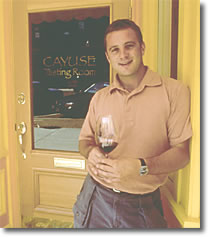 The Saturday $5 tasting at the local wine shop was supposed to be Argentinean wines, but as I was told by the shop owner last week there was a change and they would be pouring Clarendon Hills wines. This is the McLaren Vale winery that Robert Parker regularly anoints with overwhelming admiration. Parker’s publication, The Wine Advocate, has allocated a specific review to Australian wines in issues No. 143, 148, 155, and 161. The Clarendon Hills single vineyard wines have been reviewed in each of those issues and very few of the recommended wines have scored below 90 pints. The praise both for the wines and the winemaker has been effusive ; Roman Bratasiuk is one of Planet Earth’s greatest winemakers, Robert Parker, Wine Advocate #155 (Oct 2004).
My first experience with Clarendon Hills was on March 15, 1997. That tasting was of eight different Australian wines, and included two Clarendon Hills wines; the 1995 Clarendon Hills Grenache Old Vines Clarendon Vineyard, and the 1995 Shiraz. At that tasting I had rated the Clarendon Hills wines highly putting the Grenache in second place, in front of the Shiraz but both behind the 1992 Seppelt’s Dorian Cabernet. In recent years (i.e. after beginning the Shiraz eBlog ) I have only tasted the Moritz and the Liandra Syrah, both from the 2002 vintage. Each wine had a fried tomato (or tomato paste) character that I found unattractive. But even with my experience of those 2002’s the chance to taste through close to $300USD worth of wine for $5 was too good an opportunity to pass up.
The wines were poured and described by David Turcan (National Account Rep for Commonwealth Wine and Spirits, Inc. of Mansfield Massachusetts). David was quite knowledgeable about the Clarendon Hills wines. He even knew that Shiraz reached Australia in the 1820’s, although he wasn’t sure exactly how; the first importation of Shiraz vines was most likely by John Macarthur.
The wines had been decanted about 90 minutes before the tasting began and were not poured blinded, unfortunately.
2003 Blewitt Springs Grenache $47.99USD
Cherry red with very faint orange tinge. Smoke, licorice and cherry are the dominant aromas. Medium to full bodied with an attractive licorice note to the palate. Soft and smooth in the mouth with very good balance. Firm tannins precede the lengthy finish. 2, 2, 4.1, 10.0 = 18.1/20, 90/100. 14.5% alcohol.
2003 Kangarilla Grenache $47.99USD
Cherry red with red edge. Pronounced pepper, faint tomato paste and pleasant aromatic character that became licorice with time. Full bodied with a soft and supple mouthfeel and fine tannins. Very well balanced wine. 2, 2, 4.0, 10.2 = 18.2/20, 91/100. 14.5% alcohol.
2003 Brookman Merlot $51.99USD
Cherry red with faint orange tinge. More restrained with oak, tomaoto paste, faint anise and cedar; I could easily have been convinced that this wine contained some Cabernet. Full bodied with a soft and supple entry, very fine tannins and with an excellent carry of flavors onto the palate and the lengthy finish. 2, 2, 4.0, 10.2 = 18.2/20, 91/100. 14.5% alcohol.
2003 Sandown Cabernet Sauvignon $55.99USD
Dense cherry red with a red edge with just a faint tinge of orange. Clearly evident tomato paste with pepper, dusty oak (almost sandalwood) and underlying complex aromatic aromas. Again a soft and supple entry but with more forward tannins and acidity. The least well balanced wine, being a little disjointed, and closing down to dusty oak during the tasting. 2, 2, 4.1, 9.8 = 17.9/20, 89/100. 14.5% alcohol.
2003 Liandra Syrah $68.99USD
Dense cherry red with a faint orange tinge. Dominant tomato paste aroma over faint pepper and shy fruit flavors. Full boded with excellent mouthfeel and presence of flavors on the palate. Excellent balance of clean acidity and fine tannins capped off with a lengthy finish. 2, 2, 4.3, 10.1 = 18.4/20, 92/100. 14.5% alcohol.
Once I had made my notes on the wines I let the glasses sit while I went through another seven wines made up of whites and reds from a hodgepodge of varietals and countries. The last wine in that group was the 2003 Cayuse Syrah En Chamberlin ($59.99USD) from the Walla Walla Valley in Washington. A dense cherry red with a red edge, the wine had tremendous complexity with aromas of stewed dark fruits, violets, faint pepper and stewed quince. All those flavors explode on the palate and provide an exceptional mouth pleasing experience. The length of the finish on this wine makes you believe that it has actually taken up residence. Beautiful wine! What was most interesting was that this wine had a faint tomato paste character but it melded with a subdued ethyl acetate (EA) aroma to produce a sweet aromatic flavor that was very pleasing. (That’s the flavor your looking for Roman!) 2, 2, 4.4, 10.6 = 19/20, 95/100. 14.8% alcohol.
Put your money where you mouth is Michael. So I bought bottles of the Cailloux (2002 and 2003), Coccinelle [Ladybug], En Cerise [Cherry], and En Chamberlin. Whether I’ll get any more is questionable. The mailing list is full, and the wine shop allocation was 18 bottles, total!
What happened to the Clarendon Hills? Actually something interesting! The wine I left in my glasses became much jammier especially for the two Grenache (strawberry), the Cab had even more oak and the Llianda became port-like. But when David let me smell the Lliandra directly from the decanter there was that ugly tomato again.
 The Saturday $5 tasting at the local wine shop was supposed to be Argentinean wines, but as I was told by the shop owner last week there was a change and they would be pouring Clarendon Hills wines. This is the McLaren Vale winery that Robert Parker regularly anoints with overwhelming admiration. Parker’s publication, The Wine Advocate, has allocated a specific review to Australian wines in issues No. 143, 148, 155, and 161. The Clarendon Hills single vineyard wines have been reviewed in each of those issues and very few of the recommended wines have scored below 90 pints. The praise both for the wines and the winemaker has been effusive ; Roman Bratasiuk is one of Planet Earth’s greatest winemakers, Robert Parker, Wine Advocate #155 (Oct 2004).
My first experience with Clarendon Hills was on March 15, 1997. That tasting was of eight different Australian wines, and included two Clarendon Hills wines; the 1995 Clarendon Hills Grenache Old Vines Clarendon Vineyard, and the 1995 Shiraz. At that tasting I had rated the Clarendon Hills wines highly putting the Grenache in second place, in front of the Shiraz but both behind the 1992 Seppelt’s Dorian Cabernet. In recent years (i.e. after beginning the Shiraz eBlog ) I have only tasted the Moritz and the Liandra Syrah, both from the 2002 vintage. Each wine had a fried tomato (or tomato paste) character that I found unattractive. But even with my experience of those 2002’s the chance to taste through close to $300USD worth of wine for $5 was too good an opportunity to pass up.
The wines were poured and described by David Turcan (National Account Rep for Commonwealth Wine and Spirits, Inc. of Mansfield Massachusetts). David was quite knowledgeable about the Clarendon Hills wines. He even knew that Shiraz reached Australia in the 1820’s, although he wasn’t sure exactly how; the first importation of Shiraz vines was most likely by John Macarthur.
The wines had been decanted about 90 minutes before the tasting began and were not poured blinded, unfortunately.
2003 Blewitt Springs Grenache $47.99USD
Cherry red with very faint orange tinge. Smoke, licorice and cherry are the dominant aromas. Medium to full bodied with an attractive licorice note to the palate. Soft and smooth in the mouth with very good balance. Firm tannins precede the lengthy finish. 2, 2, 4.1, 10.0 = 18.1/20, 90/100. 14.5% alcohol.
2003 Kangarilla Grenache $47.99USD
Cherry red with red edge. Pronounced pepper, faint tomato paste and pleasant aromatic character that became licorice with time. Full bodied with a soft and supple mouthfeel and fine tannins. Very well balanced wine. 2, 2, 4.0, 10.2 = 18.2/20, 91/100. 14.5% alcohol.
2003 Brookman Merlot $51.99USD
Cherry red with faint orange tinge. More restrained with oak, tomaoto paste, faint anise and cedar; I could easily have been convinced that this wine contained some Cabernet. Full bodied with a soft and supple entry, very fine tannins and with an excellent carry of flavors onto the palate and the lengthy finish. 2, 2, 4.0, 10.2 = 18.2/20, 91/100. 14.5% alcohol.
2003 Sandown Cabernet Sauvignon $55.99USD
Dense cherry red with a red edge with just a faint tinge of orange. Clearly evident tomato paste with pepper, dusty oak (almost sandalwood) and underlying complex aromatic aromas. Again a soft and supple entry but with more forward tannins and acidity. The least well balanced wine, being a little disjointed, and closing down to dusty oak during the tasting. 2, 2, 4.1, 9.8 = 17.9/20, 89/100. 14.5% alcohol.
2003 Liandra Syrah $68.99USD
Dense cherry red with a faint orange tinge. Dominant tomato paste aroma over faint pepper and shy fruit flavors. Full boded with excellent mouthfeel and presence of flavors on the palate. Excellent balance of clean acidity and fine tannins capped off with a lengthy finish. 2, 2, 4.3, 10.1 = 18.4/20, 92/100. 14.5% alcohol.
Once I had made my notes on the wines I let the glasses sit while I went through another seven wines made up of whites and reds from a hodgepodge of varietals and countries. The last wine in that group was the 2003 Cayuse Syrah En Chamberlin ($59.99USD) from the Walla Walla Valley in Washington. A dense cherry red with a red edge, the wine had tremendous complexity with aromas of stewed dark fruits, violets, faint pepper and stewed quince. All those flavors explode on the palate and provide an exceptional mouth pleasing experience. The length of the finish on this wine makes you believe that it has actually taken up residence. Beautiful wine! What was most interesting was that this wine had a faint tomato paste character but it melded with a subdued ethyl acetate (EA) aroma to produce a sweet aromatic flavor that was very pleasing. (That’s the flavor your looking for Roman!) 2, 2, 4.4, 10.6 = 19/20, 95/100. 14.8% alcohol.
Put your money where you mouth is Michael. So I bought bottles of the Cailloux (2002 and 2003), Coccinelle [Ladybug], En Cerise [Cherry], and En Chamberlin. Whether I’ll get any more is questionable. The mailing list is full, and the wine shop allocation was 18 bottles, total!
What happened to the Clarendon Hills? Actually something interesting! The wine I left in my glasses became much jammier especially for the two Grenache (strawberry), the Cab had even more oak and the Llianda became port-like. But when David let me smell the Lliandra directly from the decanter there was that ugly tomato again.
Houghton’s White Burgundy Gets a Name Change
 Hougton’s White Burgundy was produced by Houghton Winemaker Jack Mann, and was entered into the 1937 Melbourne Wine Show where it was a hit with the judges. However it proved difficult to place in any of the styles available in Australia at the time. The wine was described as reminiscent of white Burgundy from France and so that name was chosen. Now some 69 vintages later Houghton’s is changing Burgundy to Classic in order to conform to the international trade agreement between Australia and the European Commission.
As shown on the Australian Wine and Brandy Corporation site the date for the phase out of the use of (White) Burgundy was to be decided at the end of 1997.
Legal to use in Australia, until a date to be agreed:
(EU/Aust Wine Agreement aim was to determine phase-out dates by 31/12/97, but dates have still not yet been determined).
Burgundy, Chablis, Champagne, Claret, Graves, Marsala, Moselle, Port, Sauternes, Sherry, White Burgundy.
Ref: AWBC Reg 13. (Note: wine under these names may not be exported to the EU)
The new label will carry the name Houghton’s White Classic. The 2005 Houghton’s White Classic has been released in its home market of Western Australia, and will be available nationally with the 2006 vintage in June next year. No information was provided on when it will be released internationally! Press release.
 Hougton’s White Burgundy was produced by Houghton Winemaker Jack Mann, and was entered into the 1937 Melbourne Wine Show where it was a hit with the judges. However it proved difficult to place in any of the styles available in Australia at the time. The wine was described as reminiscent of white Burgundy from France and so that name was chosen. Now some 69 vintages later Houghton’s is changing Burgundy to Classic in order to conform to the international trade agreement between Australia and the European Commission.
As shown on the Australian Wine and Brandy Corporation site the date for the phase out of the use of (White) Burgundy was to be decided at the end of 1997.
Legal to use in Australia, until a date to be agreed:
(EU/Aust Wine Agreement aim was to determine phase-out dates by 31/12/97, but dates have still not yet been determined).
Burgundy, Chablis, Champagne, Claret, Graves, Marsala, Moselle, Port, Sauternes, Sherry, White Burgundy.
Ref: AWBC Reg 13. (Note: wine under these names may not be exported to the EU)
The new label will carry the name Houghton’s White Classic. The 2005 Houghton’s White Classic has been released in its home market of Western Australia, and will be available nationally with the 2006 vintage in June next year. No information was provided on when it will be released internationally! Press release.
Perfect Wines for Thanksgiving
 Turkey day (Thanksgiving) is almost upon us here in the USA and so its time to start thinking about what wines to serve with your roasted big bird!
I’ve put an order in at my local wine shop for Clarendon Hills Grenache Old Vines Kangarilla Vineyard, but we will also have a bottle of Turkey Flat Rose that will be served chilled with appetizers just to whet the appetite.
There are lots of other suggestions, including those from the Sommeliers at Charlie Palmer restaurants. Their recommendations include Gewürztraminer, rustic Pinot noir, or Zinfandel for the sweet flavors of candied yams and cranberry sauce. To enhance savory dishes they suggest a fruity California or Australian syrah, a Grenache or a big Santa Barbara Pinot noir.
Hmm, maybe I’ll grab a bottle of Dutschke Ocsar Semmler Shiraz out of the cellar just in case the Clarendon Hills wants some company.
 Turkey day (Thanksgiving) is almost upon us here in the USA and so its time to start thinking about what wines to serve with your roasted big bird!
I’ve put an order in at my local wine shop for Clarendon Hills Grenache Old Vines Kangarilla Vineyard, but we will also have a bottle of Turkey Flat Rose that will be served chilled with appetizers just to whet the appetite.
There are lots of other suggestions, including those from the Sommeliers at Charlie Palmer restaurants. Their recommendations include Gewürztraminer, rustic Pinot noir, or Zinfandel for the sweet flavors of candied yams and cranberry sauce. To enhance savory dishes they suggest a fruity California or Australian syrah, a Grenache or a big Santa Barbara Pinot noir.
Hmm, maybe I’ll grab a bottle of Dutschke Ocsar Semmler Shiraz out of the cellar just in case the Clarendon Hills wants some company.
Thursday, November 10, 2005
Why Wine Drinkers Need to Find a Reputable Wine Store
Typically, a single 50-gallon French oak barrel costs between $35,000 and $65,000, Winkler says. Burnt American oak barrels carry a $30,000 price tag. Oak barrels coopered in Australia--produced from a French oak forest replica (Australia is the first country in the world to successfully replicate a French oak forest, according to Winkler)--cost roughly $40,000. This is why wines fermented and aged in oak aren't cheap.
As we all know oak barrels are no where near that expensive. They sell for about $700-$1,100USD for French and $350-$550USD for American. But as the article shows there are people out there who tout this rubbish and unfortunately it seems that there are others who will readily accept it, and spend their hard earned cash buying wine presumably described under the same outrageous terms.
If you are a novice wine drinker and you don’t want to be led into wasting your money, please find a reputable wine shop. Visit more than one shop, compare prices, ask questions. If you get offers that sound too good to be true don’t bite, check it out first even if it means the offer might not be held, especially if it might not be held.
Typically, a single 50-gallon French oak barrel costs between $35,000 and $65,000, Winkler says. Burnt American oak barrels carry a $30,000 price tag. Oak barrels coopered in Australia--produced from a French oak forest replica (Australia is the first country in the world to successfully replicate a French oak forest, according to Winkler)--cost roughly $40,000. This is why wines fermented and aged in oak aren't cheap.

As we all know oak barrels are no where near that expensive. They sell for about $700-$1,100USD for French and $350-$550USD for American. But as the article shows there are people out there who tout this rubbish and unfortunately it seems that there are others who will readily accept it, and spend their hard earned cash buying wine presumably described under the same outrageous terms.
If you are a novice wine drinker and you don’t want to be led into wasting your money, please find a reputable wine shop. Visit more than one shop, compare prices, ask questions. If you get offers that sound too good to be true don’t bite, check it out first even if it means the offer might not be held, especially if it might not be held.
Sunday, November 06, 2005
Realistic Flavor Descriptions
 In a letter published in the November 30th issue of Wine Spectator a reader wrote asking why can’t tasting notes contain flavor descriptions that “we, the common people, can more readily understand and relate to.” This request came about because of descriptors like “suave toast”, “vanilla pastry”, and "buttered brioche” that have appeared in tasting notes in the magazine.
But its not just the Wine Spectator that has fallen afoul of waxing lyrical over the wines they recommend. Here are some descriptors from another critic - "melted licorice, white flowers, crushed rocks, candied toffee, liquid minerals, spice box". What do these terms mean as descriptions of flavor? Presumably they signify something to the person who wrote the tasting note. But the problem is whether such a descriptor has a flavor connotation for anyone else? This is quite a serious problem because its often said, especially by those who decry awarding points to rate wines, and even those who don’t, that the description contained within a tasting note provides the most valuable information in terms of palate appeal. This is, of course, only true if the description has meaning to you. If you know what suave toast or liquid minerals means in terms of a flavor then you have a chance of appreciating the tasting note that contains those descriptors. But only if your perception of suave toast is the same as that of the individual who wrote the tasting note. How do you determine that? Some would say that you have to compare your description of the wine with that of the critic so that you can align your palates. Sounds like a useful exercise but do you write your tasting note before or after you read that of the critic? Chances are that if you write it after you may be influenced by the critic’s description. And what if you do detect a toast flavor that is just not quite true toast? Do you assume that the critic knows what he/she is talking about and put the slightly different toast flavor that you detect down to being suave toast? If so then let’s hope that the critic really does know what he/she are describing.
And that, of course, is the more serious problem. How confident can you be that the critic can correctly identify an individual flavor? It seems that for trained individuals its relatively easy to identify a single flavor in a mixture (Jinks and Laing, A limit in the processing of components in odor mixtures. Perception 28(1999) p395-404). However once a mixture reaches 16 components the ability to identify a single component falls to chance. What was also interesting from this study is that there were a number of “false alarms”; that is identifying the target odorant when it was not present. This failure to identify the target occurred in some cases when only one or two components of the possible 16 were present.
Fortunately most tasting notes contain fewer that 16 odor descriptors; many have less than half a dozen. That is an interesting finding as it has been shown that “only 3 or 4 components of a complex mixture could be discriminated and identified and that this capacity could not be increased by training” (Livermore and Laing, Influence of training and experience on the perception of multicomponent odor mixtures. J. Expt. Psychology: Human perception and performance. 22 (1996) p267-277). In this case the total number of odorants tested was seven and the total number in a mixture was five. Some of the participants in this test included professional perfumers and flavorists. So don’t be too alarmed if you can only give names to 3 or 4 flavors in any one wine. You are actually doing pretty well, as long as you are correctly identifying those odors. But beware the individual who reels off flavor after flavor in a description. In all likelihood its wishful thinking, either that or he/she has abilities outside that of trained professionals.
What does all this mean in terms of realistic flavor descriptors? Well clearly they are only realistic if they have meaning to those who have an accurate impression of that flavor. So the description of a wine may not provide any realism to many wine drinkers. Nonetheless describing wine using evocative, attractive, but yet obscure, flavor descriptors is a considerable gamble on the part of any wine critic. The possibility always exists that the reader will be more amused than impressed, more angered than pleased. And in the case of the individual who wrote the letter to the Wine Spectator, begin to ask for a more realistic approach to describing the flavors of wine. The problem is whether realistic flavor descriptors will have more meaning than the obscure descriptions that make wine sound so attractive.
Friday, November 04, 2005
Vinosense
A new wine blog has hit the blogosphere. Vinosense could end up being a fountain of useful information, especially for those with an interest in Australian and New Zealand wines. Why? Well Vinosense is run by David Brookes (AKA Matau on the WineStar forum). Dave has been in the wine industry for 15 years and as he notes “I have covered a few bases working anywhere from vineyard to vintage work at wineries to retail (some small, some large) and wholesale and I am currently working at Langtons Wine Auctions, in conjunction with Christies, in Sydney Australia and I’m a contributing writer to Campbell Mattinsons Winefront Monthly.” Unlike a lot of amateur wine bloggers (well me anyway) that is an impressive breadth and depth of vinous experience. Better make sure you add the site to your favorites, I’ve a feeling its going to get very popular.
A new wine blog has hit the blogosphere. Vinosense could end up being a fountain of useful information, especially for those with an interest in Australian and New Zealand wines. Why? Well Vinosense is run by David Brookes (AKA Matau on the WineStar forum). Dave has been in the wine industry for 15 years and as he notes “I have covered a few bases working anywhere from vineyard to vintage work at wineries to retail (some small, some large) and wholesale and I am currently working at Langtons Wine Auctions, in conjunction with Christies, in Sydney Australia and I’m a contributing writer to Campbell Mattinsons Winefront Monthly.” Unlike a lot of amateur wine bloggers (well me anyway) that is an impressive breadth and depth of vinous experience. Better make sure you add the site to your favorites, I’ve a feeling its going to get very popular.
Wednesday, November 02, 2005
The Wine Advocate Reviews Australia
Well its out, or at least online. The annual Wine Advocate review of Australian wines by Robert Parker Jr. Some 852 wines are recommended which is less than 30% of the total tasted. That means that some 3000 wines were sampled for this report. Three received top marks of 100 - all fortified, and another three received 99 points. Fifty-seven (57) or 6.7% of the recommended wines received 96 points or better. That percentage is very similar to what Parker has found when his scoring is tabulated by vintage, as a shown below.
Parker Scoring of Australian wines by vintage.
1996 (recommended 200 wines) 12 (6%) 96-100, 85 (42%) 90-95
1998 (recommended 365 wines) 26 (7%) 96-100, 168 (46%) 90-95
2000 (recommended 380 wines) 2 (0.5%) 96-100, 146 (38%) 90-95
2002 (recommended 541 wines) 34 (6%) 96-100, 263 (49%) 90-95
As usual Parker makes some introductory remarks in a piece entitled Current Realities and Myths Surrounding Australian Wines. Let’s look at some of the comments.
Given the fact that I am an undeniable Francophile, Eurocentric elitists must be shocked to see the lofty ratings and high praise bestowed on many Australian wines. Robert Parker Jr. TWA #161.
This is certainly true, but what a great advantage for Australian wine to have Parker’s voice on your side. Many, including myself, complain that Parker’s scores only lead to inflation of the price of our favorite wines. In the USA there is also a certain greed that occurs when big scores are given which allows importers, distributors and retailers to boost prices. This is a much greater concern that Parker has no control over, and would still occur if it was only the Wine Spectator that was rating wines.
Australia’s finest glories, aside from the fortified wines of Rutherglen, are the great, classic old vine cuvées of Shiraz and Grenache from South Australia, particularly those from the Barossa Valley, McLaren Vale, and Clare Valley. Robert Parker Jr. TWA #161.
There will be foot stamping and crying in other regions of Australia, but its no secret that Parker favors South Australia. Its unfortunate that other regions don’t receive more press from Parker as Australian wine is much more than just the Barossa and Rutherglen. But as with most who are on the critical side of the issue I just hope that the US market continues to ignore Australia’s fortified wines.
….these wines have become more elegant and well-balanced over the last five years.. Robert Parker Jr. TWA #161.
I hope this is not a veiled attempt to claim credit for a change in Australian wines. Experienced wine drinkers will not agree that such an improvement has occurred. It may be more correct to claim that in the previous 5 years Australia has seen some very impressive vintages that have produced outstanding wines.
..over 70% of the wines I tasted for this report were not included because they were over-oaked, diluted, innocuous, or uninteresting offerings that represent nothing more than industrial swill. Robert Parker Jr. TWA #161.
This is in keeping with previous reports. I have not yet read the hard copy of TWA #161 to learn if Parker continues to be scathing in his assessment of producers like Penfold’s. There was no basis for the comments in the last Australian report and I hope the shrillness of those comments have not found their way into TWA #161.
Australia has been at the forefront of industrial viticulture….. Robert Parker Jr. TWA #161.
This has to be a pleasing statement for the Australian wine industry. It offers a validation (perhaps more correctly a realization) of the success of the industry in producing inexpensive, quality wines that are enjoyed by appreciative consumers worldwide.
Perhaps the biggest surprise of Australia is how good the dry Rieslings are. Another surprise is their unoaked Chardonnays……… Robert Parker Jr. TWA #161.
This is not new information to those of us who do actually drink Australia’s white wines.
The last comment I want to note concerns this point One of the perennial criticisms of these South Australian wines is that they are no more than one-dimensional fruit bombs that will fall apart with age. Robert Parker Jr. TWA #161.
Parker clearly does not agree with this criticism. To make his point he offers up Penfold’s Grange as an example of a wine that was initially decried as too rich, too concentrated, and port-like, only to become one of the few Australian wines with a history of aging well. I’m not sure I agree with Grange, as made by Max Schubert, being turned into the poster child of fruit bombs. As I noted in a previous post on October 25 Penfold’s Grange especially in its early years with Max Schubert was not an alcoholic monster like many of the fruit bombs of today. Indeed during its early vintages the alcohol level in Grange shows a slow but steady drop. Was Schubert responding to the criticisms? The more recent vintages have shown an increase in alcohol so that the wine now reaches 14.5%; a considerable increase over the levels Schubert sought. It would be unfortunate if Grange does join the ranks of the high alcohol, concentrated wines favored by the few who fail to appreciate that a bottle of age worthy wine does not need to be consumed as soon as possible after it is purchased.
Well its out, or at least online. The annual Wine Advocate review of Australian wines by Robert Parker Jr. Some 852 wines are recommended which is less than 30% of the total tasted. That means that some 3000 wines were sampled for this report. Three received top marks of 100 - all fortified, and another three received 99 points. Fifty-seven (57) or 6.7% of the recommended wines received 96 points or better. That percentage is very similar to what Parker has found when his scoring is tabulated by vintage, as a shown below.
Parker Scoring of Australian wines by vintage.
1996 (recommended 200 wines) 12 (6%) 96-100, 85 (42%) 90-95
1998 (recommended 365 wines) 26 (7%) 96-100, 168 (46%) 90-95
2000 (recommended 380 wines) 2 (0.5%) 96-100, 146 (38%) 90-95
2002 (recommended 541 wines) 34 (6%) 96-100, 263 (49%) 90-95
As usual Parker makes some introductory remarks in a piece entitled Current Realities and Myths Surrounding Australian Wines. Let’s look at some of the comments.
Given the fact that I am an undeniable Francophile, Eurocentric elitists must be shocked to see the lofty ratings and high praise bestowed on many Australian wines. Robert Parker Jr. TWA #161.
This is certainly true, but what a great advantage for Australian wine to have Parker’s voice on your side. Many, including myself, complain that Parker’s scores only lead to inflation of the price of our favorite wines. In the USA there is also a certain greed that occurs when big scores are given which allows importers, distributors and retailers to boost prices. This is a much greater concern that Parker has no control over, and would still occur if it was only the Wine Spectator that was rating wines.
Australia’s finest glories, aside from the fortified wines of Rutherglen, are the great, classic old vine cuvées of Shiraz and Grenache from South Australia, particularly those from the Barossa Valley, McLaren Vale, and Clare Valley. Robert Parker Jr. TWA #161.
There will be foot stamping and crying in other regions of Australia, but its no secret that Parker favors South Australia. Its unfortunate that other regions don’t receive more press from Parker as Australian wine is much more than just the Barossa and Rutherglen. But as with most who are on the critical side of the issue I just hope that the US market continues to ignore Australia’s fortified wines.
….these wines have become more elegant and well-balanced over the last five years.. Robert Parker Jr. TWA #161.
I hope this is not a veiled attempt to claim credit for a change in Australian wines. Experienced wine drinkers will not agree that such an improvement has occurred. It may be more correct to claim that in the previous 5 years Australia has seen some very impressive vintages that have produced outstanding wines.
..over 70% of the wines I tasted for this report were not included because they were over-oaked, diluted, innocuous, or uninteresting offerings that represent nothing more than industrial swill. Robert Parker Jr. TWA #161.
This is in keeping with previous reports. I have not yet read the hard copy of TWA #161 to learn if Parker continues to be scathing in his assessment of producers like Penfold’s. There was no basis for the comments in the last Australian report and I hope the shrillness of those comments have not found their way into TWA #161.
Australia has been at the forefront of industrial viticulture….. Robert Parker Jr. TWA #161.
This has to be a pleasing statement for the Australian wine industry. It offers a validation (perhaps more correctly a realization) of the success of the industry in producing inexpensive, quality wines that are enjoyed by appreciative consumers worldwide.
Perhaps the biggest surprise of Australia is how good the dry Rieslings are. Another surprise is their unoaked Chardonnays……… Robert Parker Jr. TWA #161.
This is not new information to those of us who do actually drink Australia’s white wines.
The last comment I want to note concerns this point One of the perennial criticisms of these South Australian wines is that they are no more than one-dimensional fruit bombs that will fall apart with age. Robert Parker Jr. TWA #161.
Parker clearly does not agree with this criticism. To make his point he offers up Penfold’s Grange as an example of a wine that was initially decried as too rich, too concentrated, and port-like, only to become one of the few Australian wines with a history of aging well. I’m not sure I agree with Grange, as made by Max Schubert, being turned into the poster child of fruit bombs. As I noted in a previous post on October 25 Penfold’s Grange especially in its early years with Max Schubert was not an alcoholic monster like many of the fruit bombs of today. Indeed during its early vintages the alcohol level in Grange shows a slow but steady drop. Was Schubert responding to the criticisms? The more recent vintages have shown an increase in alcohol so that the wine now reaches 14.5%; a considerable increase over the levels Schubert sought. It would be unfortunate if Grange does join the ranks of the high alcohol, concentrated wines favored by the few who fail to appreciate that a bottle of age worthy wine does not need to be consumed as soon as possible after it is purchased.
Tuesday, November 01, 2005
Another Poodle Thought
 " Where do you think we are?"
"Not sure. But there is probably a vineyard around here somewhere."
"Do you think there will be cellar dog?"
"Hope so, Grrrrrr."
The cute white one is Arwen (Winnie) Evenstar who is recovering from surgery to make sure she does not suffer from the more severe complications of bloat again. She is lucky her mum is a veterinarian and could assist the Emergency Center vet with surgery at midnight last Saturday. I was lucky. All I had to do was pace the waiting room for two hours with Mercy. The big black guy is Magic’s Handsome Strider, or just Strider - 'the greatest traveler and huntsman in this age of the world'.
 " Where do you think we are?"
"Not sure. But there is probably a vineyard around here somewhere."
"Do you think there will be cellar dog?"
"Hope so, Grrrrrr."
The cute white one is Arwen (Winnie) Evenstar who is recovering from surgery to make sure she does not suffer from the more severe complications of bloat again. She is lucky her mum is a veterinarian and could assist the Emergency Center vet with surgery at midnight last Saturday. I was lucky. All I had to do was pace the waiting room for two hours with Mercy. The big black guy is Magic’s Handsome Strider, or just Strider - 'the greatest traveler and huntsman in this age of the world'.
Subscribe to:
Posts (Atom)