Breaking News: Late yesterday Australia’s Prime Minister John Howhard announced that his government had passed legislation making Shiraz the national grape. "This decision is not about choosing one variety over another. It recognises Shiraz in its historical role in laying the foundation for the Australian wine industry," he said. "Over the next weeks members of my government will be meeting with officials from the United Nations to draft language that will ensure that the name Shiraz is used only in Australia. We will not allow use of the name in other countries." When questioned, Howhard conceded that Australia may allow use of Syrah by other countries. "At least until such time as we are successful in securing a UN resolution restricting the cultivation of Shiraz (Syrah) to Australia."
"Shiraz is already recognized by the tens of thousands of enthusiasts who attend our annual Festival", explained Justin Time of Timeless Winery and the President of the Board of Shiraz Imbibers & Cultists (SIC). "This is a vote for agriculture, for the rich history and the role that wine has played in this great country," he added. "It is extremely far-sighted that the Government has chosen to support both SIC and the 'grass-roots' Shiraz constituency with this vote." His final comment was met with raucous approval from the hundreds of SIC members present. "On to the U.N."
Wednesday, August 30, 2006

Wednesday, August 23, 2006
A Point About 100 Points
I dropped by Tom Wark’s Fermentation blog the other day and found a post on wine ratings. Tom posted on the topic because he had received emails linking to an article by Gary Rivlin on wine rating in The New York Times. There really is nothing new in the Rivlin article, in fact there is one statement that I see over and over again, and that is the argument that Robert Parker, Jr. “introduced the 100-point system to the wine world in 1978”.
Now let’s get this straight, once and for all time. Robert Parker, Jr. made the 100-point scoring system popular. He did NOT invent, introduce, or in any way originate the use of 100 points in the scoring of wine. To confirm this all you have to do is look at a copy of Dan Murphy’s A Guide to Wine Tasting (Sun Books, Melbourne, 1977). Chapter Fourteen is devoted to Score Cards. In discussing examples of existing score cards, Dan writes “Many judges in various countries think that a scale of 100 has its value, since a judge may include far more individual facets of the wines and allot points (or subtract them) accordingly. This may help his accuracy and consistency.”
He then goes on, in Figures 7 through 13, to show “a series of score cards which I have used in my business for twenty-five years and which I find useful also for scoring wines at shows.”
Unlike Parker’s simple allocation of 100 points, Murphy’s scoring is different for different wine styles, no doubt one reason why it is not in popular use today. But let’s give credit where it is due. Robert Parker, Jr. made popular something that existed at least a quarter of a century before he began the Wine Advocate. He may have massaged it a bit to make it suit his style, but he did not invent, introduce, or in any way originate the use of 100 points in the scoring of wine.
Now let’s get this straight, once and for all time. Robert Parker, Jr. made the 100-point scoring system popular. He did NOT invent, introduce, or in any way originate the use of 100 points in the scoring of wine. To confirm this all you have to do is look at a copy of Dan Murphy’s A Guide to Wine Tasting (Sun Books, Melbourne, 1977). Chapter Fourteen is devoted to Score Cards. In discussing examples of existing score cards, Dan writes “Many judges in various countries think that a scale of 100 has its value, since a judge may include far more individual facets of the wines and allot points (or subtract them) accordingly. This may help his accuracy and consistency.”
He then goes on, in Figures 7 through 13, to show “a series of score cards which I have used in my business for twenty-five years and which I find useful also for scoring wines at shows.”
Unlike Parker’s simple allocation of 100 points, Murphy’s scoring is different for different wine styles, no doubt one reason why it is not in popular use today. But let’s give credit where it is due. Robert Parker, Jr. made popular something that existed at least a quarter of a century before he began the Wine Advocate. He may have massaged it a bit to make it suit his style, but he did not invent, introduce, or in any way originate the use of 100 points in the scoring of wine.
Thursday, August 17, 2006
The passing of an Australian wine pioneer
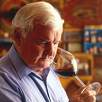 My most vivid memory of Len Evans is of a raspy, almost high pitched English accent, which came from a cherubic face that broke into a grin without too much cajoling and then the head was thrown back in laughter. And that was all from images of him on TV being interviewed about some aspect of wine. I never actually met the man, although if you learned to love wine in Australia in the 1970’s and later it was almost at Evans’ insistence. His Complete Book of Australian Wine was encyclopedic and in the early 1970’s no one was a serious wine drinker without a copy. I guess I came closest to him, in spirit at least, when I dined in The Great Cask Hall at Rothbury Estate. Surrounded by fellow immunologists I hoped I was not the only one to realize that this was more than just a place to throw back a few glasses of wine.
And now he is gone. Described as a “legend in his own lunchtime”, Len Evans, OBE, OA, passed away on August 17. He died of a heart attack at the wheel of his car in the Newcastle's John Hunter Hospital car park where he had gone to collect his wife, Patricia after she had recovered from surgery. He was 75. Only 75, he always seemed much older, wiser. Perhaps it was all that wine, more likely it was decades of selfless effort and struggle on behalf of the the Australian wine industry and more importantly the Australian wine drinker.
His list of achievements is overwhelming. I prefer a simpler statement.
Len Evans (1930-2006), Welsh born, English raised, Australian immigrant, welder, ring barker, script writer, glass washer, and doyen of the Australian wine industry. How we needed you, how you did us proud, and now how we will miss you.
Wednesday, August 16, 2006
The Most Collected Wines in Australia - The List
The August/September 2006 issue of Gourmet Traveller WINE magazine contains an interesting insert - a commemorative poster displaying the top 50 labels of the most collected wines in Australia.
Now whether this really is the definitive listing of the most collected wines in Australia is probably debatable, but it is certainly an excellent starting point as the list has been generated from a study of over 1 million bottles held for over 3,500 private wine collectors. The total number of bottles of each wine, irrespective of vintage, was determined and each label was then ranked according to those totals. The study was done by Wine Ark, said to be Australia’s largest wine storage provider. The figures come from a June 2006 stocktake of their managed cellars. The count revealed that 84% of the collection was red with shiraz being the most popular grape (46%), followed by Cabernet sauvignon (33%). Sixty-six percent of the wines were from South Australia with 19% coming from each of Barossa and Coonawarra.
Wine Ark was founded in 1999 and provides not only storage, but also wine sales, wine cabinets and a Cellar Club. Its not clear whether the wines sales of Wine Ark influence what ends up being stored by its customers. There is bound to be some influence, although as noted by Judy Sarris in her Gourmet Traveller WINE article, Wine Ark does not offer Penfolds through their Wine Ark Club. That is significant because the top two wines are from Penfolds, poor man’s Grange, followed by the big boy himself.
The Top 50 Most Collected Wines are-
1 Penfolds Bin 389 Cabernet Shiraz Blend
2 Penfolds Bin 95 Grange Shiraz
3 Wynns Coonawarra Estate Cabernet Sauvignon
4 Lake's Folly Cabernet Blend
5 Moss Wood Cabernet Sauvignon
6 Penfolds Bin 707 Cabernet Sauvignon
7 Wynns Coonawarra Estate John Riddoch Cabernet Sauvignon
8 Penfolds St Henri Shiraz
9 Cullen Cabernet Merlot (inc Diane Madellene)
10 Penfolds Bin 28 Kalimna Shiraz
11 Rockford Basket Press Shiraz
12 Penfolds Bin 407 Cabernet Sauvignon
13 Wynns Coonawarra Estate Michael Shiraz
14 Leeuwin Estate Art Series Chardonnay
15 Petaluma Riesling (inc Hanlin Hill)
16 Grosset Polish Hill Riesling
17 Orlando (Jacob's Creek) St Hugo Cabernet Sauvignon
18 Howard Park Cabernet Merlot
19 Jasper Hill Georgia's Paddock Shiraz
20 Penfolds Bin 128 Shiraz
21 Henschke Mount Edelstone Shiraz
22 Dalwhinnie Moonambel Shiraz
23 Petaluma Coonawarra Cabernet Merlot
24 Mount Mary Quintet Cabernet Blend
25 Lindemans Limestone Ridge Shiraz Cabernet Blend
26 Clonakilla Shiraz Viognier
27 Wynns Coonawarra Estate Shiraz
28 Penfolds RWT Shiraz
29 Torbreck The Steading Grenache Mataro Shiraz
30 Parker Coonawarra Estate First Growth Cabernet Blend
31 Tyrrell's Vat 1 Semillon
32 Tyrrell's Vat 47 Pinot Chardonnay
33 Brokenwood Graveyard Shiraz
34 Lindemans Pyrus Cabernet Blend
35 Fox Creek Reserve Shiraz
36 Giaconda Chardonnay
37 Henschke Hill of Grace Shiraz
38 De Bortoli Noble One Botrytis Semillon
39 Grant Burge Meshach Shiraz
40 Hardys Eileen Hardy Shiraz
41 Bowen Estate Cabernet Sauvignon
42 Lindemans St. George Cabernet Sauvignon
43 Mount Langi Ghiran Langi Shiraz
44 d'Arenberg The Dead Arm Shiraz
45 Katnook Estate Cabernet Sauvignon
46 Grosset Watervale Riesling
47 Pierro Chardonnay
48 Tyrrell's Vat 9 Shiraz
49 Turkey Flat Shiraz
50 Peter Lehmann Stonewell Shiraz
What are the top collected Shiraz? I knew you would ask. Here are the top twenty.
1 Penfolds Bin 95 Grange Shiraz
2 Penfolds St Henri Shiraz
3 Penfolds Bin 28 Kalimna Shiraz
4 Rockford Basket Press Shiraz
5 Wynns Coonawarra Estate Michael Shiraz
6 Jasper Hill Georgia's Paddock Shiraz
7 Penfolds Bin 128 Shiraz
8 Henschke Mount Edelstone Shiraz
9 Dalwhinnie Moonambel Shiraz
10 Clonakilla Shiraz Viognier
11 Wynns Coonawarra Estate Shiraz
12 Penfolds RWT Shiraz
13 Brokenwood Graveyard Shiraz
14 Fox Creek Reserve Shiraz
15 Henschke Hill of Grace Shiraz
16 Grant Burge Meshach Shiraz
17 Hardys Eileen Hardy Shiraz
18 Mount Langi Ghiran Langi Shiraz
19 d'Arenberg The Dead Arm Shiraz
20 Tyrrell's Vat 9 Shiraz
How many do you have?
The Top 100 Collected wines and other lists are here.
Now whether this really is the definitive listing of the most collected wines in Australia is probably debatable, but it is certainly an excellent starting point as the list has been generated from a study of over 1 million bottles held for over 3,500 private wine collectors. The total number of bottles of each wine, irrespective of vintage, was determined and each label was then ranked according to those totals. The study was done by Wine Ark, said to be Australia’s largest wine storage provider. The figures come from a June 2006 stocktake of their managed cellars. The count revealed that 84% of the collection was red with shiraz being the most popular grape (46%), followed by Cabernet sauvignon (33%). Sixty-six percent of the wines were from South Australia with 19% coming from each of Barossa and Coonawarra.
Wine Ark was founded in 1999 and provides not only storage, but also wine sales, wine cabinets and a Cellar Club. Its not clear whether the wines sales of Wine Ark influence what ends up being stored by its customers. There is bound to be some influence, although as noted by Judy Sarris in her Gourmet Traveller WINE article, Wine Ark does not offer Penfolds through their Wine Ark Club. That is significant because the top two wines are from Penfolds, poor man’s Grange, followed by the big boy himself.
The Top 50 Most Collected Wines are-
1 Penfolds Bin 389 Cabernet Shiraz Blend
2 Penfolds Bin 95 Grange Shiraz
3 Wynns Coonawarra Estate Cabernet Sauvignon
4 Lake's Folly Cabernet Blend
5 Moss Wood Cabernet Sauvignon
6 Penfolds Bin 707 Cabernet Sauvignon
7 Wynns Coonawarra Estate John Riddoch Cabernet Sauvignon
8 Penfolds St Henri Shiraz
9 Cullen Cabernet Merlot (inc Diane Madellene)
10 Penfolds Bin 28 Kalimna Shiraz
11 Rockford Basket Press Shiraz
12 Penfolds Bin 407 Cabernet Sauvignon
13 Wynns Coonawarra Estate Michael Shiraz
14 Leeuwin Estate Art Series Chardonnay
15 Petaluma Riesling (inc Hanlin Hill)
16 Grosset Polish Hill Riesling
17 Orlando (Jacob's Creek) St Hugo Cabernet Sauvignon
18 Howard Park Cabernet Merlot
19 Jasper Hill Georgia's Paddock Shiraz
20 Penfolds Bin 128 Shiraz
21 Henschke Mount Edelstone Shiraz
22 Dalwhinnie Moonambel Shiraz
23 Petaluma Coonawarra Cabernet Merlot
24 Mount Mary Quintet Cabernet Blend
25 Lindemans Limestone Ridge Shiraz Cabernet Blend
26 Clonakilla Shiraz Viognier
27 Wynns Coonawarra Estate Shiraz
28 Penfolds RWT Shiraz
29 Torbreck The Steading Grenache Mataro Shiraz
30 Parker Coonawarra Estate First Growth Cabernet Blend
31 Tyrrell's Vat 1 Semillon
32 Tyrrell's Vat 47 Pinot Chardonnay
33 Brokenwood Graveyard Shiraz
34 Lindemans Pyrus Cabernet Blend
35 Fox Creek Reserve Shiraz
36 Giaconda Chardonnay
37 Henschke Hill of Grace Shiraz
38 De Bortoli Noble One Botrytis Semillon
39 Grant Burge Meshach Shiraz
40 Hardys Eileen Hardy Shiraz
41 Bowen Estate Cabernet Sauvignon
42 Lindemans St. George Cabernet Sauvignon
43 Mount Langi Ghiran Langi Shiraz
44 d'Arenberg The Dead Arm Shiraz
45 Katnook Estate Cabernet Sauvignon
46 Grosset Watervale Riesling
47 Pierro Chardonnay
48 Tyrrell's Vat 9 Shiraz
49 Turkey Flat Shiraz
50 Peter Lehmann Stonewell Shiraz
What are the top collected Shiraz? I knew you would ask. Here are the top twenty.
1 Penfolds Bin 95 Grange Shiraz
2 Penfolds St Henri Shiraz
3 Penfolds Bin 28 Kalimna Shiraz
4 Rockford Basket Press Shiraz
5 Wynns Coonawarra Estate Michael Shiraz
6 Jasper Hill Georgia's Paddock Shiraz
7 Penfolds Bin 128 Shiraz
8 Henschke Mount Edelstone Shiraz
9 Dalwhinnie Moonambel Shiraz
10 Clonakilla Shiraz Viognier
11 Wynns Coonawarra Estate Shiraz
12 Penfolds RWT Shiraz
13 Brokenwood Graveyard Shiraz
14 Fox Creek Reserve Shiraz
15 Henschke Hill of Grace Shiraz
16 Grant Burge Meshach Shiraz
17 Hardys Eileen Hardy Shiraz
18 Mount Langi Ghiran Langi Shiraz
19 d'Arenberg The Dead Arm Shiraz
20 Tyrrell's Vat 9 Shiraz
How many do you have?
The Top 100 Collected wines and other lists are here.
Monday, August 14, 2006
Make me ripe, and don’t forget the acid
 A Saturday visit to Vintage Wines of San Diego saw me tasting my way through their $5 Chardonnay offering. Six wines that contained several surprises, soon to be the subject of a future post. I also selected several wines from their Wine Bar, among them the 2004 Massena The Eleventh Hour Shiraz from the Barossa Valley. Massena is a partnership between Dan Standish and Jaysen Collins that has been making wine since the 2000 vintage. The Eleventh Hour is 100% Shiraz that was initially based on 60 year old vines in Greenock that were saved, at the eleventh hour, from destruction. The 2004 wine also includes fruit from 90 year old vines from the Light Pass region of the Barossa. The wine spends 18 months in French oak and is made by Traditional Barossa winemaking of open fermentation, basket pressing and naturally occurring malolactic fermentation ensures purity of fruit, with open and round tannins.
The Massena wines have received acclaim from numerous critics, but this was my first experience with the wines. Just from the color it was clear that this 2004 shiraz was no shrinking violet. And it was not, in fact it smelled very much like a young port. My notes were Very porty, dried tea leaves, blackberry, blueberry, plum, and every other dark fruit you might think you can smell. [No, this has to be port.] The smell was so rich and overripe I just had to take the glass to some others to smell. The opinion was the same, very portish. An expedition was undertaken to explore the wine shop to learn the alcohol content. Fourteen and half percent! That has got to be low?
But how did the wine taste? At this level of ripeness and probably with a good amount of time in oak (I didn’t know it was 18 months at that time) I was expecting a tanninc, flabby monster. Surprise, surprise! It’s a very deceptive wine. The entry onto the palate is soft and supple but once the wine starts to cross the palate the acidity kicks in and you are in for a rocky, disjointed ride with the firm tannins gamely trying to smooth things down at the finish. They fail. The discussion then turned to where did all this acidity come from? The fruit was obviously picked very ripe, the fermentation done to get as much from that fruit as possible. The acidity had to have been added, and a little too liberally it appeared.
Let’s not jump to conclusions. The wine in the Wine Bar comes from bottles that have been opened the previous day. It was possible that the acidity was due to a poor response of the wine to temperature and air during that time. The only thing to do was to purchase a bottle and drink it at my leisure at home.
As we were going to help Miranda’s mother celebrate her birthday on Sunday, we could also drink The Eleventh Hour. Although the wine was better with our meal of spare ribs, green salad and garlic mashed spuds, this wine is not Aussie Shiraz at its finest hour. My notes after consuming much of the bottle, and really trying to see its good sides, it does smell very appealing, were -
Massena The Eleventh Hour Shiraz Barossa Valley 2004 $37.99USD
Deeply colored, almost purple, with red edge. Very portish, ripe and sweet with plum, blackberry, blueberry and smoky oak. Developing aromas of prunes and dried dates. Soft and supple entry but the wine is disjointed due to sharp biting acidity, especially on the finish. The palate lacks balance, depth and complexity. The fruit is simply overripe and the acidification overdone. 2, 2, 4.0, 8.0 = 16.0/20, 80/100. 14.5% alcohol. Tasted August 14, 2006.
I know that its not unusual, nor illegal to acidify wine in Australia. In fact with the ripening conditions in Australia it can be necessary. However in this case it has been overdone and has not provided this wine with any favors at all. The life span of this wine is likely to be short and I cannot recommend it.
The problem is that I am likely to be in the minority is criticizing this wine. I was in the minority on Sunday as both Miranda and her mother did enjoy the wine. But if you take very small sips of the wine, as both Miranda and her mother do when they drink wine, you don’t notice the acidity that much. And it is very easy to be seduced by the opulence of the rich fruit flavors; I was certainly fascinated until I tasted the wine.
Friday, August 11, 2006
Wine Odyssey – a year of wine, food and travel
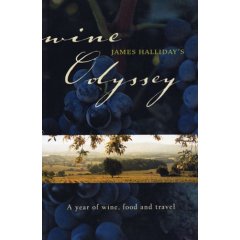 There are not many individuals who live the vinous existence enjoyed by Australia’s James Halliday. That is why I was pleased to find his Wine Odyssey – a year of wine, food and travel. Written in a diary-like format, the book chronicles Halliday’s experiences in the world of wine for 2002. And when I say world, I mean that Halliday does get about. He is more than just an acknowledged expert on Australian wines, his expertise as a critic, judge and just plain wine expert is sought in the New World and Old World alike.
Halliday describes himself as a workaholic in the first sentence of the Prologue, by the end of the book that is more than believable. I was convinced the first time we learn that it is not uncommon for his wife to meet him at Melbourne airport with fresh clothes so that he can jet off to judge yet another Wine Show, or speak at a wine symposium. All of this is done against the backdrop of consulting for Coldstream Hills Winery (which Halliday and his wife Suzanne sold to Southcorp in 1996), tasting through thousands of Australian wines for his annual Wine Companion and selecting the annual Top 100 wines for the Weekend Australian. And these are just a few of the regular events that occupy his time during the year.
A diary should be a personal account of the life of the writer, even if it is only a slice of that life, as is the case with Halliday’s Odyssey. While this book does document Halliday’s life on an almost daily basis it is not cluttered with the personal detritus that some writers might be tempted to include, and some readers may be expecting! Instead it is well tempered with vinous experiences that the wine aficionado will appreciate. The most telling, at least for me, is a reminiscence of a visit, with his wife Suzanne, to France in the early 1980’s. At La Pyramide (a restaurant) in Vienne he seeks out wines of his birth year. One is a 1938 Romanée-Conti. I’ll let Halliday tell of the experience.
“As Louis, the venerable sommelier, teased the cork out of the bottle with his splayed fingers, a sixth sense warned me that something extraordinary was about to happen. As I smelt the wine he poured for my approval, Suzanne said, ‘Why are you crying?’ My first reaction was to indignantly deny that I was doing any such thing, but then I realized that tears were indeed trickling down my cheeks. It was an entirely involuntary reaction to the sheer perfection of the wine.”
If that little anecdote does not give some insight into the love that Halliday has for the liquid that he has devoted his life to, then I clearly don’t have the measure of the man.
For the less emotional, but still voyeuristic, purists there is the description of the purchase and consumption of a double magnum of 1865 Chateau Lafite, as well as 77 vintages of Chateau Latour from 1920 to 2000. Another highlight are the photographs that add visual detail to many of Halliday's exploits, all snapped by the author. There is much to recommend this excellent little book, I mean diary.
Wine Odyssey: A year of wine, food and travel (Paperback) by James Halliday, 304 pages, HarperCollinsPublishers PTY Limited (May 1, 2004). $20.95USD
Thursday, August 10, 2006
Dan Berger Downunder
Noted American wine writer Dan Berger gave the Wine Press Club of NSW Annual Lecture on August 9th at the Australian National Maritime Museum in Sydney, Australia. The title of Berger’s presentation was “The Quality or the Critter? Australian Wines and the American Palate”.
Berger began by arguing that Australians should stop worrying about the so-called grape glut, noting that it’s “a classic example of Chicken Little hollering that the sky is falling combined with that of the boy who cried wolf, as well as a number of other Mother Goose tales”. As Berger argues, these events are cyclical, but I wonder if he has ever farmed grapes and had to rely on adequate prices for survival of his livelihood?
He then went on to state that “I can tell you that, in general, the higher you go on the price scale for Australian wines, the more quality you get. I cannot say the same for French, California, or Italian wines.” That is an interesting comment given some of the discussion that has taken place in some wine spheres in recent weeks. There may well be differences in quality in terms of price but the problem, at least in the USA, is whether there are sufficient differences among the wines at a particular price point to justify purchases from multiple wineries? When most of the wine taste the same, why buy them all?
Berger also noted that he had talked with Peter Gago of Penfolds, and had been told that there is actually a shortage of many different wine grapes, including top rated cool climate Chardonnay fruit and quality Sauvignon Blanc. This is a good thing for Australian grape growers as the larger Australian wine makers buy grapes for both inexpensive (commodity sector in Berger’s words) as well as the higher-end wines. According to Berger this situation is different from the USA where the larger wine companies (The Wine Group, Gallo, Bronco) have no wines in the quality range. Grape gluts in the USA are thus more likely to adversely affect the industry.
Berger then addressed the future of Australian wine and some of the strategies he thinks should be used. The list he commented upon included
1) Highlight your regions,
2) Eschew number mongers
3) Launch campaigns highlighting gold medals and trophies at wine shows around the world
4) Empower the consumer with factual data
5) Tell a story
6) Focus more of your efforts on Riesling and on rose and dessert wines like ports, sherries and muscats that are classic Australian offerings and which are unique here.
I’m not going to comment on Berger’s strategies, except for the last one. In addressing his last point he states “As for your dessert wines, they are some of the world’s finest, and yet the only time I see overt praise for them is about the coldest days of winter. If we all don’t stand behind these amazing products, they one day may be just a memory.” When I see comments about regionality, medal winners and Australian fortifieds lumped together I'm reminded that its the one wine style that is known in the USA on the basis of
1) At least one major critic raves about them,
2) At least one major critic awards them massive points,
3) The major region (Rutherglen) is known, and yet
4) They remains the best value for money both inside and outside Australia.
Australian fortified wines need to tell their story? To whom? Maybe someone should tell Dan Berger about a place called Seppeltsfield and a company called Fosters. When a behemoth like Fosters divests itself of the jewels that are the Seppeltsfield fortified brands one significant story in Australian wine history may be coming to its ending.
For those who want to read Berger’s comments his presentation is here.
Berger began by arguing that Australians should stop worrying about the so-called grape glut, noting that it’s “a classic example of Chicken Little hollering that the sky is falling combined with that of the boy who cried wolf, as well as a number of other Mother Goose tales”. As Berger argues, these events are cyclical, but I wonder if he has ever farmed grapes and had to rely on adequate prices for survival of his livelihood?
He then went on to state that “I can tell you that, in general, the higher you go on the price scale for Australian wines, the more quality you get. I cannot say the same for French, California, or Italian wines.” That is an interesting comment given some of the discussion that has taken place in some wine spheres in recent weeks. There may well be differences in quality in terms of price but the problem, at least in the USA, is whether there are sufficient differences among the wines at a particular price point to justify purchases from multiple wineries? When most of the wine taste the same, why buy them all?
Berger also noted that he had talked with Peter Gago of Penfolds, and had been told that there is actually a shortage of many different wine grapes, including top rated cool climate Chardonnay fruit and quality Sauvignon Blanc. This is a good thing for Australian grape growers as the larger Australian wine makers buy grapes for both inexpensive (commodity sector in Berger’s words) as well as the higher-end wines. According to Berger this situation is different from the USA where the larger wine companies (The Wine Group, Gallo, Bronco) have no wines in the quality range. Grape gluts in the USA are thus more likely to adversely affect the industry.
Berger then addressed the future of Australian wine and some of the strategies he thinks should be used. The list he commented upon included
1) Highlight your regions,
2) Eschew number mongers
3) Launch campaigns highlighting gold medals and trophies at wine shows around the world
4) Empower the consumer with factual data
5) Tell a story
6) Focus more of your efforts on Riesling and on rose and dessert wines like ports, sherries and muscats that are classic Australian offerings and which are unique here.
I’m not going to comment on Berger’s strategies, except for the last one. In addressing his last point he states “As for your dessert wines, they are some of the world’s finest, and yet the only time I see overt praise for them is about the coldest days of winter. If we all don’t stand behind these amazing products, they one day may be just a memory.” When I see comments about regionality, medal winners and Australian fortifieds lumped together I'm reminded that its the one wine style that is known in the USA on the basis of
1) At least one major critic raves about them,
2) At least one major critic awards them massive points,
3) The major region (Rutherglen) is known, and yet
4) They remains the best value for money both inside and outside Australia.
Australian fortified wines need to tell their story? To whom? Maybe someone should tell Dan Berger about a place called Seppeltsfield and a company called Fosters. When a behemoth like Fosters divests itself of the jewels that are the Seppeltsfield fortified brands one significant story in Australian wine history may be coming to its ending.
For those who want to read Berger’s comments his presentation is here.
Saturday, August 05, 2006
Craggy Range Winery Dinner
August 1st saw The WineSellar & Brasserie in San Diego holding a New Zealand Winemaker Dinner hosted by Steve Smith, M.W. (Master of Wine), Wine & Viticulture Director of Craggy Range Winery. I was interested in attending this gathering for several reasons. First, we see very little in the way of New Zealand wine in the USA, unless its Sauvignon Blanc. Second, with a trip planned for December of this year I’ve been cramming on New Zealand wine knowledge and with Steve Smith, MW as the host the evening seemed like it might yield a few gems of knowledge about the kiwi wine scene.
The Craggy Range Winery makes some 30 different wines, with the duties being split between three winemakers. The wines are primarily single varietal, single vineyard bottlings made from grapes grown on the company's own vineyards in the winegrowing districts of Hawkes Bay and Marlborough. Craggy Range is an investment of the Peabody family, originally from North America but residents of Australia for many years. Steve Smith, MW is both shareholder and General Manager. Craggy Range Winery is a very recent addition to the burgeoning New Zealand wine industry. Land was first purchased in 1998, and the first wines were made in the 1999 vintage from small parcels of mature vineyards in Marlborough and Hawkes Bay regions.
Reception:Little Bites
2005 Craggy Range Sauvignon Blanc, Te Muna Road Vineyard (13.1% alcohol)
Miranda and I arrived a little too late to take advantage of the nibbles served during the reception, but we did get a glass of the 2005 Te Muna Road Vineyard Sauvignon Blanc to sip as we wandered among the aisles of cases of wine that dominant the floor space of The WineSellar. The wine was making such a favorable impression as we were ushered upstairs to the Brasserie that we kept a tight grasp on our glasses, meaning that we had all the more to taste over our first course.
1st: Heirloom Tomato salad with Buffalo Mozzarella , creamy citrus vinaigrette
2005 Craggy Range Sauvignon Blanc, Te Muna Road Vineyard (13.1% alcohol)
Part of the Varietals Collection, the Te Muna Vineyard is in the Martinborough region, at the southern end of the North Island. Straw gold in color, this is a very attractively scented Sauvignon Blanc with obvious notes of pineapple, guava, and citrus. The palate is dominated by excellent, bright, crisp acidity and impeccable balance that leads to a bone dry, lengthy finish. One of the best Sauvignon Blancs I’ve had. 2, 2, 4.1, 10.1 = 18.2/20, 91/100.
I’m not a big fan of acidic, dry wines with the acidity of tomatoes and the sharpness of vinaigrette, and this first course was no exception. Pity, this wine deserved something a little less overpowering.
2nd: (Lightly) Pepper crusted line caught Ahi, seared rare, veal reduction with crushed cherries, parsnip puree
2004 Craggy Range Pinot, Te Muna Road Vineyard (14% alcohol)
Another in the Varietals Collections, the 2004 Te Muna Road Vineyard Pinot Noir was fermented in 50% new French oak barriques using a 100% spontaneous natural ferment (i.e. indigenous yeast). Light cherry in color with a faint orange/brown tinge to its edge it boasts concentrated pure Pinot spicey richness. The palate has prominent juicy acidity, silky tannins and excellent carry of flavors; the acidity perhaps little too aggressive at present. Still, it’s a nice wine that could do with a few years in the cellar. 2, 2, 4.2, 9.6 = 17.8/20, 89/100.
The Ahi was a much better pairing with the Pinot. The rare, oily flesh was just what the acidity of this Pinot needs at this stage of its life.
3rd: New Zealand lamb rack, red wine reduction, lightly herbed, sweet garlic mashed, mushroom, glazed turnips and Swiss chard
2002 Sophia, Craggy Range, Gimblett Gravels (14% alcohol)
Part of the Prestige Collection the 2002 Sophia is a blend of 63% Merlot, 27% Cabernet Franc,
5% Malbec and 5% Cabernet Sauvignon. The wine is a dense cherry red with a red edge, and is rich and concentrated with earthy aromas backed up by flavors of smoke and tar that developed into fruitcake with some air. Even though the entry onto the palate is soft, this is not a shy wine, its full bodied and mouth filling, with prominent mouth drying tannins. The structural foundation is solid, so give it at least five years in a cool dark place and it should be a beauty. 2, 2, 4.1, 10.3 = 18.4/20, 92/100.
I’ll eat rack of lamb with anything, but I never eat it this rare. Still this was what the Sophia was made for, all that blood and iron! But it really is still too young to be truly food friendly.
Finale: Valrhona chocolate Dessert Duo of flourless chocolate cake and bittersweet chocolate terrine, blueberry coulis and a rumor of crème anglaise
2002 Le Sol, Craggy Range, Gimblett Gravels (15.4% alcohol)
The Le Sol is another member of the Prestige Collection. Its 100% Syrah that sees new and seasoned French oak barriques, without racking. Densely colored it is made from 50% dimpled (i.e. late harvest) fruit. And unfortunately this shows in the intensely flavored bitumen, medicinal, and stewed fruit notes that override a faint aroma of mint. The palate is equally aggressive in its flavor profile, although the feel of the wine is pleasing and nicely balanced with bright acidity and firm tannins. I was expecting much more from this wine. 2, 2, 4.0, 10.0 = 18.0/20, 90/100.
Pairing the Le Sol with dessert was not a great idea, and the suggestion of Steve Smith to sip a little of the wine with the lamb was a much better suggestion. But again the Le Sol needs time to overcome its aggressive youth.
During his discussion on the wines Steve Smith noted that the reason for the inclusion of late harvested grapes in the Le Sol was due to a difference of opinion between himself and a younger winemaker. Unfortunately the younger man has since passed away and, as he had argued for the inclusion of the dimpled fruit, the wine will continue to be made in this style in his memory. While one can understand the emotional ties that bonded these individuals as people as well as winemakers, one must ask whether it is really sound judgment to restrict the winemaking in this way when the history of the wine is so young – only two vintages have been released to my knowledge.
Its also the youth of Craggy Range wines that raises another question. As Miranda and I sat over our food and wines I wondered what the future would hold for Craggy Range. They seemed to be doing the right thing in terms of promotion, sending their top winemaker and GM to spread the word to the biggest market in the world for fine wines. But what chance do these wines have to compete? Part of the answer was down stairs in The WineSellar. People were certainly buying the wine, a case of the Pinot went out the door as we made our way downstairs, and there were only two bottles of the Sophia left in the box that had been full when we arrived. I picked one up, $52.99USD, the Le Sol was $60.99USD. At those prices there is not a lot of value in either of those wines, especially give the lack of a track record. I had picked up a bottle of the Pinot previously for $33.99USD, that’s reasonable for Pinot, but not this pinot. I’ve seen the Sauvignon Blanc for around $20USD, which is expensive for New Zealand Sauvignon Blanc.
At present the USA is awash in wine that sells for much less than the Craggy Range wines. Bringing wines into this market from overseas is currently fraught with problems, especially at the higher end of the market. Ric Einstein of TORBWine.com has recently discussed the problems facing Australian wines. The situation with New Zealand is likely to be worse, given the lack of exposure in the USA market. In addition, Bordeaux blends are common from the Napa Valley and elsewhere, excellent quality Syrah can be found by the dozens for much less that $60, Pinot is everywhere for $30. Plus excellent New Zealand Sauvignon Blanc sell for less than $20; although that Te Muna SB was tasty! I’m hoping that when we visit New Zealand in December I’ll find that the other Craggy Range wines are of the same quality. Whether I’ll find wines that are better value is a different question.
The Craggy Range Winery makes some 30 different wines, with the duties being split between three winemakers. The wines are primarily single varietal, single vineyard bottlings made from grapes grown on the company's own vineyards in the winegrowing districts of Hawkes Bay and Marlborough. Craggy Range is an investment of the Peabody family, originally from North America but residents of Australia for many years. Steve Smith, MW is both shareholder and General Manager. Craggy Range Winery is a very recent addition to the burgeoning New Zealand wine industry. Land was first purchased in 1998, and the first wines were made in the 1999 vintage from small parcels of mature vineyards in Marlborough and Hawkes Bay regions.
Reception:Little Bites
2005 Craggy Range Sauvignon Blanc, Te Muna Road Vineyard (13.1% alcohol)
Miranda and I arrived a little too late to take advantage of the nibbles served during the reception, but we did get a glass of the 2005 Te Muna Road Vineyard Sauvignon Blanc to sip as we wandered among the aisles of cases of wine that dominant the floor space of The WineSellar. The wine was making such a favorable impression as we were ushered upstairs to the Brasserie that we kept a tight grasp on our glasses, meaning that we had all the more to taste over our first course.
1st: Heirloom Tomato salad with Buffalo Mozzarella , creamy citrus vinaigrette
2005 Craggy Range Sauvignon Blanc, Te Muna Road Vineyard (13.1% alcohol)
Part of the Varietals Collection, the Te Muna Vineyard is in the Martinborough region, at the southern end of the North Island. Straw gold in color, this is a very attractively scented Sauvignon Blanc with obvious notes of pineapple, guava, and citrus. The palate is dominated by excellent, bright, crisp acidity and impeccable balance that leads to a bone dry, lengthy finish. One of the best Sauvignon Blancs I’ve had. 2, 2, 4.1, 10.1 = 18.2/20, 91/100.
I’m not a big fan of acidic, dry wines with the acidity of tomatoes and the sharpness of vinaigrette, and this first course was no exception. Pity, this wine deserved something a little less overpowering.
2nd: (Lightly) Pepper crusted line caught Ahi, seared rare, veal reduction with crushed cherries, parsnip puree
2004 Craggy Range Pinot, Te Muna Road Vineyard (14% alcohol)
Another in the Varietals Collections, the 2004 Te Muna Road Vineyard Pinot Noir was fermented in 50% new French oak barriques using a 100% spontaneous natural ferment (i.e. indigenous yeast). Light cherry in color with a faint orange/brown tinge to its edge it boasts concentrated pure Pinot spicey richness. The palate has prominent juicy acidity, silky tannins and excellent carry of flavors; the acidity perhaps little too aggressive at present. Still, it’s a nice wine that could do with a few years in the cellar. 2, 2, 4.2, 9.6 = 17.8/20, 89/100.
The Ahi was a much better pairing with the Pinot. The rare, oily flesh was just what the acidity of this Pinot needs at this stage of its life.
3rd: New Zealand lamb rack, red wine reduction, lightly herbed, sweet garlic mashed, mushroom, glazed turnips and Swiss chard
2002 Sophia, Craggy Range, Gimblett Gravels (14% alcohol)
Part of the Prestige Collection the 2002 Sophia is a blend of 63% Merlot, 27% Cabernet Franc,
5% Malbec and 5% Cabernet Sauvignon. The wine is a dense cherry red with a red edge, and is rich and concentrated with earthy aromas backed up by flavors of smoke and tar that developed into fruitcake with some air. Even though the entry onto the palate is soft, this is not a shy wine, its full bodied and mouth filling, with prominent mouth drying tannins. The structural foundation is solid, so give it at least five years in a cool dark place and it should be a beauty. 2, 2, 4.1, 10.3 = 18.4/20, 92/100.
I’ll eat rack of lamb with anything, but I never eat it this rare. Still this was what the Sophia was made for, all that blood and iron! But it really is still too young to be truly food friendly.
Finale: Valrhona chocolate Dessert Duo of flourless chocolate cake and bittersweet chocolate terrine, blueberry coulis and a rumor of crème anglaise
2002 Le Sol, Craggy Range, Gimblett Gravels (15.4% alcohol)
The Le Sol is another member of the Prestige Collection. Its 100% Syrah that sees new and seasoned French oak barriques, without racking. Densely colored it is made from 50% dimpled (i.e. late harvest) fruit. And unfortunately this shows in the intensely flavored bitumen, medicinal, and stewed fruit notes that override a faint aroma of mint. The palate is equally aggressive in its flavor profile, although the feel of the wine is pleasing and nicely balanced with bright acidity and firm tannins. I was expecting much more from this wine. 2, 2, 4.0, 10.0 = 18.0/20, 90/100.
Pairing the Le Sol with dessert was not a great idea, and the suggestion of Steve Smith to sip a little of the wine with the lamb was a much better suggestion. But again the Le Sol needs time to overcome its aggressive youth.
During his discussion on the wines Steve Smith noted that the reason for the inclusion of late harvested grapes in the Le Sol was due to a difference of opinion between himself and a younger winemaker. Unfortunately the younger man has since passed away and, as he had argued for the inclusion of the dimpled fruit, the wine will continue to be made in this style in his memory. While one can understand the emotional ties that bonded these individuals as people as well as winemakers, one must ask whether it is really sound judgment to restrict the winemaking in this way when the history of the wine is so young – only two vintages have been released to my knowledge.
Its also the youth of Craggy Range wines that raises another question. As Miranda and I sat over our food and wines I wondered what the future would hold for Craggy Range. They seemed to be doing the right thing in terms of promotion, sending their top winemaker and GM to spread the word to the biggest market in the world for fine wines. But what chance do these wines have to compete? Part of the answer was down stairs in The WineSellar. People were certainly buying the wine, a case of the Pinot went out the door as we made our way downstairs, and there were only two bottles of the Sophia left in the box that had been full when we arrived. I picked one up, $52.99USD, the Le Sol was $60.99USD. At those prices there is not a lot of value in either of those wines, especially give the lack of a track record. I had picked up a bottle of the Pinot previously for $33.99USD, that’s reasonable for Pinot, but not this pinot. I’ve seen the Sauvignon Blanc for around $20USD, which is expensive for New Zealand Sauvignon Blanc.
At present the USA is awash in wine that sells for much less than the Craggy Range wines. Bringing wines into this market from overseas is currently fraught with problems, especially at the higher end of the market. Ric Einstein of TORBWine.com has recently discussed the problems facing Australian wines. The situation with New Zealand is likely to be worse, given the lack of exposure in the USA market. In addition, Bordeaux blends are common from the Napa Valley and elsewhere, excellent quality Syrah can be found by the dozens for much less that $60, Pinot is everywhere for $30. Plus excellent New Zealand Sauvignon Blanc sell for less than $20; although that Te Muna SB was tasty! I’m hoping that when we visit New Zealand in December I’ll find that the other Craggy Range wines are of the same quality. Whether I’ll find wines that are better value is a different question.
Sunday, July 30, 2006
Some Tastes
I’ve been trying to catch up on getting the tasting notes I have for a swath of wines into some semblance of order for my Tasting Notes eBlog. They are mostly Shiraz/Syrah or blends that contain Shiraz. So far I have been able to get the 2004 Aussie Shiraz down and they are listed below in descending order of preference with the score I gave them. But there is more detail if you link to Tasting Notes where the wines are listed in the order in which they have been consumed (usually over on evening or two).
However the pick of the wines that I have been able to post has not been Australian. It was the 2003 Lagier Meredith Syrah from the Mt Veeder region of California. You can find its tasting note here.
2004 Australian Shiraz
Tuesner The Riebke Ebenezer Road, Barossa Valley Shiraz 2004 $17.99USD – 91/100
Henry’s Drive Dead Letter Office Shiraz 2004 (55% Padthway, 45% McLaren Vale) $28.99USD – 91/100
Marquis Philips Shiraz 9 McLaren Vale 2004 $35.99USD - 89/100
Glaetzer Bishop Shiraz Barossa Valley 2004 $34.99USD - 89/100
Olive Hill Winery Jimmy Section Shiraz McLaren Vale 2004 $34.99 (French Oak) (Screwcap) – 89/100
Mitolo Jester McLaren Vale Shiraz 2004 $17.99USD (Screwcap) – 88/100
Strathewen Hills Patterson Lakes Shiraz Port Phillip (Vicoria) 2004 $23.99USD (Screwcap) – 86/100
Fetish Wines The Watcher Barossa Valley Shiraz 2004 $16.99USD (Screwcap) – 86/100
Deakin Estate Shiraz (Victoria) 2004 $4.50USD – 86/100
Hewitson Ned and Henry’s Shiraz Barossa Valley Shiraz 2004 $15.99USD (Screwcap) – 83/100
However the pick of the wines that I have been able to post has not been Australian. It was the 2003 Lagier Meredith Syrah from the Mt Veeder region of California. You can find its tasting note here.
2004 Australian Shiraz
Tuesner The Riebke Ebenezer Road, Barossa Valley Shiraz 2004 $17.99USD – 91/100
Henry’s Drive Dead Letter Office Shiraz 2004 (55% Padthway, 45% McLaren Vale) $28.99USD – 91/100
Marquis Philips Shiraz 9 McLaren Vale 2004 $35.99USD - 89/100
Glaetzer Bishop Shiraz Barossa Valley 2004 $34.99USD - 89/100
Olive Hill Winery Jimmy Section Shiraz McLaren Vale 2004 $34.99 (French Oak) (Screwcap) – 89/100
Mitolo Jester McLaren Vale Shiraz 2004 $17.99USD (Screwcap) – 88/100
Strathewen Hills Patterson Lakes Shiraz Port Phillip (Vicoria) 2004 $23.99USD (Screwcap) – 86/100
Fetish Wines The Watcher Barossa Valley Shiraz 2004 $16.99USD (Screwcap) – 86/100
Deakin Estate Shiraz (Victoria) 2004 $4.50USD – 86/100
Hewitson Ned and Henry’s Shiraz Barossa Valley Shiraz 2004 $15.99USD (Screwcap) – 83/100
Wednesday, July 19, 2006
The 50 Point Wine
Many who search out the pinnacle of wine perfection chase the myth in wines given a perfect score, 100 points! On the other end of the scale are the wines that never seem to be talked about, those that fall below the cutoff score that signifies a recommended wine, below 84-85 points for Robert Parker or 75 points for Wine Spectator. But the true bottom of the wine barrel is 50 points in the 100 points scoring system. A wine scores 50 points just for being liquid in a bottle.
Do 50 point wines exist? It is difficult to get any definitive numbers because non-recommended wines are rarely described in any detail by wine critics. Why? Well in the case of Robert Parker they make up some 65-75% of the wines he tastes. Recording the tasting notes, or even just the scores, for those wines would consume a significant amount of space in any publication, hardcopy or otherwise. This is a blessing for winemakers because the wine buying public never learns that certain wines have achieved non-recommended status. Of course it is possible that a wine does not receive a recommended score because it was not submitted for review, which leaves the wine buying public even further in the dark about the quality of a winery’s portfolio.
Enter the enthusiastic amateur wine critic or, as we are known these days, the wine blogger. Wine bloggers, it seems, will drink pretty much everything and then they will blog about it. Why? Well most of us are not occupied in the wine trade full-time. Wine is our passion, not our mistress; although there may be some to whom it is a passionate mistress. Wine bloggers are willing to experience the spectrum of wine and comment on the knowledge gleaned to the world of cyberspace. We are an information conduit to the masses yearning to gather bits and bytes of wine knowledge at the click of a Google enquiry.
And if you Google Graeme Miller Wines you will find a 50 point wine courtesy of a wine blogger. Cam Wheeler of Appellation Australia gave 50 points to the 2005 Graeme Miller Wines (Yarra Valley) Rosé. According to what is fast becoming legend Cam tasted the wine at the Victorian Winemaker Exhibition 2006. He commented at the tasting that he thought the wine had a problem but was told (by the winery owners) that the wine was sound; no additional bottles were opened to confirm the quality of the wine. Cam posted his, rather apologetic, tasting note on his blog; how else do you write a 50 point score? Several months later he received a short, terse email threatening legal action if the tasting note was not removed! Further emails have passed back and forth between Cam and the winery and their content can be found here. Needless to say Cam has not removed the tasting note.
What does all this say about wine bloggers and their critiques of wines? Should we be like the Parkers' and Wine Spectators' of this world and not describe those wines that fall below a certain score? Hardly. As Cam notes on his blog the wine in question was tasted by others and found wanting, severely wanting. The consensus seems to be that its not a wine that should be recommended. It will be interesting to see what the established critics make of this wine. If no recommended scores appear then Cam will have done us a service by putting a score out there for us to see. And that is one thing that wine bloggers should do, assume the role of the long abdicated consumer advocate, and talk about the wines that should not be recommended.
Still, I’m intrigued about this 50 pointer. I don’t know that I have ever had one. Well maybe some of the stuff from around the Great Lakes that is made from the native American grapes, or perhaps from Virginia. But no, some of those may be 60-70 pointers. Fifty points is in a class of its own. I have a feeling that sales of this wine might just increase with all the internet discussion. Will they export? 50 points, there is a real marketing gimmick there, especially if they can get Robert Parker to agree with Cam’s score.
Do 50 point wines exist? It is difficult to get any definitive numbers because non-recommended wines are rarely described in any detail by wine critics. Why? Well in the case of Robert Parker they make up some 65-75% of the wines he tastes. Recording the tasting notes, or even just the scores, for those wines would consume a significant amount of space in any publication, hardcopy or otherwise. This is a blessing for winemakers because the wine buying public never learns that certain wines have achieved non-recommended status. Of course it is possible that a wine does not receive a recommended score because it was not submitted for review, which leaves the wine buying public even further in the dark about the quality of a winery’s portfolio.
Enter the enthusiastic amateur wine critic or, as we are known these days, the wine blogger. Wine bloggers, it seems, will drink pretty much everything and then they will blog about it. Why? Well most of us are not occupied in the wine trade full-time. Wine is our passion, not our mistress; although there may be some to whom it is a passionate mistress. Wine bloggers are willing to experience the spectrum of wine and comment on the knowledge gleaned to the world of cyberspace. We are an information conduit to the masses yearning to gather bits and bytes of wine knowledge at the click of a Google enquiry.
And if you Google Graeme Miller Wines you will find a 50 point wine courtesy of a wine blogger. Cam Wheeler of Appellation Australia gave 50 points to the 2005 Graeme Miller Wines (Yarra Valley) Rosé. According to what is fast becoming legend Cam tasted the wine at the Victorian Winemaker Exhibition 2006. He commented at the tasting that he thought the wine had a problem but was told (by the winery owners) that the wine was sound; no additional bottles were opened to confirm the quality of the wine. Cam posted his, rather apologetic, tasting note on his blog; how else do you write a 50 point score? Several months later he received a short, terse email threatening legal action if the tasting note was not removed! Further emails have passed back and forth between Cam and the winery and their content can be found here. Needless to say Cam has not removed the tasting note.
What does all this say about wine bloggers and their critiques of wines? Should we be like the Parkers' and Wine Spectators' of this world and not describe those wines that fall below a certain score? Hardly. As Cam notes on his blog the wine in question was tasted by others and found wanting, severely wanting. The consensus seems to be that its not a wine that should be recommended. It will be interesting to see what the established critics make of this wine. If no recommended scores appear then Cam will have done us a service by putting a score out there for us to see. And that is one thing that wine bloggers should do, assume the role of the long abdicated consumer advocate, and talk about the wines that should not be recommended.
Still, I’m intrigued about this 50 pointer. I don’t know that I have ever had one. Well maybe some of the stuff from around the Great Lakes that is made from the native American grapes, or perhaps from Virginia. But no, some of those may be 60-70 pointers. Fifty points is in a class of its own. I have a feeling that sales of this wine might just increase with all the internet discussion. Will they export? 50 points, there is a real marketing gimmick there, especially if they can get Robert Parker to agree with Cam’s score.
Tuesday, July 18, 2006
Mudgee – How to blog a wine region
Most blogs start with little more than the support of the individual brave enough to take on the job of attempting to post regularly on a subject of their choosing. With luck the blog might garner some attention and like minded readers may post a few comments. Or you may never ever raise a ripple in the sea of cybercurrents that carry the majority of flotsam and jetsam of the blogosphere. Sound familiar? Then imagine the possibilities if your blog was linked with a major media outlet like The Sydney Morning Herald. Picture a grander vision of having such a blog talk about the wine region that is home to your winery.
Such is the luck of Mudgee, located on the Central Tablelands of NSW and part of the newly renamed "Central NSW" Region. Apparently their tourism campaign, targeting the patrons of art house cinemas, caught the attention of Rob Woodburn whose blog, Lost in Transit, featured the town and surrounding wine region in a post on June 28. A travel blog on the online site of a Sydney newspaper, how could it not draw attention? Fifty-six comments later and you have what seems to be the discovery of an Australian wine region, somewhat to the detriment of the better known nearby Hunter Valley.
In truth Mudgee has been in the wine business for quite a while but like its better known cousin, the Hunter Valley, it has lagged behind the growth of other wine regions of Australia. And there is good reason for this. The quality of wine is not really competitive; there are exceptions. But having visited the region several times over the last couple of decades I have not been impressed. Yes, there has been growth, and our visit in December 2003 revealed some surprises like Abercorn but I enjoyed Mudgee more as a weekend retreat than as a major wine region. Maybe I’ll be proved wrong in years to come but not in the near future. Still there must be something in the air or on the cyberwaves because another post just hit the surf, or is that the "Nest in the Hills".
Such is the luck of Mudgee, located on the Central Tablelands of NSW and part of the newly renamed "Central NSW" Region. Apparently their tourism campaign, targeting the patrons of art house cinemas, caught the attention of Rob Woodburn whose blog, Lost in Transit, featured the town and surrounding wine region in a post on June 28. A travel blog on the online site of a Sydney newspaper, how could it not draw attention? Fifty-six comments later and you have what seems to be the discovery of an Australian wine region, somewhat to the detriment of the better known nearby Hunter Valley.
In truth Mudgee has been in the wine business for quite a while but like its better known cousin, the Hunter Valley, it has lagged behind the growth of other wine regions of Australia. And there is good reason for this. The quality of wine is not really competitive; there are exceptions. But having visited the region several times over the last couple of decades I have not been impressed. Yes, there has been growth, and our visit in December 2003 revealed some surprises like Abercorn but I enjoyed Mudgee more as a weekend retreat than as a major wine region. Maybe I’ll be proved wrong in years to come but not in the near future. Still there must be something in the air or on the cyberwaves because another post just hit the surf, or is that the "Nest in the Hills".
Monday, July 17, 2006
French Lose the World Cup but Win the Wine Cup
We all know which country won the World Cup but according to Australian wine makers it seems that the French are still on top in the wine business. The Australian news media outlet The Age asked leading members of the Australian wine industry (winemaker Chester Osborn, of d'Arenberg Wines; marketer Rob Geddes of WineStream; wine company CEO Darren De Bortoli; and winery owner Bruce Tyrrell of Tyrrell's Wines) who stands in the way of Australia achieving world dominion. Their answers might surprise you; they knocked me off my feet!
The greatest threat was generally considered to be Spain, although Italy got a half vote. A surprise to me, I would have said the USA given the potential that the US has to compete with the Australian products.
The quiet achiever was all over the place with New Zealand, France, Italy and Germany getting nods. My bias would be a toss up between New Zealand and Germany but that may change after we visit NZ in December.
The most admired player? Again a big spread with France, Australia, New Zealand and Argentina getting gongs. My gong would be for France if I was a whole lot more affluent. Otherwise I’ll stick with Oz with a little bit of Germany thrown in for the necessary sweet white.
It was for the most innovative player that things got just plain strange. France two, Australia and New Zealand one each. You climb the ladder like Oz has, with innovation as one of your major players, only to lose out to the guy who has fallen in front of goal ten seconds before full time! Excuse me for confusing Europeans, but this is just too weird because these comments are coming from Australian wine experts.
But the clincher was the score for the most aggressive player. The French got two clear points, the South Africans one and the last point split by Australia and France.
By my count that makes France the clear winner with 6 and half points. One has to wonder if the Australian wine industry really has its eye on the ball. The South Americans might not have done all that much in World Cup but watch them when it comes to competing in wine.
The greatest threat was generally considered to be Spain, although Italy got a half vote. A surprise to me, I would have said the USA given the potential that the US has to compete with the Australian products.
The quiet achiever was all over the place with New Zealand, France, Italy and Germany getting nods. My bias would be a toss up between New Zealand and Germany but that may change after we visit NZ in December.
The most admired player? Again a big spread with France, Australia, New Zealand and Argentina getting gongs. My gong would be for France if I was a whole lot more affluent. Otherwise I’ll stick with Oz with a little bit of Germany thrown in for the necessary sweet white.
It was for the most innovative player that things got just plain strange. France two, Australia and New Zealand one each. You climb the ladder like Oz has, with innovation as one of your major players, only to lose out to the guy who has fallen in front of goal ten seconds before full time! Excuse me for confusing Europeans, but this is just too weird because these comments are coming from Australian wine experts.
But the clincher was the score for the most aggressive player. The French got two clear points, the South Africans one and the last point split by Australia and France.
By my count that makes France the clear winner with 6 and half points. One has to wonder if the Australian wine industry really has its eye on the ball. The South Americans might not have done all that much in World Cup but watch them when it comes to competing in wine.
Thursday, June 29, 2006
We Love Shiraz
I think everyone who visits this site knows that, but I'm not talking about this site. Shiraz has competition? No not really. But I have found a new web site, based in the USA, that is "dedicated to everyone who enjoys Shiraz and the great wine from Australia". It is early days yet for WeLoveShiraz.com, but as one goal is "to catalog 100% of all Australian wine producers and get many of them to be contributing writers" expectations are high.
I guess I better add it to the links so we can keep an eye on it and its companion website!
I guess I better add it to the links so we can keep an eye on it and its companion website!
Wednesday, June 21, 2006
Desperately Seeking Funding, The World Cup and a little Bordeaux
No I’m not seeking funding for my eBlogs. I’m just doing my impersonation of a scientist trying to convince his peers that his research is more worthy of receiving federal funds that some 80 percent of the other research grant applications that are reviewed by the National Institutes of Health (NIH). Well, at least that’s my excuse for not posting so frequently on wine these days. With funding levels being reduced for the first time in the history of the NIH there is a serious concern that medical research in the USA will begin to fall behind the rest of the world. The news may not be that bad, but its pretty obvious that while the current administration is not adverse to spending money to kill people, they are loathe to support the sciences in any meaningful way. And if they say they are, ask them to show you the NIH budget figures after they have been adjusted for inflation. And if they start talking about their AIDS initiatives, make sure they tell you just how much is going to faith based groups. Oh well, maybe I’ll just tell my lab staff to start praying before each experiment!
Speaking of going down on one’s knees, I wonder how much prayer is being offered up in the hope that Australia's Socceroos go through to the Group of 16 in the World Cup? Probably not as much as in Croatia! Unfortunately I’ll be working on my research application during the game tomorrow but I’ll be opening up a bottle of Aussie Shiraz to watch the replay later that evening. It will be a really good bottle if we go through.
And speaking of good bottles, I’ve finally put up some notes on a tasting of 2003 Bordeaux from this past April. I have still to catch up on the March Chardonnay tasting (I was unable to attend the Pinot Noir tasting in May). But I will attend the 2001 Brunello di Montalcino tasting tomorrow night. Its lucky that the soccer replay is not until 11pm! Watch for notes on the Brunellos, oh around November! Sad isn’t it?
Speaking of going down on one’s knees, I wonder how much prayer is being offered up in the hope that Australia's Socceroos go through to the Group of 16 in the World Cup? Probably not as much as in Croatia! Unfortunately I’ll be working on my research application during the game tomorrow but I’ll be opening up a bottle of Aussie Shiraz to watch the replay later that evening. It will be a really good bottle if we go through.
And speaking of good bottles, I’ve finally put up some notes on a tasting of 2003 Bordeaux from this past April. I have still to catch up on the March Chardonnay tasting (I was unable to attend the Pinot Noir tasting in May). But I will attend the 2001 Brunello di Montalcino tasting tomorrow night. Its lucky that the soccer replay is not until 11pm! Watch for notes on the Brunellos, oh around November! Sad isn’t it?
Friday, June 16, 2006
But can you drink 5-8 glasses a day?
WATER into wine? Why bother when in Sydney next week you can buy a bottle of 2003 chardonnay or a 2002 shiraz-cabernet for less than many leading brands of bottled water.
That's the reality of the 900 million-litre wine glut sloshing across Australia, which has created a boom in the "cleanskin" market. MORE->
That's the reality of the 900 million-litre wine glut sloshing across Australia, which has created a boom in the "cleanskin" market. MORE->
Tuesday, June 13, 2006
Grape grower 'plotted to bomb winery'
(From The Age, by Steve Butcher, June 14, 2006)
 THE downturn in the grape market had a potentially disastrous outcome when a company director allegedly planned to bomb a winery over lost income.
Steve Bergamin, 23, is accused of planning to blame terrorists for his plot to bomb the Gapsted winery, between Myrtleford and Bright in north-east Victoria.
He allegedly told an associate he wanted the winery "levelled … lock, stock and barrel".
A detective told a bail hearing in Melbourne Magistrates Court yesterday that Bergamin was angered by a cut in grape prices and said the winery "had to go".
"I want it to look like terrorists have done it," he allegedly said. MORE->
There are terroirists, and then there are terrorists, and then there are those who are just plain idiots!
 THE downturn in the grape market had a potentially disastrous outcome when a company director allegedly planned to bomb a winery over lost income.
Steve Bergamin, 23, is accused of planning to blame terrorists for his plot to bomb the Gapsted winery, between Myrtleford and Bright in north-east Victoria.
He allegedly told an associate he wanted the winery "levelled … lock, stock and barrel".
A detective told a bail hearing in Melbourne Magistrates Court yesterday that Bergamin was angered by a cut in grape prices and said the winery "had to go".
"I want it to look like terrorists have done it," he allegedly said. MORE->
There are terroirists, and then there are terrorists, and then there are those who are just plain idiots!
Sunday, June 11, 2006
Aussie wines take French to the cleaners
NEARLY a billion bottles of French and Italian wine are to be turned into disinfectant and bio-fuels because no one is prepared to buy and drink them. And the reason?
British drinkers would rather buy Australian. Says Annabel Crabb (London) in the June 11 edition of The Age.
And if you look at what has been happening in Ireland since 1990 you can see how the French and Italians have been suffering while Australia has risen to the top in case sales and market share in 2004.
British drinkers would rather buy Australian. Says Annabel Crabb (London) in the June 11 edition of The Age.
And if you look at what has been happening in Ireland since 1990 you can see how the French and Italians have been suffering while Australia has risen to the top in case sales and market share in 2004.
Saturday, June 03, 2006
The Irish Wine Buff
As expected the Guinness in Ireland was smooth and creamy, and came in pint glasses. The wine experience was a little different. I took four bottles of 2002 Australian Shiraz as well a 375 ml bottle of Seppelt’s DP 59 Rare Rutherglen Tokay to share among relatives and friends. The reception these wines received was interesting. Friends from England were quite willing to taste the wines and express an opinion. But my wife’s Irish cousins seemed more interested in the alcohol content than the taste of the wines. Initially I put this down to a lack of experience with wine, after all alcohol is not the only component that goes to make a balanced and structurally sound wine.
However! Toward the end of our week among the green hills and stone ruins of southwest Ireland I was asked to purchase wine for a birthday party. And this was not just any birthday party; it was the reason for being in Ireland. The wine selection would have to rise to the occasion but there was only one bottle of Aussie Shiraz left. Having seen what wines were being sold in the supermarkets I was keen to find a specialist wine store. But this is Ireland. The land of Guinness. Small villages with narrow streets. And peat-smoke filled pubs! Quality wine is it, ya say? Hmmm, let me tink now. Fortunately some of the other Americans who were visiting for the party, and were staying in GarryKennedy, had seen a wine shop, The Wine Buff, in nearby Nenagh.
A brief glance around the shelves of The Wine Buff and I knew that I wasn’t going to be buying any New World Wines. But the owner Alexis Kelly was very accommodating once she knew I liked Syrah. And she opened a couple of bottles of other wines for us to taste as well. In the end we came away with a six-pack of wines that turned out to be quite popular among the party goers. Maybe I’ll post on them in the future.
But what of the Irish and the alcohol content of wine? To try and learn more I chased down the web site for The Wine Buff because Alexis had said in passing that The Wine Buff was looking at Australia. And there it was, Update from Australia. And there it was again, the concern over high alcohol content. This time the comments were a little more informative. The alcohol level was clearly a concern but so was the heavy extraction and lack of freshness. With comments like “At this stage I have tasted about two hundred wines and there were only about six wines, maximum, that I felt like drinking” it looks like The Wine Buff won’t be a big importer of Australian wines .The price of the wines downunder also appeared to be a concern. I can understand this. The six wines we purchased from The Wine Buff were all under $20USD and only one was not good value.
And then there is Muck and Merlot! Published in 2004 this little book was written by Tom Doorley, reputedly “one of Ireland’s best-known commentators on food and wine”. My copy came from the Tall Stories book store in Kilkenny and as I leafed through a few chapters late at night in the Willowbrook B&B I began to realize that Mr Doorley was perhaps one of the reasons why the Irish look for the alcohol level before they taste. Muck and Merlot has a chapter entitled Wine Whine which covers the usual suspects but it also goes after “cult wines that are over-extracted and over-alcoholic”. Now there is nothing wrong with that notion, in fact it may well hold more than a grain of truth. Its just that the paragraph begins with quite a crippling comment on Penfold’s Grange. Red flag to an Australian! But the same paragraph also contains the comment “Whole swathes of the world’s wines are now too alcoholic for their own good, but do we hear serious objections? Not nearly enough of them.” Later in the same chapter are comments on the mafia and dead bodies in the irrigation channels of (Riverina) Australia. Well in truth there are a lot of Australians of Italian heritage there, so I suppose……
Back to some real facts about Ireland and those high alcohol Australian wines. Tom, my man, do you realize that Ireland is the sixth largest market for Australian wines? And that between the years 2002/3 and 2004/5 the volume of Australian wine sold increased by 46.5%? Someone in Ireland loves a little bit more alcohol in their wines!
However! Toward the end of our week among the green hills and stone ruins of southwest Ireland I was asked to purchase wine for a birthday party. And this was not just any birthday party; it was the reason for being in Ireland. The wine selection would have to rise to the occasion but there was only one bottle of Aussie Shiraz left. Having seen what wines were being sold in the supermarkets I was keen to find a specialist wine store. But this is Ireland. The land of Guinness. Small villages with narrow streets. And peat-smoke filled pubs! Quality wine is it, ya say? Hmmm, let me tink now. Fortunately some of the other Americans who were visiting for the party, and were staying in GarryKennedy, had seen a wine shop, The Wine Buff, in nearby Nenagh.
A brief glance around the shelves of The Wine Buff and I knew that I wasn’t going to be buying any New World Wines. But the owner Alexis Kelly was very accommodating once she knew I liked Syrah. And she opened a couple of bottles of other wines for us to taste as well. In the end we came away with a six-pack of wines that turned out to be quite popular among the party goers. Maybe I’ll post on them in the future.
But what of the Irish and the alcohol content of wine? To try and learn more I chased down the web site for The Wine Buff because Alexis had said in passing that The Wine Buff was looking at Australia. And there it was, Update from Australia. And there it was again, the concern over high alcohol content. This time the comments were a little more informative. The alcohol level was clearly a concern but so was the heavy extraction and lack of freshness. With comments like “At this stage I have tasted about two hundred wines and there were only about six wines, maximum, that I felt like drinking” it looks like The Wine Buff won’t be a big importer of Australian wines .The price of the wines downunder also appeared to be a concern. I can understand this. The six wines we purchased from The Wine Buff were all under $20USD and only one was not good value.
And then there is Muck and Merlot! Published in 2004 this little book was written by Tom Doorley, reputedly “one of Ireland’s best-known commentators on food and wine”. My copy came from the Tall Stories book store in Kilkenny and as I leafed through a few chapters late at night in the Willowbrook B&B I began to realize that Mr Doorley was perhaps one of the reasons why the Irish look for the alcohol level before they taste. Muck and Merlot has a chapter entitled Wine Whine which covers the usual suspects but it also goes after “cult wines that are over-extracted and over-alcoholic”. Now there is nothing wrong with that notion, in fact it may well hold more than a grain of truth. Its just that the paragraph begins with quite a crippling comment on Penfold’s Grange. Red flag to an Australian! But the same paragraph also contains the comment “Whole swathes of the world’s wines are now too alcoholic for their own good, but do we hear serious objections? Not nearly enough of them.” Later in the same chapter are comments on the mafia and dead bodies in the irrigation channels of (Riverina) Australia. Well in truth there are a lot of Australians of Italian heritage there, so I suppose……
Back to some real facts about Ireland and those high alcohol Australian wines. Tom, my man, do you realize that Ireland is the sixth largest market for Australian wines? And that between the years 2002/3 and 2004/5 the volume of Australian wine sold increased by 46.5%? Someone in Ireland loves a little bit more alcohol in their wines!
Wednesday, May 17, 2006
Ginger Man Country
Not that it will disturb the status quo too much but service is about to be  disrupted. We are off to Ireland for what I hope will be ten Guinness filled days. We may try to hunt down some wines as well, but when you are on the trail of The Ginger Man it is pubs that you need to frequent. We will be in Dublin for only a night or two and we’ll have to visit the bar where the Guinness is the best in Dublin. Of course a real Ginger Man does not go past McDaids, nor would he pass up a night in the Shelbourne Hotel. Unfortunately the latter is under rennovation. Then it will be off to Willowbrook, Garrykennedy and Lough Derg. Garrykennedy has ten buildings with two pubs, sounds about the right ratio. And there will be a few other excursions as well - at least that is what I am told!
For those few souls who don't know about The Ginger Man I recommend this site.
 disrupted. We are off to Ireland for what I hope will be ten Guinness filled days. We may try to hunt down some wines as well, but when you are on the trail of The Ginger Man it is pubs that you need to frequent. We will be in Dublin for only a night or two and we’ll have to visit the bar where the Guinness is the best in Dublin. Of course a real Ginger Man does not go past McDaids, nor would he pass up a night in the Shelbourne Hotel. Unfortunately the latter is under rennovation. Then it will be off to Willowbrook, Garrykennedy and Lough Derg. Garrykennedy has ten buildings with two pubs, sounds about the right ratio. And there will be a few other excursions as well - at least that is what I am told!
For those few souls who don't know about The Ginger Man I recommend this site.
Thursday, May 11, 2006
Campbell’s Latest
THE WINE FRONT The latest edition of Winefront (March-April) has been released in PDF format. This edition includes articles on Brokenwood Graveyard, Screwcaps, Best Value Reds, Penfolds Supers, Pinot Gris, By Farr, ILR Semillon, New Zealand pinot and more. There is also a stack of reviews plus the new Mucho Yummo Wino section. You need to be a subscriber so why not check out Winefront now.
Subscribe to:
Posts (Atom)